TL;DR
Clairvoyance is best understood as trained inner attention, not a magic switch. You develop it slowly by noticing subtle images, keeping an honest record, and testing what you sense against reality. This guide walks you from first flashes to a steady, self-aware practice.
Developing clairvoyance starts with paying honest attention to the faint inner images you already get, then practicing until you can tell the difference between a real impression and your own wishful thinking. It's a skill of attention and interpretation, not a gift that shows up fully formed or not at all. Treat it like learning an instrument: small, regular practice, patient listening, and a willingness to be wrong.
This is inner work for self-reflection and insight. It's not a substitute for medical, financial, legal, or psychological care, and no honest practice promises to predict your future.
What does clairvoyance actually feel like?
For most people it's quiet, not cinematic. You might catch a quick image behind your eyes, a color, a shape, a scene that flickers and fades. It rarely looks like a movie projected on a wall.
Photograph courtesy of U.S. National Park Service / Thomas Edison National Historical Park, Public domain
Clairvoyance means "clear seeing," and the seeing is usually internal. Think of how you can picture your own kitchen right now without being there. That same inner screen is where most early impressions show up.
The first flashes are easy to miss because they feel ordinary. A face pops into mind before the phone rings. You picture a room before you walk in. Your job at the start is just to notice these moments instead of brushing them off. If you've ever wondered Why You Can't Pay Attention to Two Things at Once, the same limits on focus explain why these fleeting impressions are so easy to miss.
How do you tell a real impression from imagination?
You can't always, and pretending otherwise is where people go wrong. The honest answer is you learn the difference over time by keeping records and checking them against what actually happens.

A useful rule of thumb: imagination tends to take effort, and you steer it. Impressions tend to arrive on their own, often slightly off from what you expected. They can feel a bit foreign, like something handed to you.
But feelings aren't proof. The only way to build trust is to write down what you sense, then look back later to see what held up. Over weeks, patterns may appear. You start to recognize the particular texture of your own accurate hits.
What is the first practice to start with?
Begin with grounding and a short daily sitting. Five to ten minutes is plenty.
Sit comfortably, feel your feet and your breath, and let your attention settle. Then gently turn your focus to the inner screen, the space you use when you daydream. Notice whatever shows up without grabbing at it. If nothing comes, that's data too.
Grounding matters more than people think. When you're anxious or overstimulated, your mind fills the silence with noise, and it gets harder to tell signal from static. A calm body supports a clearer channel. Some guided meditations can help you find that settled state before you practice.
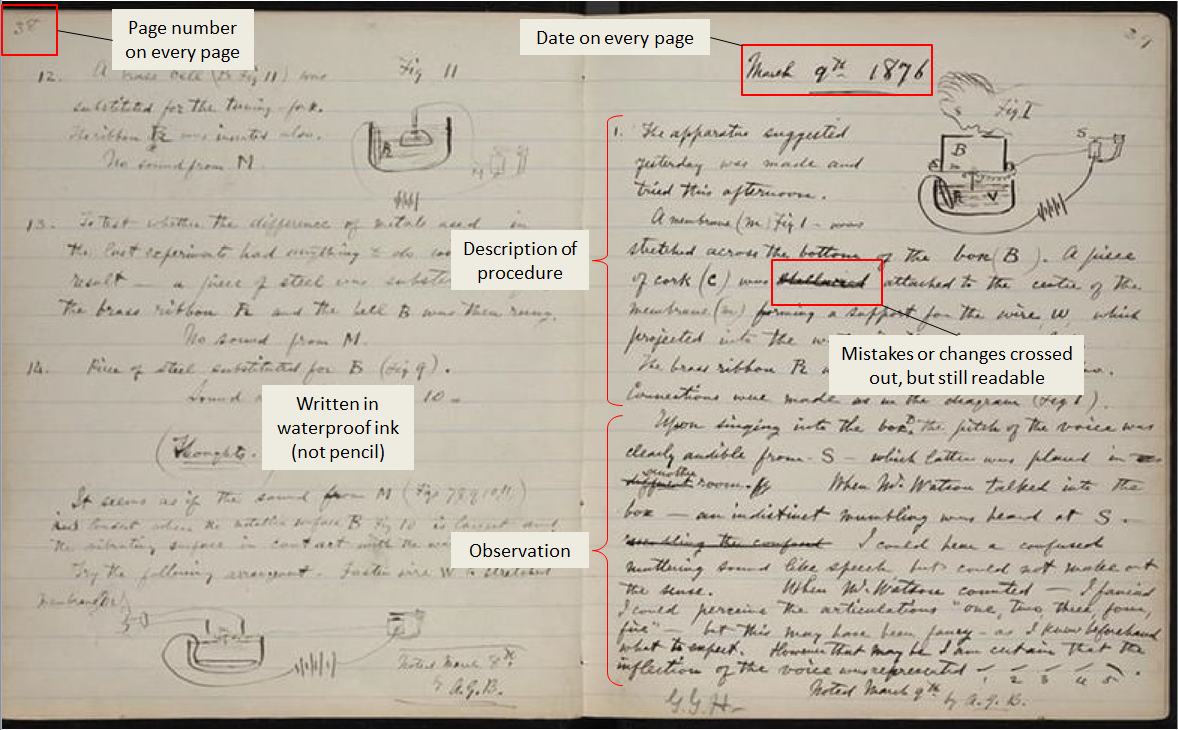
Keep a journal beside you. Date every entry. Write what you saw, felt, or sensed, and resist the urge to interpret it on the spot. Raw notes are worth more than polished conclusions.
How do you practice with feedback so you actually improve?
Feedback is the whole game. Without it you're just imagining and calling it sight. Design small exercises where reality tells you how close you were.
Photograph courtesy of Alexander Graham Bell, Public domain
Try these:
- Sealed cards or objects. Have a friend place a simple image or object in an envelope. Sit, ground, and note the first impressions. Open it after. Track hits, misses, and near misses over many attempts, not one.
- The next room. Before entering an unfamiliar space, jot a quick impression of it. Compare when you arrive.
- People you will meet. Before a call or meeting, note a color, mood, or image. Check afterward without forcing the match.
Score yourself gently but honestly. The goal isn't a perfect record. The goal is learning your own tells: when you're guessing, when you're reaching, and when something genuinely lands.
How do you avoid fooling yourself?
Name the traps out loud, because they're common and they're strong. Your mind wants to be right, wants to be special, and wants patterns even where none exist.

Photograph courtesy of Jason Zhang, CC BY-SA 3.0
Watch for these habits:
- Retrofitting. Bending a vague impression to match whatever happened. If it could mean anything, it means nothing.
- Cold reading yourself. Filling gaps with what you already know or want.
- One-hit certainty. Treating a single striking accurate moment as proof you've "arrived." Consistency over time is what counts.
Keeping vague and specific impressions in separate columns helps. Specific, checkable notes are honest. Vague ones feel impressive and prove little. The more precise your language, the harder it is to fool yourself later.
How does clairvoyance connect to numerology practice?
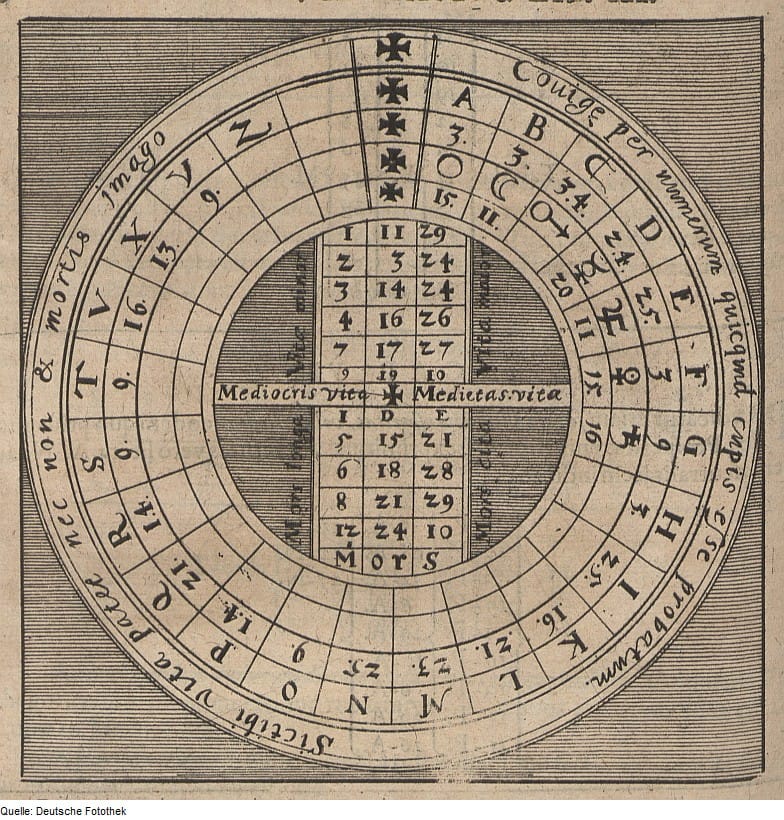
In The method, numerology gives your inner sight a stable frame to work within. Numbers are a language for self-reflection, and clairvoyance is one way you might sense what a number is pointing at.
Photograph courtesy of Deutsche Fotothek / Saxon State and University Library Dresden, Public domain
For example, sitting with your own core numbers can be a gentle target for practice. If you haven't worked this out yet, you can learn How to Calculate Your Life Path Number and Read What It Means before you begin. What images arise when you hold a 7, a season of turning inward, or a 22, the builder's number? You're not predicting anything. You're listening for how a theme shows up in your inner field.
This method works with the Pythagorean system and honors the Master Numbers 11, 22, 33, and 44. The numbers keep you grounded in meaning while your intuition supplies the imagery. Each checks the other. For a deeper personal map, you can Get your Soul Blueprint as a companion to this practice.
What does a realistic timeline look like?
There's no fixed schedule, and any claim of a guaranteed timeline should be treated with skepticism. If you sit most days and keep honest records, many people report noticing patterns over time, though this varies widely from person to person and isn't something anyone can promise.

Photograph courtesy of S Sepp, CC BY-SA 3.0
Some people are naturally more visual and see images quickly. Others sense, feel, or hear first, and images come later or not at all. None of these is better. Clairvoyance is one channel among several, and forcing it rarely works.
Expect plateaus. Expect stretches where nothing seems to come. Those are common experiences reported by practitioners and don't necessarily mean anything's gone wrong. Keep the practice small enough that you can do it on a tired day.
How do you keep the practice healthy and honest?
Protect your feet on the ground and your sense of proportion. Inner sight is a tool for insight, not a source of fear or authority over your life.

Photograph courtesy of frielp, CC BY 2.0
A few principles keep it clean:
- Never use impressions to make big medical, legal, or financial decisions. Get real professional help for real problems.
- Hold your readings lightly. "This is what I sensed" is honest. "This will happen" is not.
- Rest when you're drained. Fatigue is more likely to produce noise than clarity.
- Practice with others who value honesty over performance. A trusted community can help you notice, kindly, when you may be reaching.
Practitioners who take this work seriously tend to stay humble about it: testing consistently, admitting misses openly, and avoiding overstatement. Aim to be that kind of practitioner. The clarity you're building is worth developing slowly and well.
Sources
Numerologist and Master Teacher
Brian Wroblewski is the founder of The Healer's Code. He reads charts with the Pythagorean system and teaches people how to understand the numbers they were born with.