TL;DR
Sufi whirling is a moving prayer developed by the Mevlevi order that traces back to the poet Rumi and his followers. The turning is not performance or trance for its own sake. It is a structured ceremony called the Sema, meant to help the practitioner let go of the small self and turn toward the divine.
What Sufi Whirling Really Means and Why the Dervishes Turn
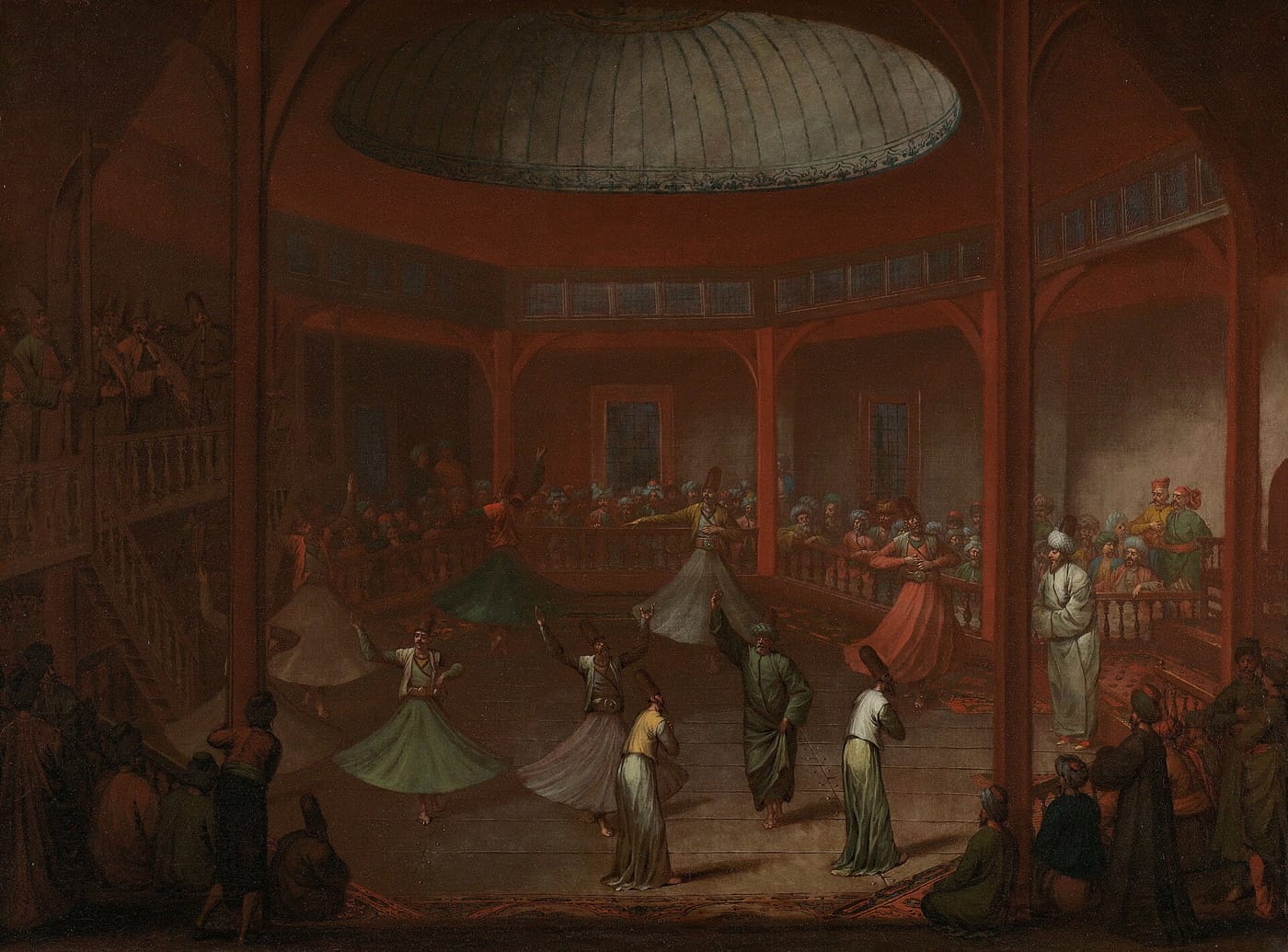
Sufi whirling is a form of moving prayer practiced by the Mevlevi order, a Sufi community that grew from the teachings of the thirteenth century poet Jalal al-Din Rumi. The turning happens inside a ceremony called the Sema, and its purpose is spiritual: to quiet the ego and turn the heart toward God. It is not a folk dance or a trick, even though it gets filmed and sold that way constantly.
Photograph courtesy of Rijksmuseum, Public domain
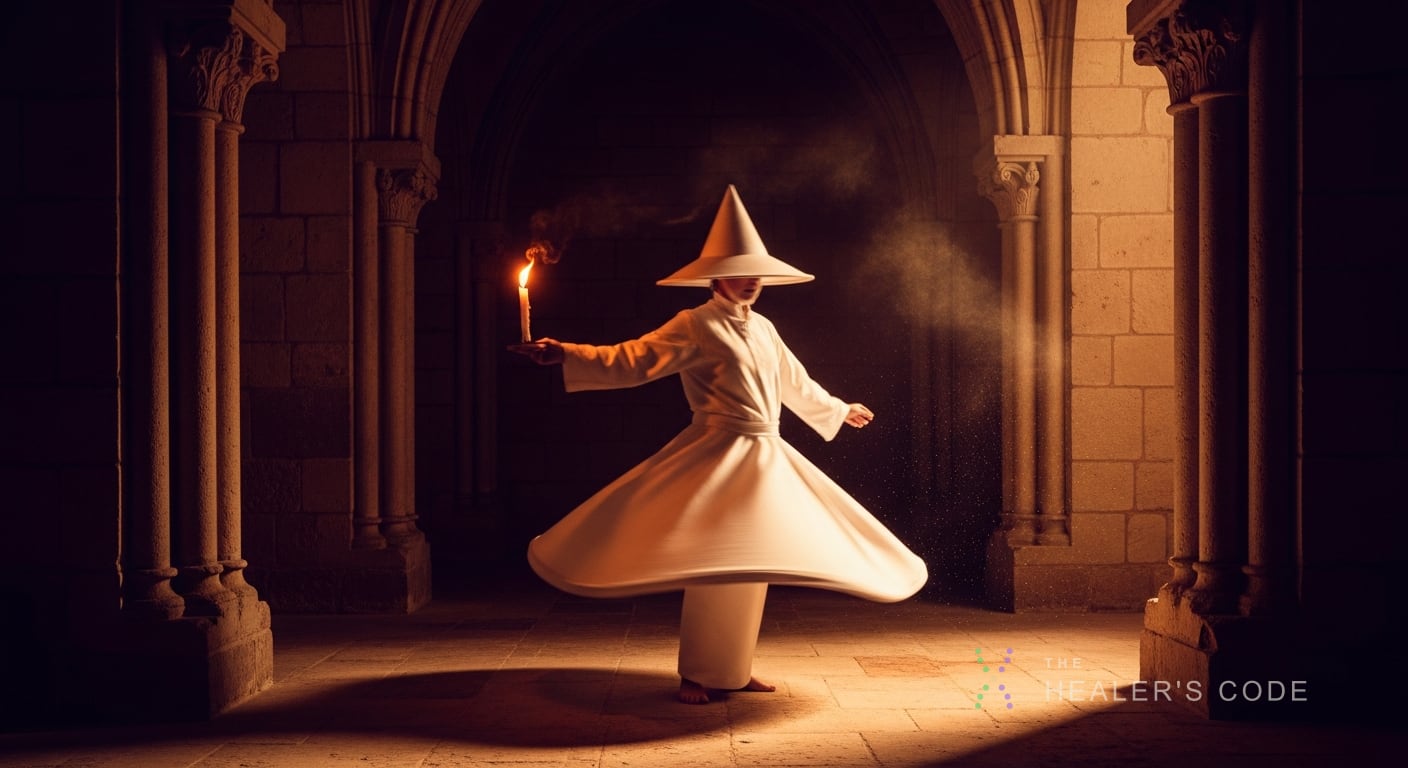
If the only image you've seen is a man in a tall felt hat and a white skirt spinning under stage lights, you've seen the surface. What's underneath is careful, old, and specific.
Who are the whirling dervishes?
The whirling dervishes belong to the Mevlevi order, founded in Konya, in what is now Turkey, after Rumi's death in 1273.
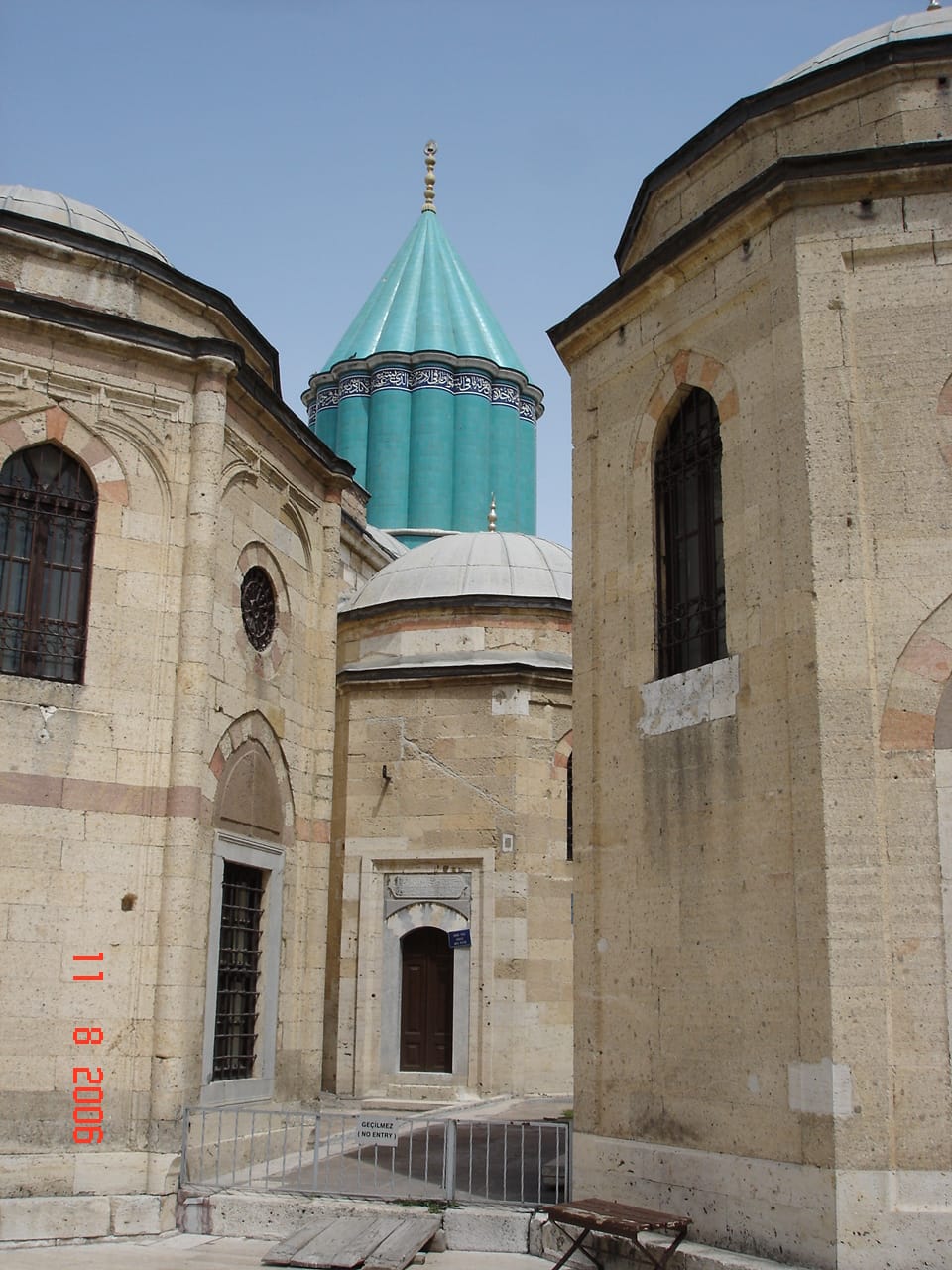
Photograph courtesy of Ahmetan, CC BY-SA 3.0
The word dervish refers to a person on the Sufi path, someone who has chosen a life oriented toward the divine rather than toward status or wealth.
Sufism itself is the mystical current inside Islam). Where Islamic law and practice give the outer form of the faith, Sufism reaches for the inner experience of nearness to God. Different Sufi orders, called tariqas, developed their own methods over the centuries. The Mevlevi method is the turn.
Rumi is the thread that ties it together. His poetry, written in Persian, circles again and again around longing, union, and the pain of separation from the source. The Sema grew out of that emotional and spiritual world.
What does the whirling actually mean?
The turning acts out a spiritual idea in the body. Everything in creation turns, from atoms to planets, and the dervish joins that turning consciously, as an act of remembrance, according to the order's own teaching.
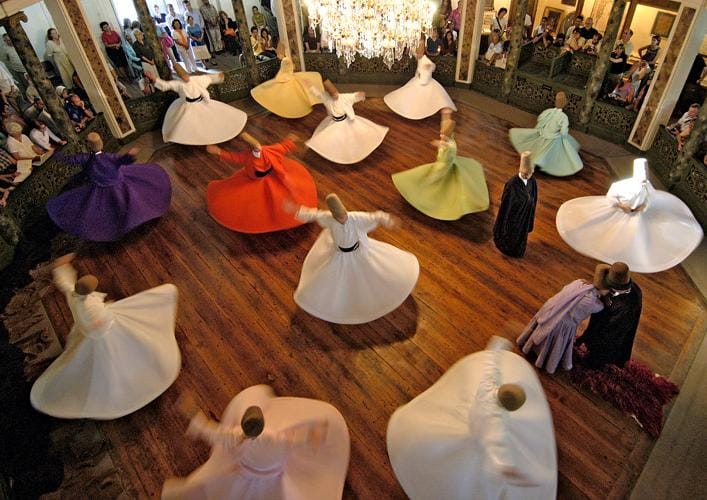
Photograph courtesy of Cenkko, Public domain
Look closely at the posture and you find meaning built into every part of it. The right hand opens upward, understood as a gesture of receiving grace from above. The left hand turns downward, passing that grace along to the earth. The dervish becomes a channel, not a container.
The head tilts, the body spins from the heart outward, and the eyes stay soft. This isn't about dizziness or spectacle. The point, as practitioners describe it, is to loosen the grip of the ego so attention can rest fully on God, a process not unlike developing your clairvoyance without the theater, where the aim is grounded presence rather than performance.
The white robe worn during the ceremony is often described as a symbol of a shroud, the ego's death. The tall felt hat, the sikke, is likened to a tombstone of the self.
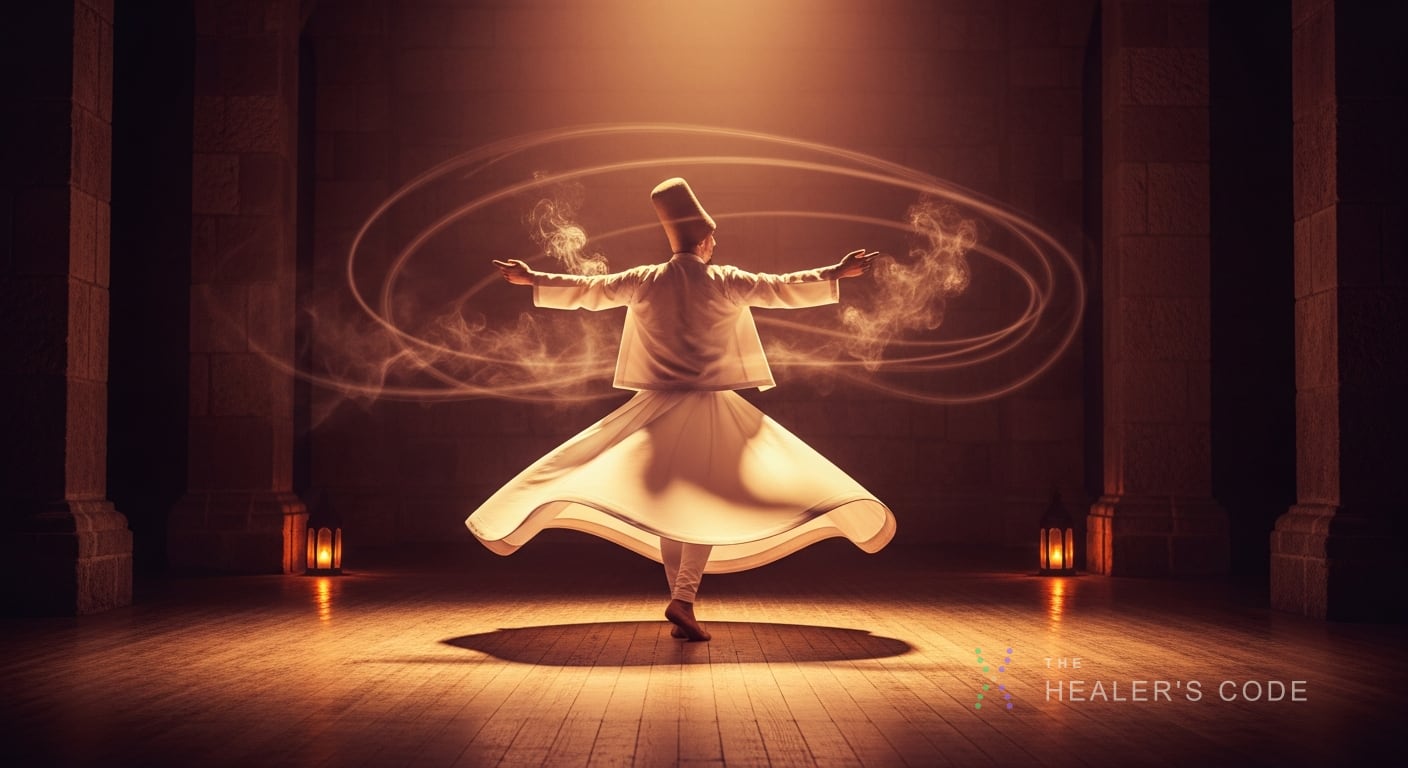
These are the order's own images, taught inside the tradition, offered here as such rather than as objective fact.
What happens during the Sema ceremony?
The Sema is a full ritual with distinct parts, not a free improvisation. It opens with praise, recitation, and music before any turning begins.
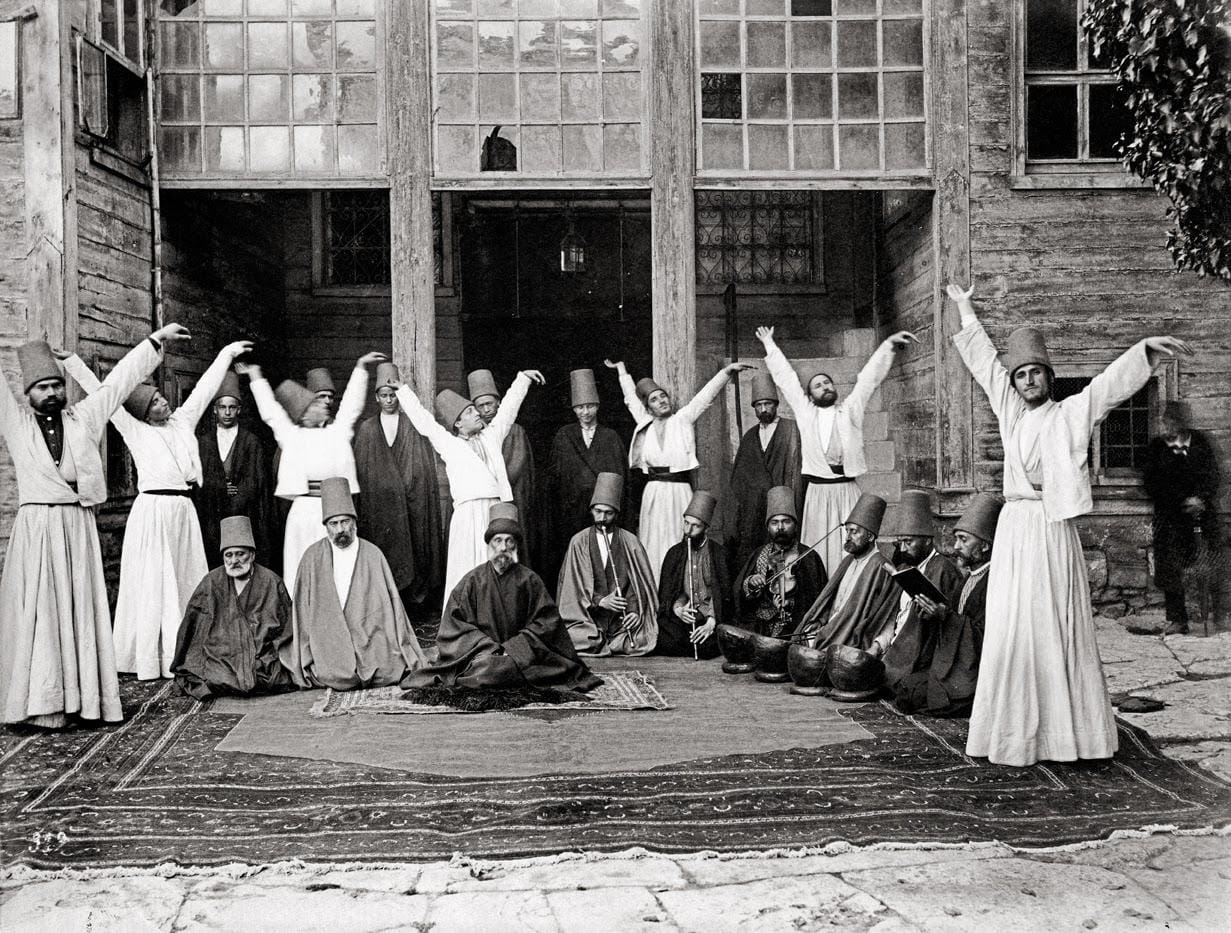
Photograph courtesy of Pascal Sebah, Public domain
A typical sequence moves through several stages. There's an opening eulogy to the Prophet and to all prophets before him. There's a drumbeat understood within the tradition to echo the divine command to be. There's instrumental music, often led by the reed flute, the ney, whose mournful sound Rumi used as an image of the soul crying for its origin.
Then the dervishes turn, usually in several rounds called selams, each carrying its own meaning within the order's teaching. The ceremony closes with recitation from the Quran and a prayer.
Understanding this shape matters. Once you know the Sema is a complete act of worship with a beginning, a body, and an end, it's easier to see it as prayer in motion rather than entertainment, in the same way guided meditations frame stillness as a practiced structure rather than an accident.
Is Sufi whirling a trance or a performance?
It's neither, at least not in the way those words are usually meant. Within the tradition, practitioners describe the turn as a disciplined devotional act, closer to contemplative prayer than to a hypnotic state or a show).
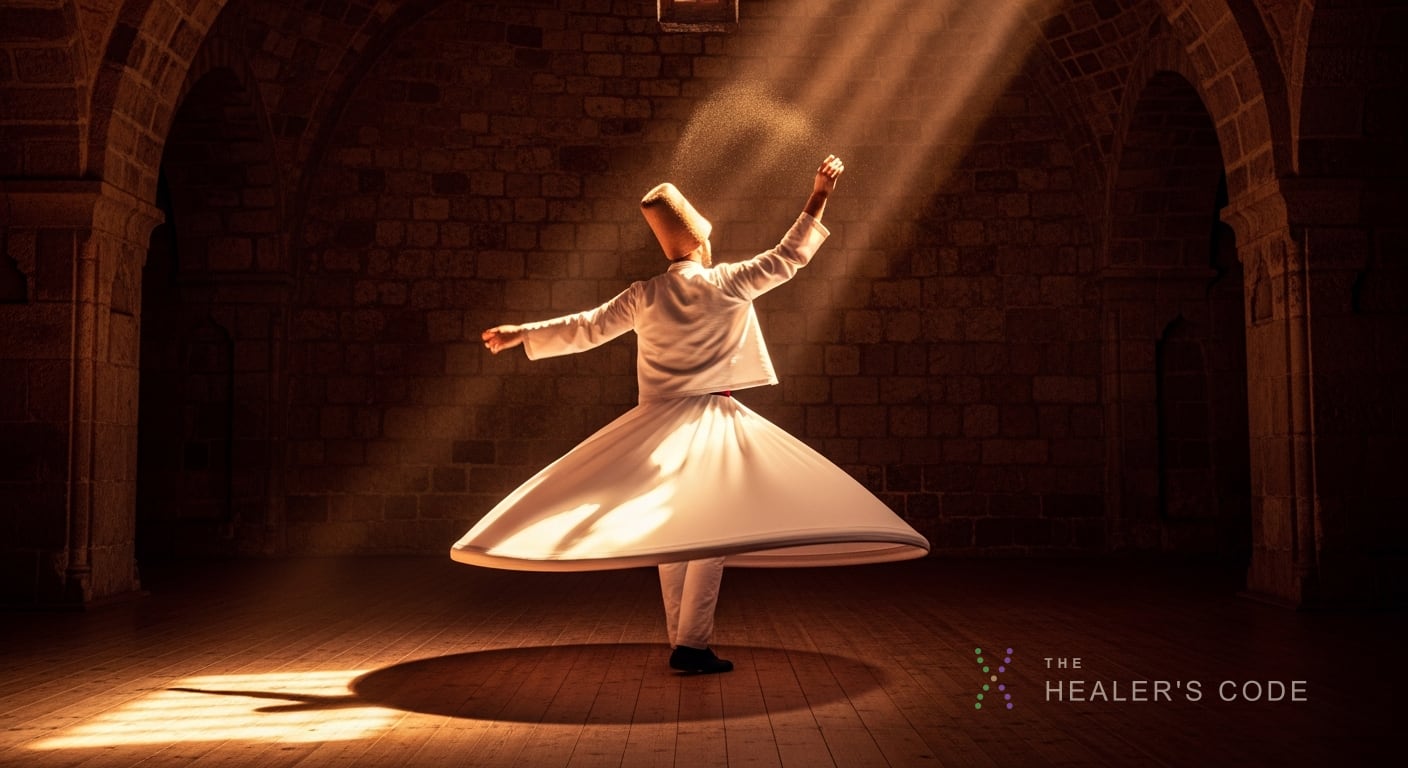
The complication is worth naming honestly. In the modern era, versions of the Sema get performed for tourists and on stages, separated from the mosque and the order. Something meaningful may still be present in those settings for some practitioners, but the framing changes what the audience thinks they're watching. Questions about what actually happens to awareness during such states connect to broader inquiry, including what science actually understands about consciousness.
If you want to understand the practice, don't ask whether it looks impressive. Ask what the practitioner is trying to do. In the Mevlevi understanding, they are trying to disappear a little, so that something larger can be present.
How does whirling fit inside the wider mystical tradition?
Many contemplative traditions across different faiths use the body and repetition to still the mind and open the heart. The Mevlevi turn is one example among many.
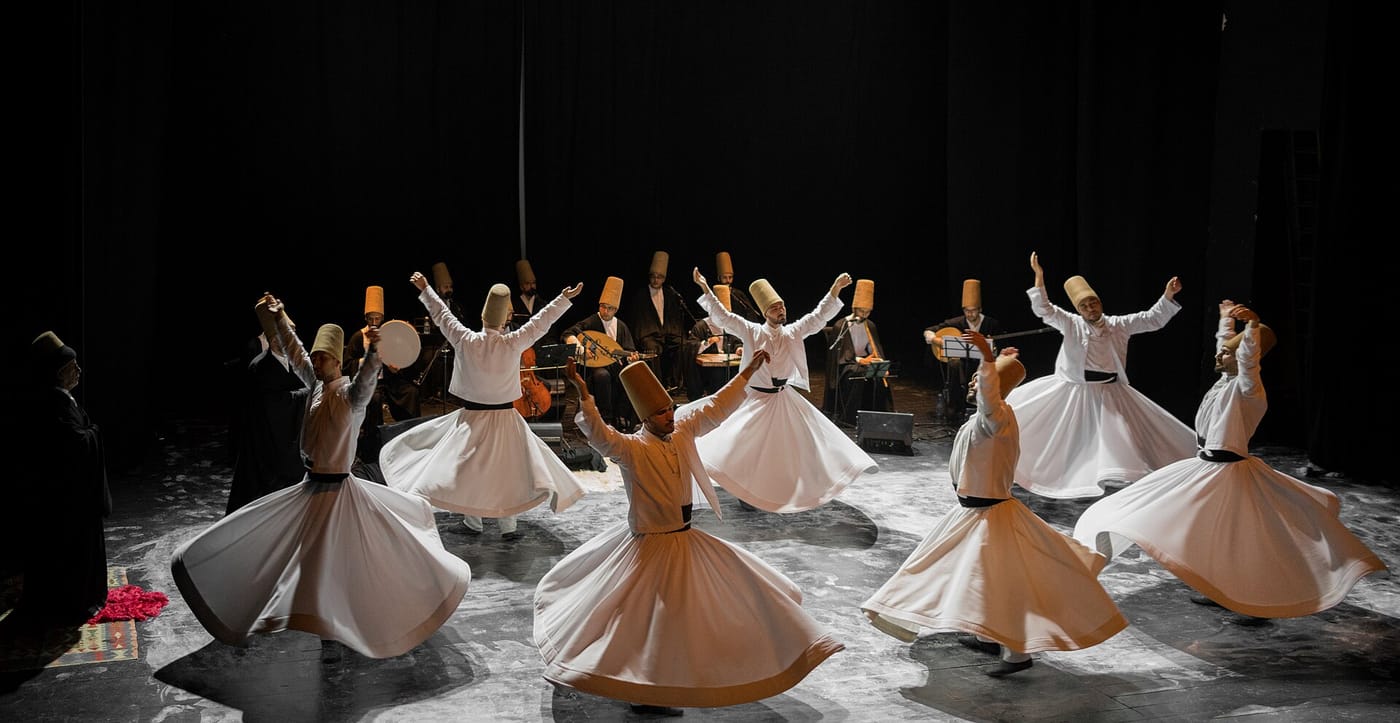
Photograph courtesy of IssamBarhoumi, CC BY-SA 4.0
You can see the family resemblance without flattening the differences. Contemplatives across traditions have used breath, chant, posture, and repeated movement toward this same aim, much as practices around consciousness and astral travel explore what leaves the body and what stays grounded. The specifics belong to each path and shouldn't be blended carelessly.
What the dervishes offer the curious seeker is a vivid reminder that prayer doesn't have to be still or silent. Devotion can be motion. Turning can be a way of listening.
If comparing traditions with care is the kind of study you enjoy, you'll find kindred company in the community, where practices like this are explored with respect rather than costume.
How can you learn more with respect?
Start with Rumi's own words, ideally in translations that stay close to the source rather than loose rewrites. His poetry is the doorway the order itself points to.
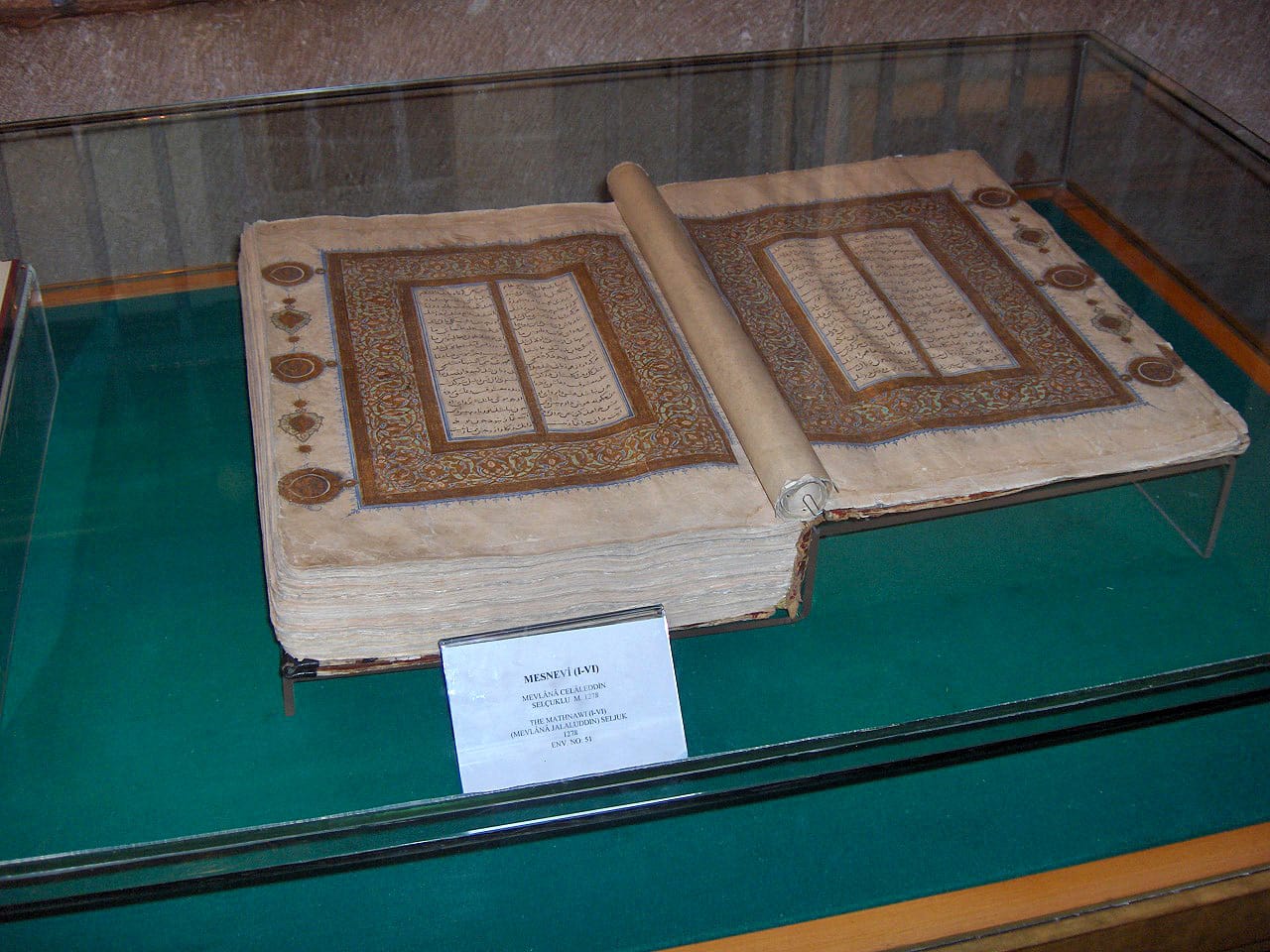
Photograph courtesy of Georges Jansoone, CC BY-SA 3.0
Read about Sufism from scholars and practitioners rather than travel brochures. Seek out the history of the Mevlevi order on its own terms. And if you ever watch a Sema in person, treat it as you would any act of worship in a tradition not your own: quietly, and without turning it into a photo opportunity first. If you want to explore your own path further, you can always get your Soul Blueprint to understand where devotional practice might fit into your life.
The practice traces back roughly seven centuries to the Mevlevi order founded after Rumi's death, and generations have sustained it because they found meaning in it, not because it looks striking on camera. Meeting it on those terms is the whole point.
Note: This article describes the beliefs and practices of the Mevlevi Sufi order as taught within that tradition. It is offered for cultural and historical understanding, not as a claim about religious truth, nor as psychological, medical, or spiritual advice.
Sources
Numerologist and Master Teacher
Brian Wroblewski is the founder of The Healer's Code. He reads charts with the Pythagorean system and teaches people how to understand the numbers they were born with.