TL;DR
Your Personal Year Number names the theme of the year you are in right now. You find it from three parts reduced separately and then added: your birth month, your birth day, and the year your current cycle began in. It turns on your birthday, not January 1, and it can be a master number. It works as a tool for reflection and planning, not a fixed prediction.
Your Personal Year Number names the theme of the year you are standing in right now.
You find it from three parts, each reduced on its own and then added together: your birth month, your birth day, and the year your current cycle began in. Most years it comes to a single digit. Sometimes it comes to a master number, 11, 22, 33 or 44, and then it stands as it is.
And it starts on your birthday, not on January 1. That one detail is where most Personal Year calculations quietly go wrong, so it is worth getting straight before you do the arithmetic.
How do you calculate your Personal Year Number?
You need three numbers: your birth month, your birth day, and the year your current cycle began in. That last one is this year if your birthday has already passed, and last year if it has not.
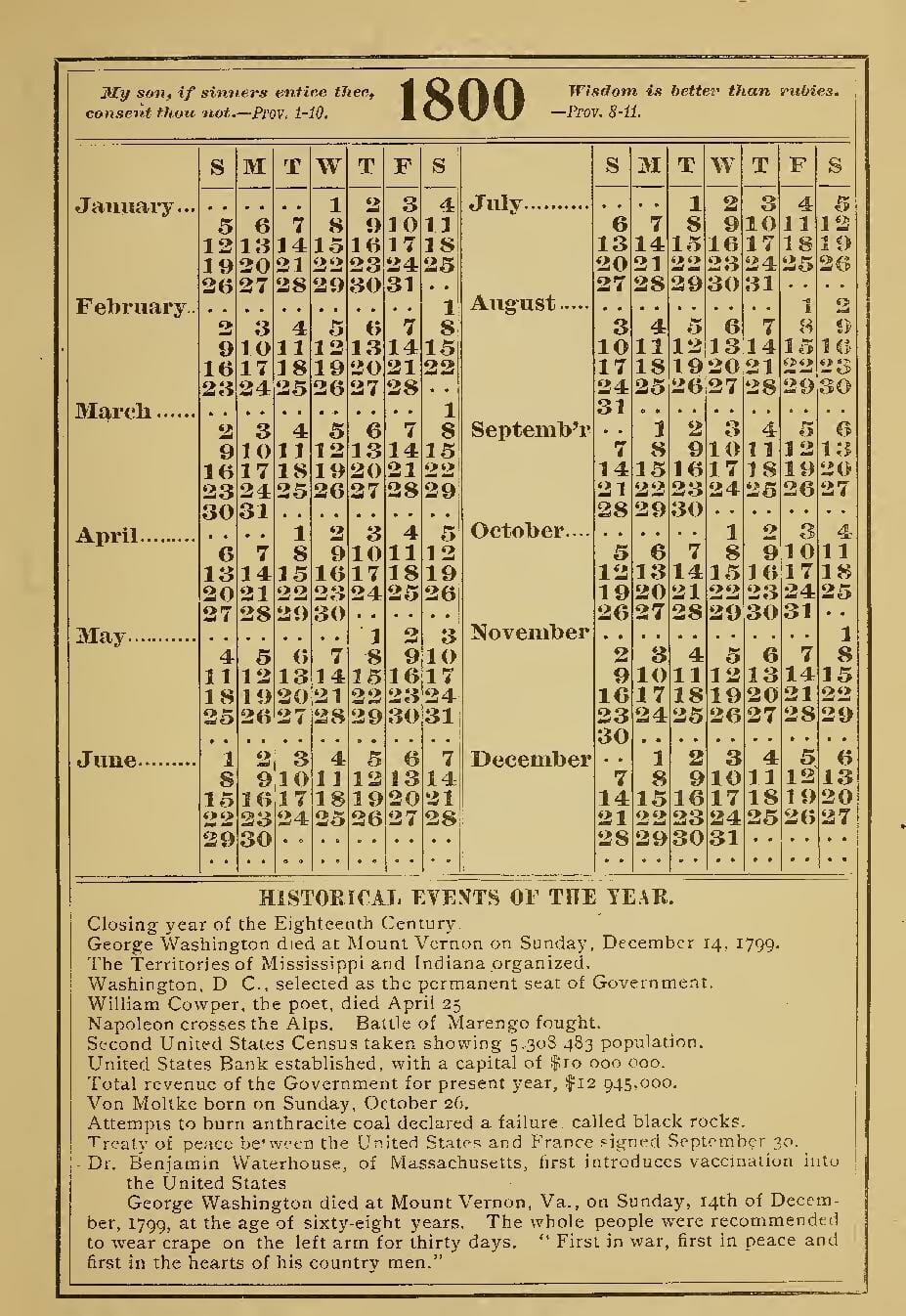
Photograph courtesy of Alonzo P. Connolly / Wikimedia Commons, Public domain
1. Reduce your birth month to a single digit. August is 8. November is 2.
2. Reduce your birth day. Born on the 27th? That is 2 + 7 = 9.
The exception is a master day. The 11th counts as 11, the 22nd counts as 22, and the 29th becomes 11. Those hold rather than reducing. Every other day reduces to a single digit.
3. Reduce the year your cycle began in. 2026 becomes 2 + 0 + 2 + 6 = 10, then 1 + 0 = 1.
4. Add the three results, then reduce. Stop at 11, 22, 33 or 44 if you land on one.
That is the whole calculation. Three parts reduced separately and then added, and that order matters: reduce them separately, or you will lose a master number that was really there.
When does your Personal Year actually begin?
On your birthday.
Photograph courtesy of Edward John Gregory / Wikimedia Commons, Public domain
Your Personal Year is yours. It starts on the day that is yours, and it runs until the next one.
So the year you are in right now began on your last birthday. If your birthday has already happened this year, use this year in the sum. If it has not happened yet, you are still inside the cycle that opened last year, and last year is the number you use.
Born May 20. On June 29, 2026 your birthday has passed, so the cycle is 2026 and your Personal Year is 8. Read the same chart on January 10, 2026 and your birthday has not arrived, so you are still in the cycle that opened in May 2025, and your Personal Year is 7. Same person, same chart, five months apart, and the year has not turned yet.
It is worth knowing which side of your birthday you are standing on before you read anything into the number.
After a 9 year the cycle returns to 1, so the same nine chapters come round again, each time on your own birthday rather than on a date you share with everybody else.
You can run your own rather than doing the arithmetic by hand.
A note on Master Numbers
Your Personal Year can be a Master. If the total comes to 11, 22, 33 or 44 it stands, exactly as it does anywhere else in your chart.

A November 29 birthday shows how it happens. In the 2025 cycle the month reduces to 2, the 29th carries 11, and 2025 reduces to 9. That is 2 + 11 + 9 = 22, a Master Year. Reduce it to 4 and you have thrown away the thing that makes the year what it is.
A Master Year is rare, and it is heavier than the single digit underneath it. The same work, at a scale that costs more.
Your Life Path holds its masters differently, by summing the whole date in one stream rather than reducing parts first. How to Calculate Your Life Path Number works that one through.
What does each Personal Year mean?
Each number describes a chapter. Read yours as an invitation to reflect, not an order or a prediction.
Personal Year 1: Beginnings. A year for starting fresh, planting seeds, and acting on your own initiative. What you begin now can set the tone for the whole cycle ahead.
Personal Year 2: Patience and partnership. A quieter, more inward year. It favors cooperation, relationships, and letting things develop instead of forcing them.
Personal Year 3: Expression. Creativity, communication, and social life move to the front. A year for sharing your voice and enjoying your work instead of just grinding through it.
Personal Year 4: Foundations. Steady, practical, sometimes demanding. This year calls for structure: routines, systems, and the unglamorous work that supports everything you build later.
Personal Year 5: Change. Restlessness shows up, along with a pull toward freedom. Expect movement, variety, and opportunities that ask you to stay flexible.
Personal Year 6: Responsibility and home. Attention turns to family, care, and commitments. A year for tending relationships and finding balance.
Personal Year 7: Reflection. A quieter, inward year. Study, rest, and honest self-examination matter more than outward achievement. Guided meditations can be a helpful companion for this kind of inward work.
Personal Year 8: Momentum. Tied to ambition and material or professional matters. Earlier effort tends to become visible now, though nothing is guaranteed.
Personal Year 9: Completion. Often read as a year of endings and clearing out. Letting go of what no longer fits opens space for the next 1 year to begin.
How can you actually use your Personal Year?
Use it as a lens to help choose your focus, not to predict events.
Photograph courtesy of Red marquis, Public domain
If you're in a 4 year, put your energy into foundational work instead of waiting around for a breakthrough. If you're in a 9 year, forcing a brand-new launch might feel like swimming upstream. Finishing old projects will likely feel more aligned.
The cycle is descriptive, not deterministic. It's a lens for reflection and planning, not a substitute for medical, financial, legal, or psychological guidance, and it guarantees nothing. If you're curious why it can be hard to focus on more than one theme at a time, Why You Can't Pay Attention to Two Things at Once offers some useful context.
Try this: at the start of the year, write down your Personal Year Number and one intention that fits its theme. Come back to it each season and see what actually unfolded.
How does the Personal Year fit with the rest of your chart?
Your Personal Year is one layer. It sits alongside your Life Path, which describes your longer arc, and your Personal Month and Personal Day, which zoom in closer.
Reading them together adds texture. A 5 year hits differently for someone whose Life Path leans toward stability than for someone who already gravitates toward change.
If you want the fuller picture that connects these layers, you can get your Soul Blueprint or shop readings for a guided walk through your chart. You might also enjoy connecting with the community as you work through your own cycle.
The point is never to hand your decisions over to a number. It's to give yourself a clearer mirror for self-reflection.
Sources
Numerologist and Master Teacher
Brian Wroblewski is the founder of The Healer's Code. He reads charts with the Pythagorean system and teaches people how to understand the numbers they were born with.