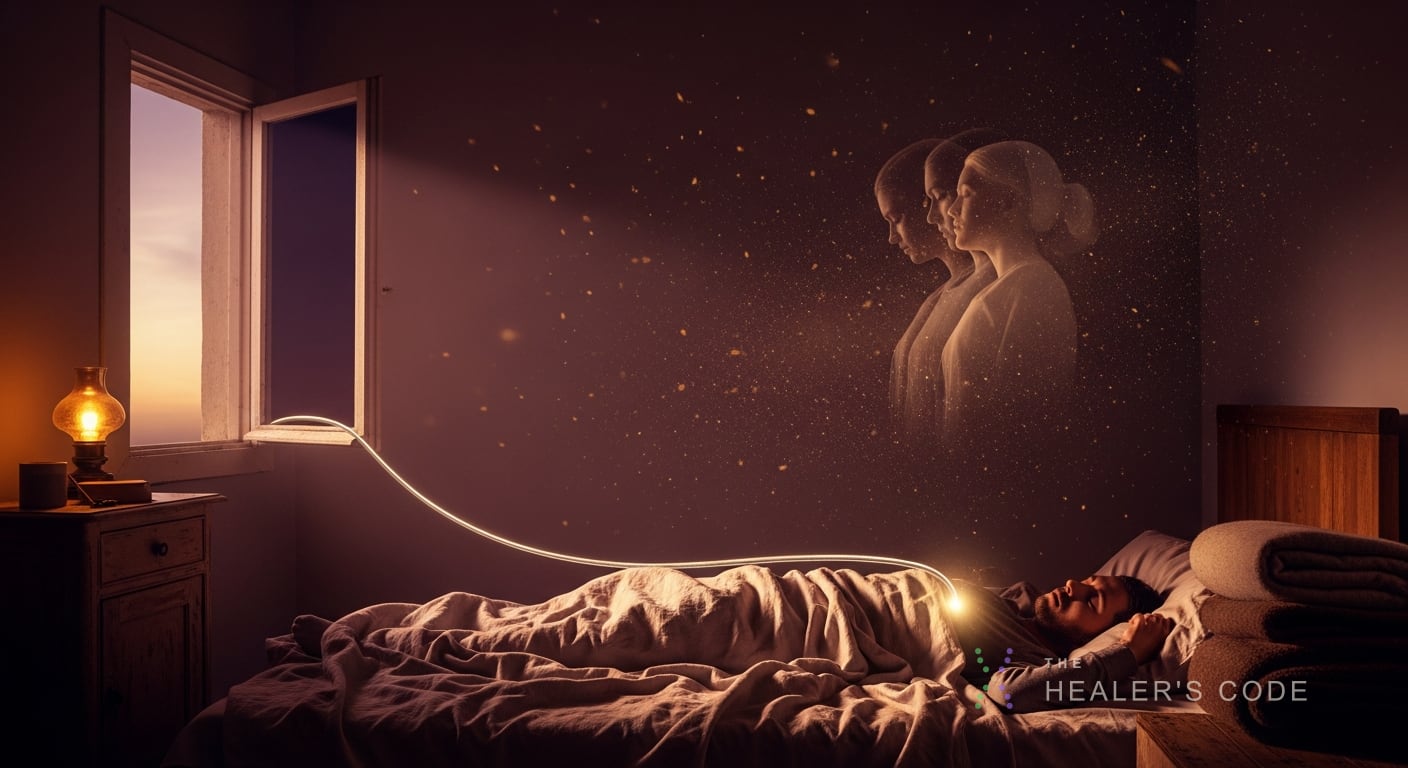
TL;DR
Astral travel is best understood as a shift in where your brain places your sense of self, not proof that consciousness physically detaches. The experience can be real and meaningful even if the "leaving" happens inside perception. Practice from a steady meditation base, set a clear way back, and know your limits.
Astral travel is best understood as a vivid state of consciousness, not proof that some part of you physically peels off and floats away. When people describe leaving the body, what science can actually observe is a shift in perception: the felt sense of where "you" are located gets remapped by the brain. That reframe matters, because it lets you practice with curiosity and safety instead of fear or false certainty.
Here's what the evidence supports, what stays speculative, and how to explore these states without losing your footing.
What is astral travel, really?
Astral travel, or astral projection, is the reported experience of your awareness separating from your body and moving through space.
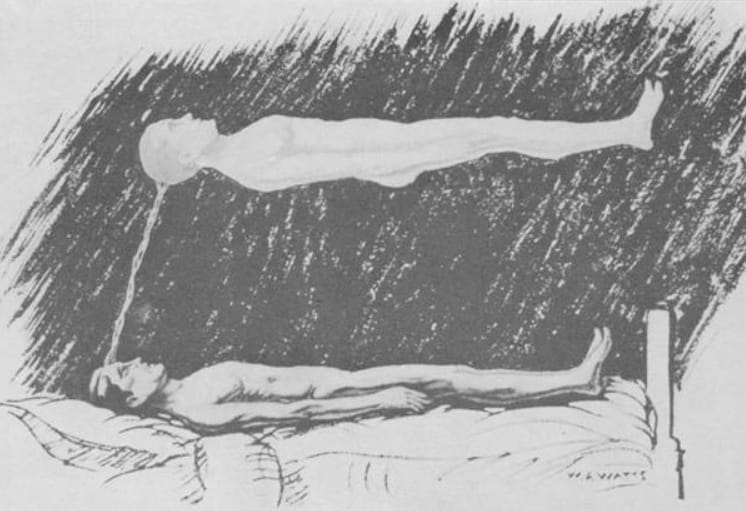
Photograph courtesy of Hereward Carrington and Sylvan Muldoon, Public domain
People describe floating above the bed, drifting through walls, or traveling to distant places.
What you're describing when you say this is an out-of-body experience, or OBE. That's the neutral term researchers use, and it doesn't assume anything about souls or planes of existence.
Here's the key distinction: an OBE describes what an experience feels like. It isn't, by itself, evidence that consciousness physically relocated. Both things can be true at once. The experience can be real and meaningful to you, and the "leaving" can be happening inside your perception rather than in physical space.
What actually "leaves" the body?
Your sense of self-location leaves. Your body doesn't.
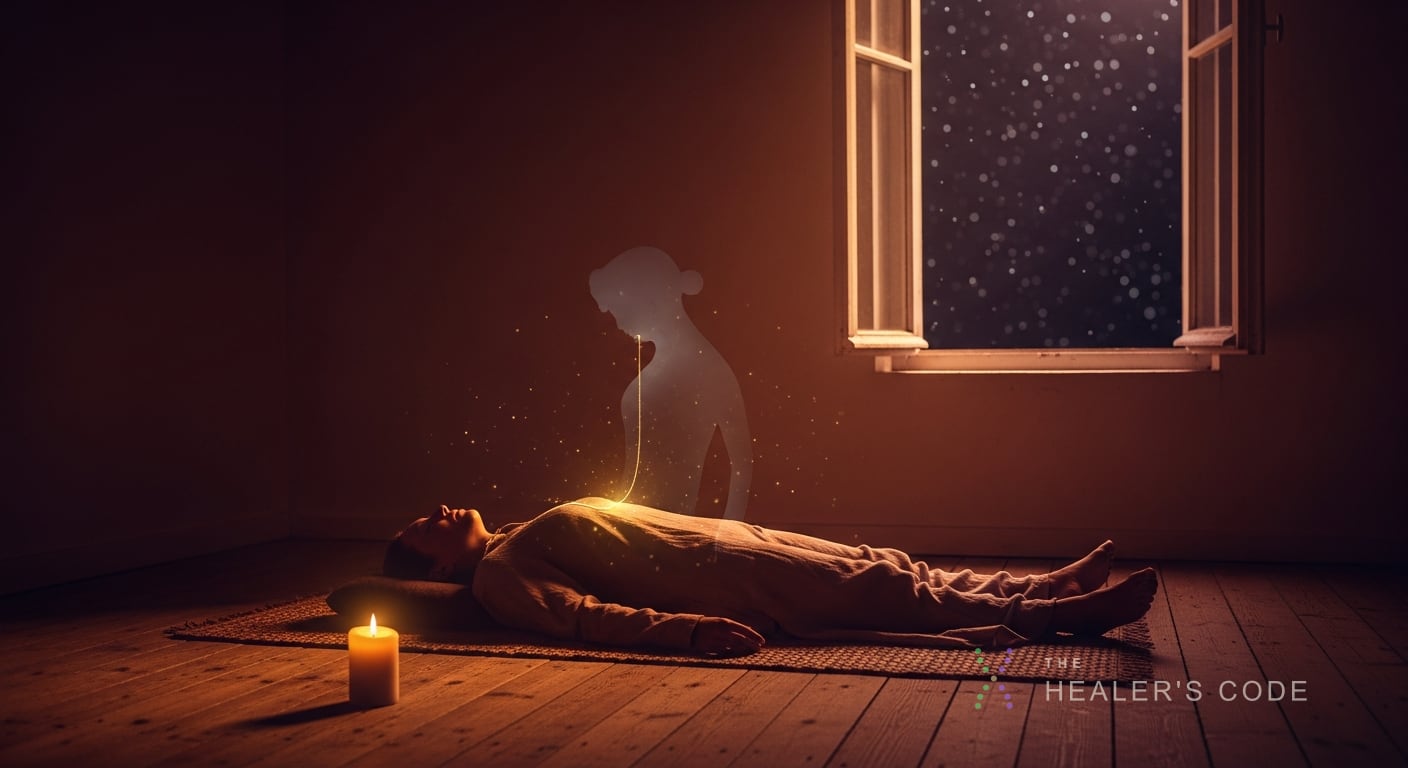
Neuroscientists have learned that your brain constantly builds a model of where "you" are. It stitches together signals from your inner ear, your vision, your sense of your own body position, and touch. Usually these agree, so you feel firmly inside your skin. This is closely related to why you can't pay attention to two things at once, since your brain can only build one coherent model of experience at a time.
When those signals conflict or get scrambled, the brain can place your point of view outside your body. Researchers led by Olaf Blanke induced out-of-body sensations by electrically stimulating a region of the brain called the temporoparietal junction, and later used virtual reality and touch to create the illusion that a person's self was located in a body a few feet away (Blanke & Arzy, 2005; Lenggenhager et al., 2007, Science).
So here's the honest answer: what shifts is your felt point of view, generated by the brain. What stays put is everything physical: your body, your breathing, your heartbeat, the room you're lying in.
That's not a letdown. A brain that can relocate your sense of self is doing something extraordinary, and it opens a real door for exploration.
Does that mean astral travel is "just" imagination?
No. "Just imagination" is a lazy dismissal, and it's not what the science says.
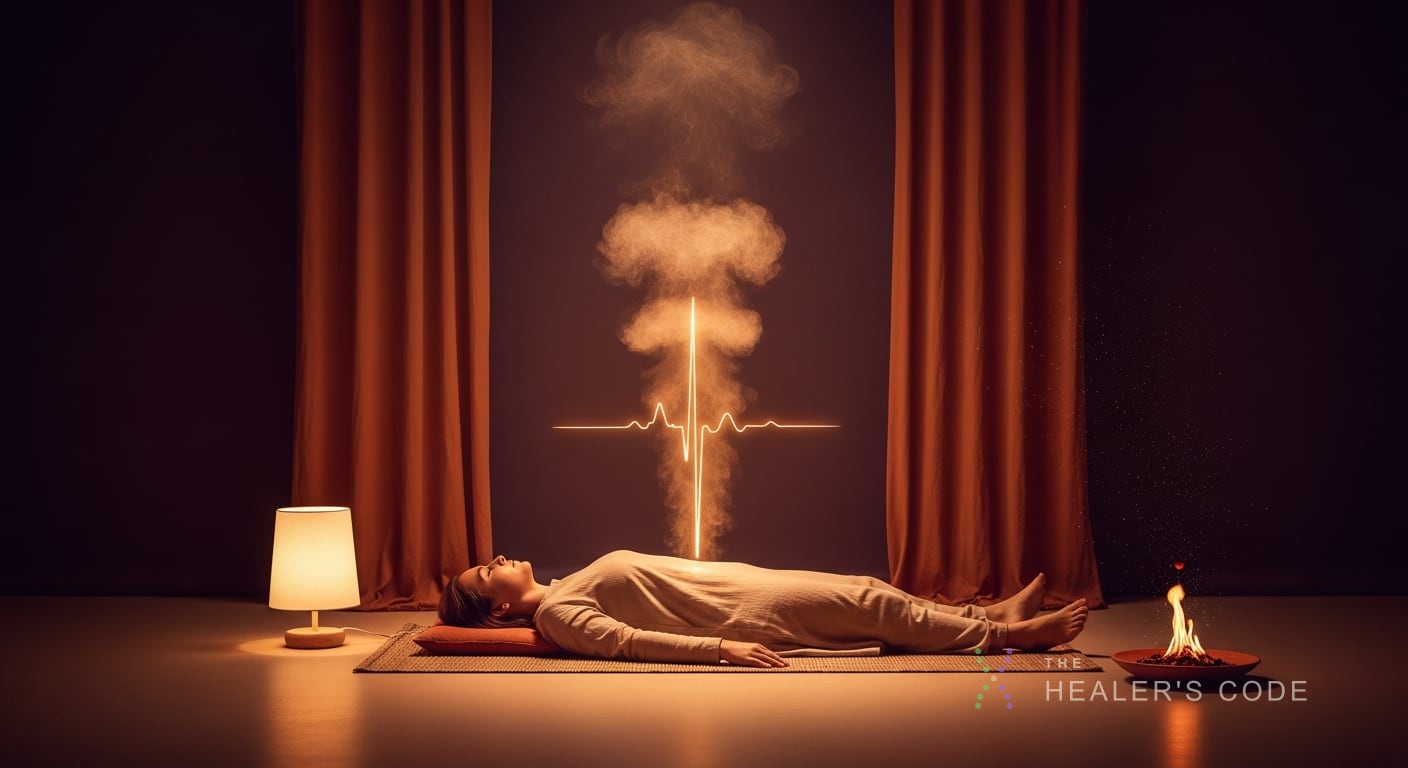
These states are distinct from ordinary daydreaming. They often arise near sleep, during deep relaxation, in moments of physical stress, or during meditation. They carry a striking sense of realness, clarity, and sometimes profound emotional weight.
Some people report calm, insight, or a loosening of their usual fears about mortality after an OBE. Those effects, when they occur, can be meaningful for how you live, whether or not your consciousness went anywhere. These are individual, subjective reports rather than established, general outcomes.
The useful stance is neither "it's supernatural proof" nor "it's nothing." It's this: a real, structured state of consciousness that you can enter, observe, and learn from.
Where does the hard problem of consciousness fit in?
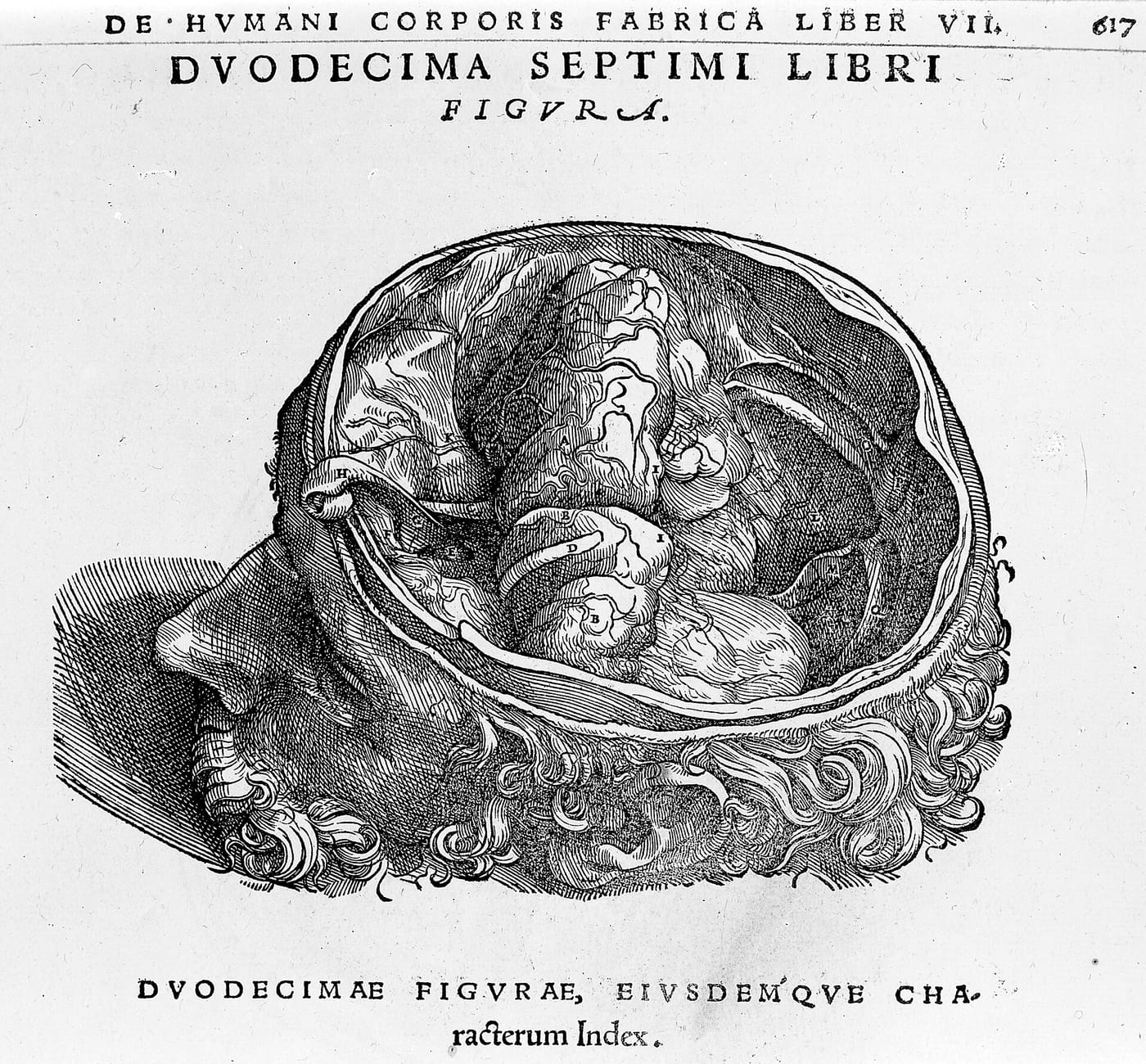
Here's the honest boundary. We can describe how the brain builds self-location, and we can even manipulate it in a lab.
Photograph courtesy of Wellcome Collection, CC BY 4.0
What we can't yet explain is why there's any felt experience at all. Philosopher David Chalmers named this the "hard problem" of consciousness.
That gap is why astral travel stays fascinating and unsettled. Science can account for the mechanics of the experience without closing the deeper question of what subjective experience is or where its limits lie.
So when someone tells you astral travel is "definitely" your soul leaving, or "definitely" only neurons firing, notice that both are claiming more than the evidence allows. Sitting with that uncertainty is part of mature inner work.
How do you practice astral travel safely?
Start from a foundation of steadiness. The goal isn't to escape your body but to explore the edges of consciousness while staying well.

Photograph courtesy of Robert Bejil, CC BY 2.0
Build a meditation base first. These states arise more easily from a mind that can rest and observe. Regular practice trains that muscle. Our guided meditations are a gentle place to begin.
Use the drowsy threshold. Many OBEs happen in the hypnagogic zone between waking and sleep. Lie down relaxed but with a light intention to stay aware as your body settles. Don't force it.
Set a clear intention and a way back. Decide before you begin that you can return to full waking awareness whenever you choose. A simple mental anchor, like wiggling your fingers or feeling the mattress, brings you back quickly.
Keep it short and grounded. End with a few minutes of ordinary sensing: feel your feet, drink water, look around the room. This "landing" ritual may help reduce disorientation.
Know your own limits. If you have a history of dissociation, panic, psychosis, or trauma that involves feeling detached from your body, these practices can be destabilizing. This article is for self-reflection and exploration, not treatment, diagnosis, or therapy. If detachment distresses you, talk with a qualified mental health professional before continuing.
What should you do if an experience feels frightening?
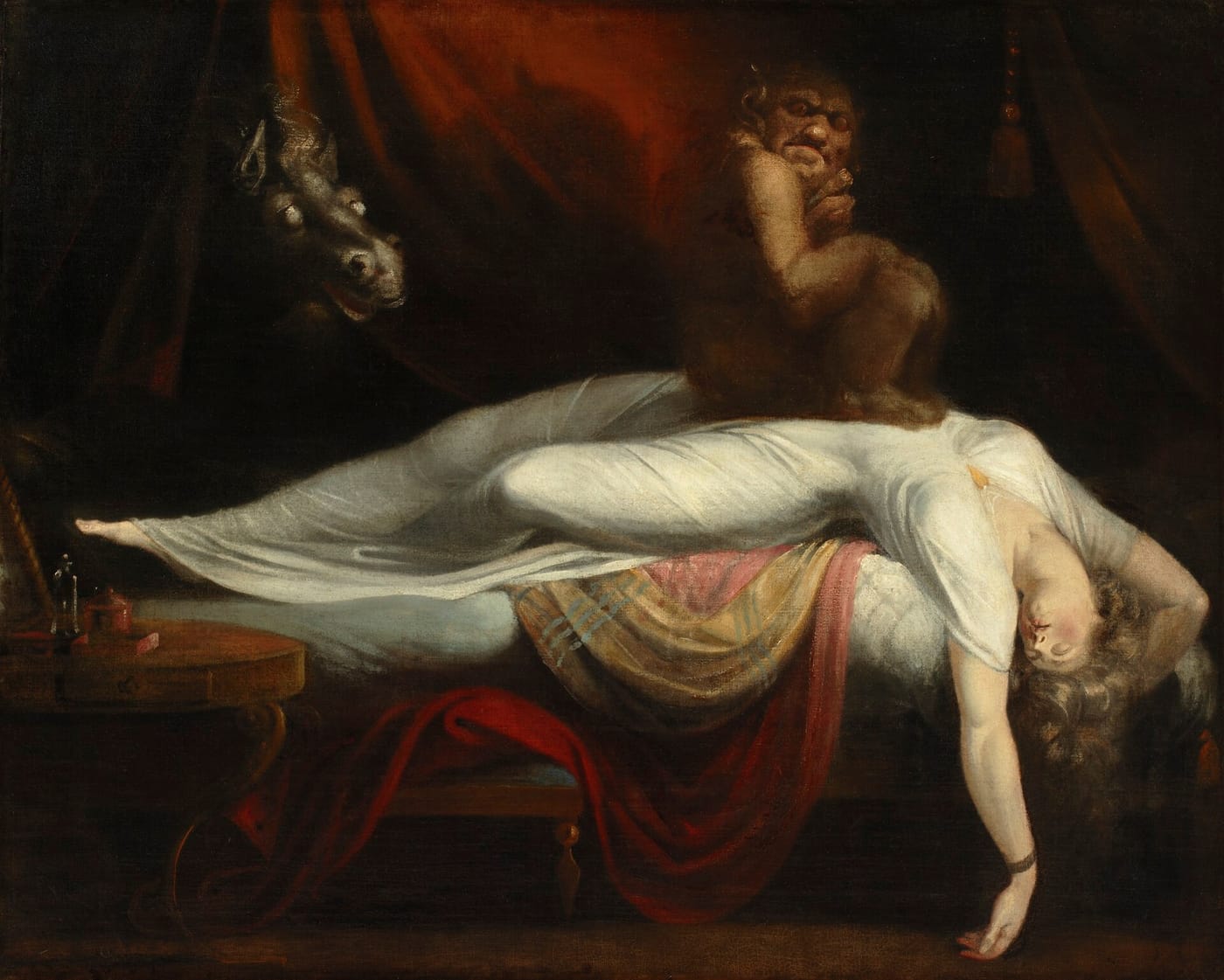
Frightening moments are common and manageable for many people. Fear during an OBE, like sleep paralysis, often comes from feeling stuck or out of control rather than from any real physical threat.
Photograph courtesy of Henry Fuseli, CC BY 2.5
Remind yourself that your body is safe and breathing on its own. Try to move a small part of it, focus on your breath, or simply tell yourself calmly that the state will pass. For most people it does, though if fear or disorientation persists or recurs, it's worth discussing with a qualified mental health professional.
If these experiences happen often and leave you shaken, that's a reason to slow down, not push harder. There's no prize for going further than feels safe.
How can numerology support this kind of inner work?
Numerology won't send you traveling, and it's not a map of other planes. What it offers is a language for reflection: a way to notice your patterns, your tendencies, and where you place your attention.

Photograph courtesy of Hijerovit, CC BY-SA 4.0
In the Pythagorean system used in The method, numbers like your Life Path can prompt honest questions about how you meet uncertainty and what grounds you. Master Numbers such as 11, 22, 33, and 44 are traditionally associated with heightened sensitivity and a pull toward the unseen, which some find makes contemplative practice feel especially resonant.
Hold it lightly. Numerology here is a mirror for self-understanding, not a prediction, not a diagnosis, and not a substitute for medical, psychological, legal, or financial care. Used that way, it can help you approach consciousness exploration with more self-awareness and less magical thinking. If you'd like a deeper, personalized starting point, you can get your Soul Blueprint or explore the community of others doing this same inner work.
Sources
- Peer-reviewed academic paper on numerology in physics constants (Proceedings of the National Academy of Sciences (PNAS))
- Pythagorean number symbolism and mystical properties of numbers 1-10 (Encyclopaedia Britannica)
- Facing Up to the Problem of Consciousness - David J. Chalmers (1995, Journal of Consciousness Studies)
Numerologist and Master Teacher
Brian Wroblewski is the founder of The Healer's Code. He reads charts with the Pythagorean system and teaches people how to understand the numbers they were born with.