TL;DR
Across cultures, the afterlife is described in three broad shapes: a journey to another realm, a return through rebirth, or a merging back into a greater whole. No tradition can prove its map, but each one offers a way to think about meaning, memory, and how you live today.
No one can hand you proof of what happens to the soul after death. What we have are maps that cultures have drawn for thousands of years, and they tend to fall into three shapes: the soul travels onward to another realm, it comes back through rebirth, or it merges into something larger. The details differ, but nearly every map agrees on one thing: something in you is worth accounting for once the body stops.
This guide walks through those shapes plainly. Treat it less like a set of answers and more like a set of lenses for a question you'll carry your whole life.
What do the major traditions actually say happens after death?
Most of the world's afterlife ideas sort into three patterns.
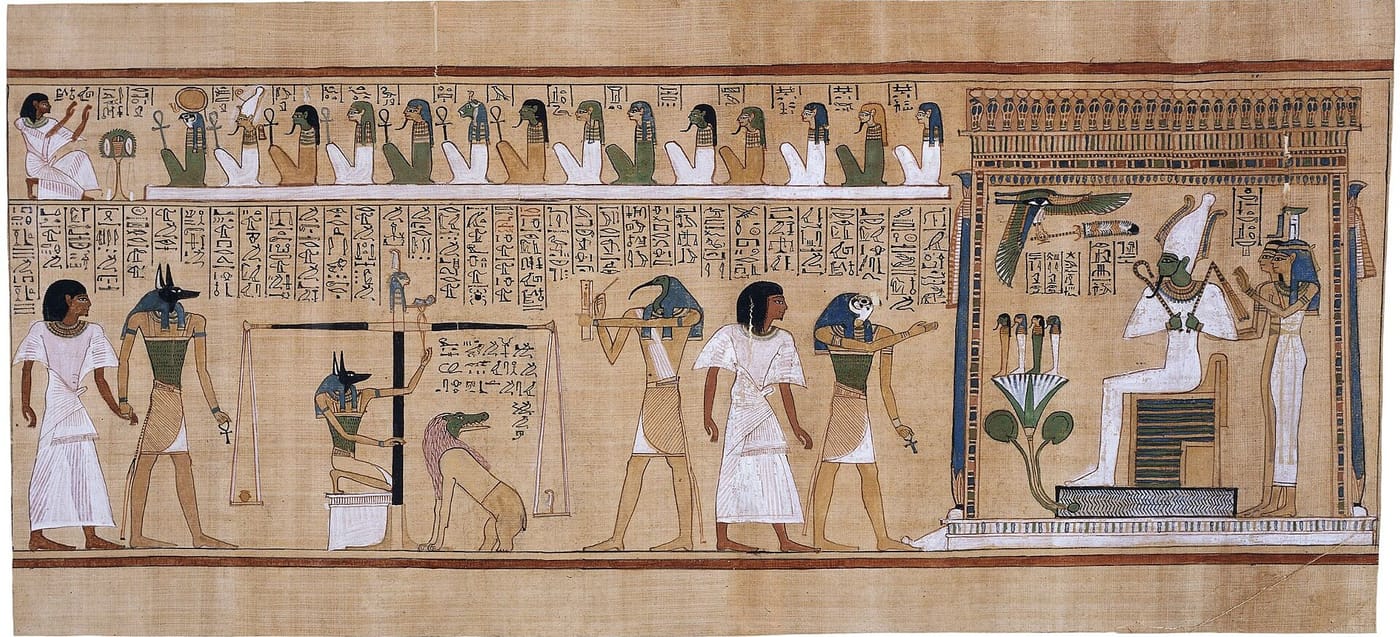
Photograph courtesy of British Museum, Public domain
The first is the journey. The soul leaves the body and travels somewhere else: a heaven, a paradise, an underworld, a realm of judgment. Christianity, Islam, and Judaism each describe some form of continued existence beyond death, often tied to how a life was lived. Ancient Egyptian texts describe the soul facing a weighing of the heart before it moves on.
The second is the return. The soul is reborn into a new life. Hinduism, Buddhism, Jainism, and Sikhism all teach some form of rebirth, shaped by karma, the moral weight of past actions. The goal in these traditions is often not a better next life but release from the cycle entirely.
The third is the merge. The individual soul dissolves back into a larger source or ground of being. You see versions of this in strands of Hindu philosophy, in Taoist writing about returning to the Tao, and in mystical traditions that describe the drop rejoining the ocean.
Plenty of traditions blend these three. The point isn't to rank them. It's to notice that human beings, separated by oceans and centuries, kept landing on surprisingly few basic shapes.
Is the soul the same as the mind or the personality?
Not quite, and this is where things get interesting.
Most teachings draw a line between the surface self and something underneath it. Your personality, your memories, your moods: many traditions tie these to the body and the current life. The soul is described as the deeper thread of identity or awareness that the surface self is built around. If you want to explore this distinction further, What Science Actually Understands About Consciousness is a useful companion piece.
In Hindu thought, this sometimes shows up as the difference between the changing self and the unchanging witness behind it. In many Western religious frameworks, the soul is the seat of conscience and continuity, the "you" that a life happens to.
You don't have to accept any single definition here. But it helps to notice the distinction, because a lot of grief and a lot of comfort live in that gap between the personality you'll lose and whatever might not be lost.
What is karma, and does it mean punishment?
Karma is not a cosmic scorecard, and it's not punishment. In its original sense, karma just means action, and the teaching is that actions carry consequences forward.
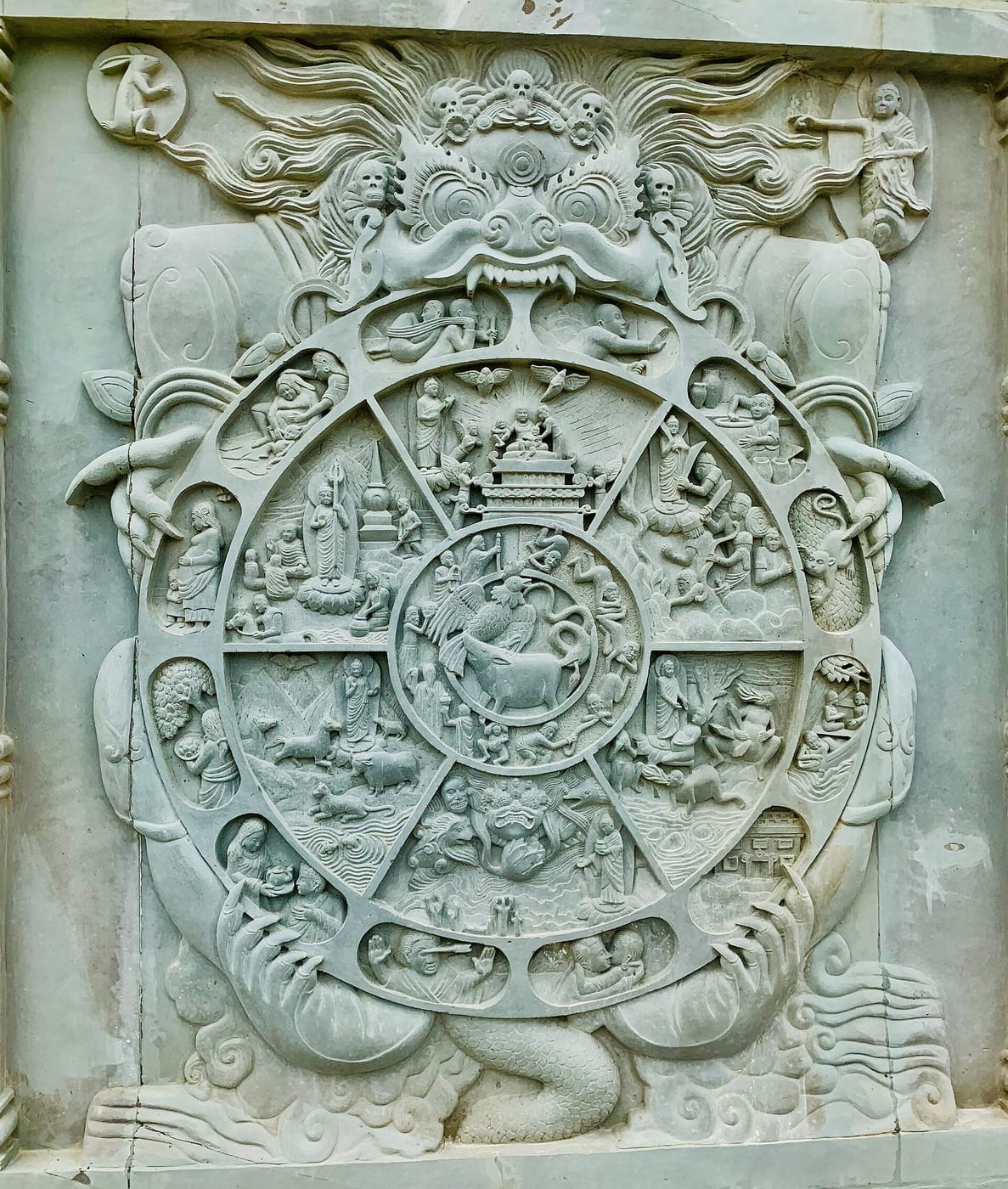
Photograph courtesy of Ms Sarah Welch, CC0
In the traditions that use the term, karma describes cause and effect across time, sometimes across lives. A cruel action shapes what comes next. So does a generous one. The framing is closer to gravity than to a judge handing down sentences.
This matters for how you hold the idea. If karma feels like a threat, you're probably picturing it as reward and punishment handed down from outside. Most sources present it instead as the natural momentum of how you live: what you practice, you become.
Why do so many cultures believe in an afterlife at all?
Because death is the one certainty every human faces, and the mind reaches for meaning around it.
Some of that reaching is comfort. The idea that a loved one continues, in some form, softens an unbearable absence. But afterlife beliefs also do quieter work. They give a culture a way to talk about justice, memory, and how to treat the living.
Notice that most afterlife maps loop back to behavior right now. Journey traditions ask how you lived. Rebirth traditions ask what you're cultivating. Merge traditions ask what you're still clinging to. The afterlife, in nearly every version, ends up as a mirror held up to the present.
How can these ideas help you if you're not religious?
You can use these maps as tools for reflection without believing any of them literally.
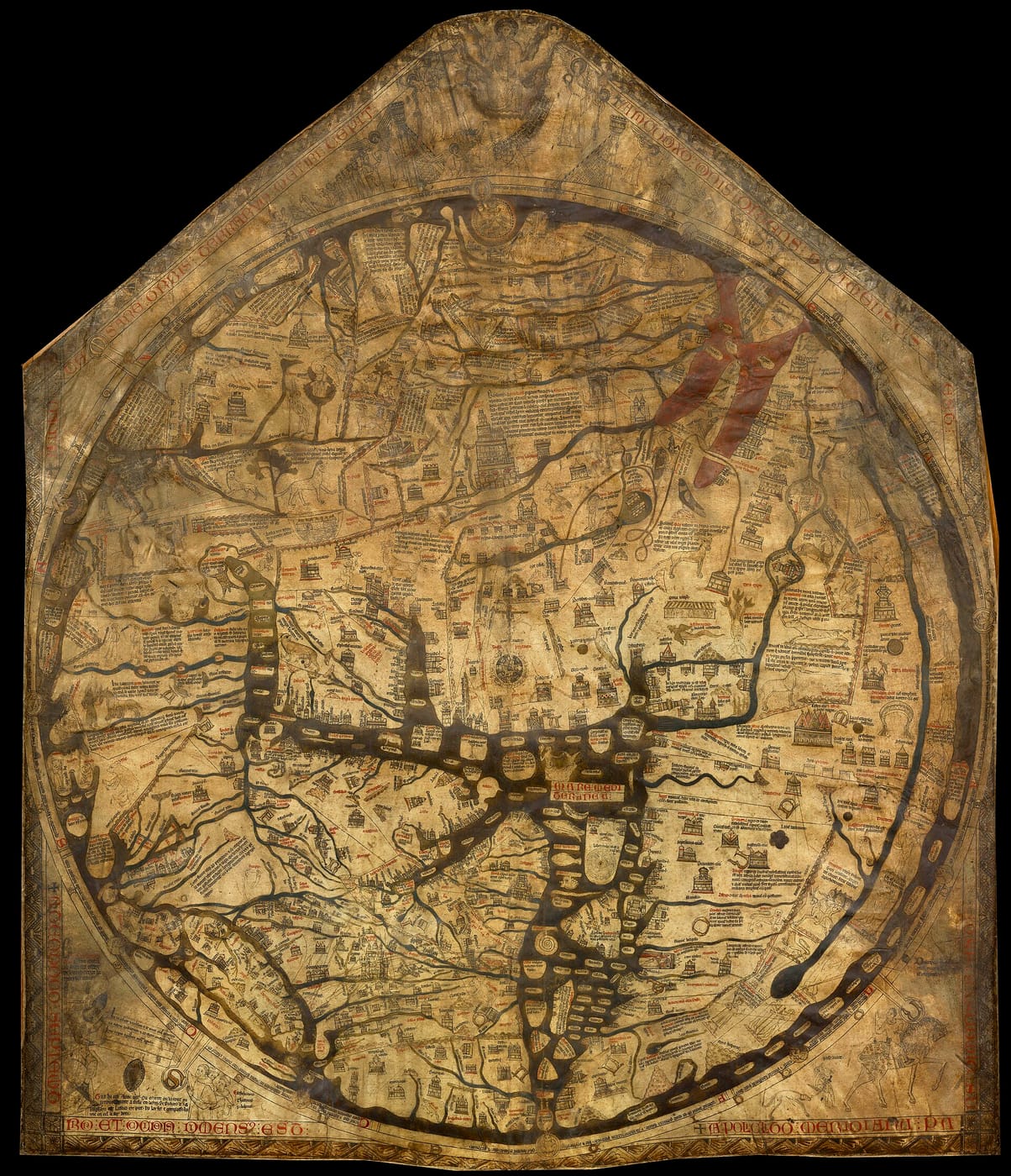
Photograph courtesy of Hereford Cathedral, Public domain
Try this: ask which shape you instinctively reach for when you imagine death. If it's the journey, you may care most about legacy and being remembered well. If it's the return, you may care about growth and unfinished lessons. If it's the merge, you may be longing for rest, belonging, or release from the pressure of being a separate self.
Your instinct is information. It tells you what you value and what you fear, which is worth knowing while you're still very much alive. Sitting with these questions is easier with support, whether that's through our guided meditations or by exploring the method behind how we approach this work.
This is also where a numerology practice can meet the question. In The Healer's Code, using the Pythagorean system and Master Numbers 11, 22, 33, and 44, your numbers are a way to reflect on the themes your life keeps circling: what you may be carrying and what you might be working through. It's not a prediction of your fate, not a guarantee of any outcome, and not a substitute for medical, financial, legal, or psychological advice. It's simply a structured way to look inward. If you want a starting point, you can get your Soul Blueprint and read it as one lens among many, for reflection rather than certainty. You might also enjoy How to Calculate Your Life Path Number and Read What It Means as a next step.
How should you sit with not knowing?
Honestly, and without rushing to a verdict.
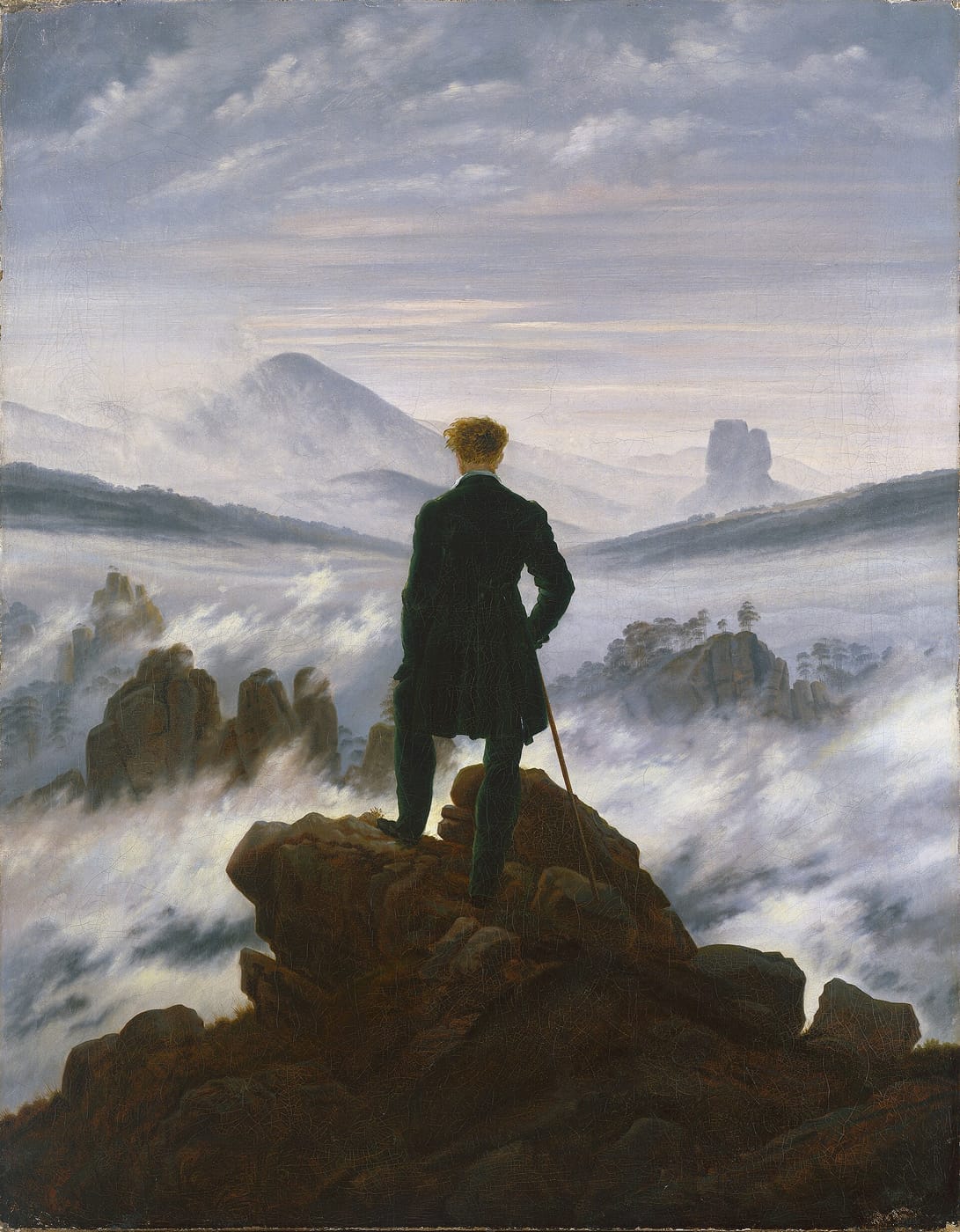
Photograph courtesy of Caspar David Friedrich, Public domain
The traditions took thousands of years and still landed on different answers. That's not a failure. It's a sign the question is bigger than any single certainty, and that the honest posture is curiosity rather than a closed case.
You don't need to pick a final map today. You can let the shapes sit next to each other, notice which one moves you, and let that noticing shape how you treat the people and the days you actually have. If you'd like to explore these questions alongside others, the community is a good place to start.
Sources
Numerologist and Master Teacher
Brian Wroblewski is the founder of The Healer's Code. He reads charts with the Pythagorean system and teaches people how to understand the numbers they were born with.