TL;DR
Cultures around the world describe the afterlife in strikingly different ways: rebirth, judgment, ancestral presence, union, or rest. This guide lays those pictures side by side so you can see the patterns without treating any one as the single correct answer.
Cultures across the world tend to describe the afterlife in a handful of recurring shapes: rebirth into a new life, a journey toward judgment or reward, continued presence among the living as an ancestor, union with something larger, or rest until a future awakening. No tradition owns the picture, and plenty blend several shapes at once. What follows is a map, not a verdict.
The point isn't to decide who's right. It's to notice how people in very different places have tried to answer the same honest question: where does a person go when the body stops.
Which cultures teach that the soul is reborn?
Several of the world's largest traditions describe death as a doorway back into life, not an exit from it.
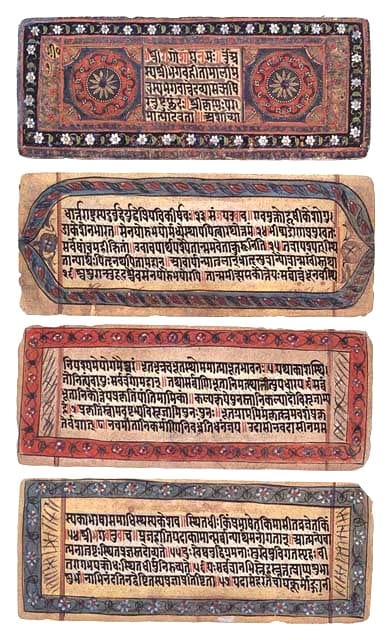
Photograph courtesy of Library of Congress, Southern Asian Collection, Public domain
In Hinduism, the atman, or self, moves from one body to the next across many lifetimes. The conditions of each life are shaped by past action, and the long arc points toward moksha, release from the cycle of rebirth. The idea is old and shows up in texts like the Bhagavad Gita, which compares changing bodies to changing worn-out clothes.
Buddhism describes rebirth without a fixed soul that travels intact. Instead, it teaches that a stream of causes and conditions continues, shaped by intention and action. The aim is nirvana, the end of craving and of the cycle itself.
Many Indigenous and folk traditions hold their own forms of rebirth too, sometimes within a family line, sometimes into the natural world. The details vary a lot, so it's worth treating each tradition on its own terms rather than lumping them together.
Which traditions describe judgment, reward, or a journey?
Another common shape is a passage after death that leads toward some kind of accounting.
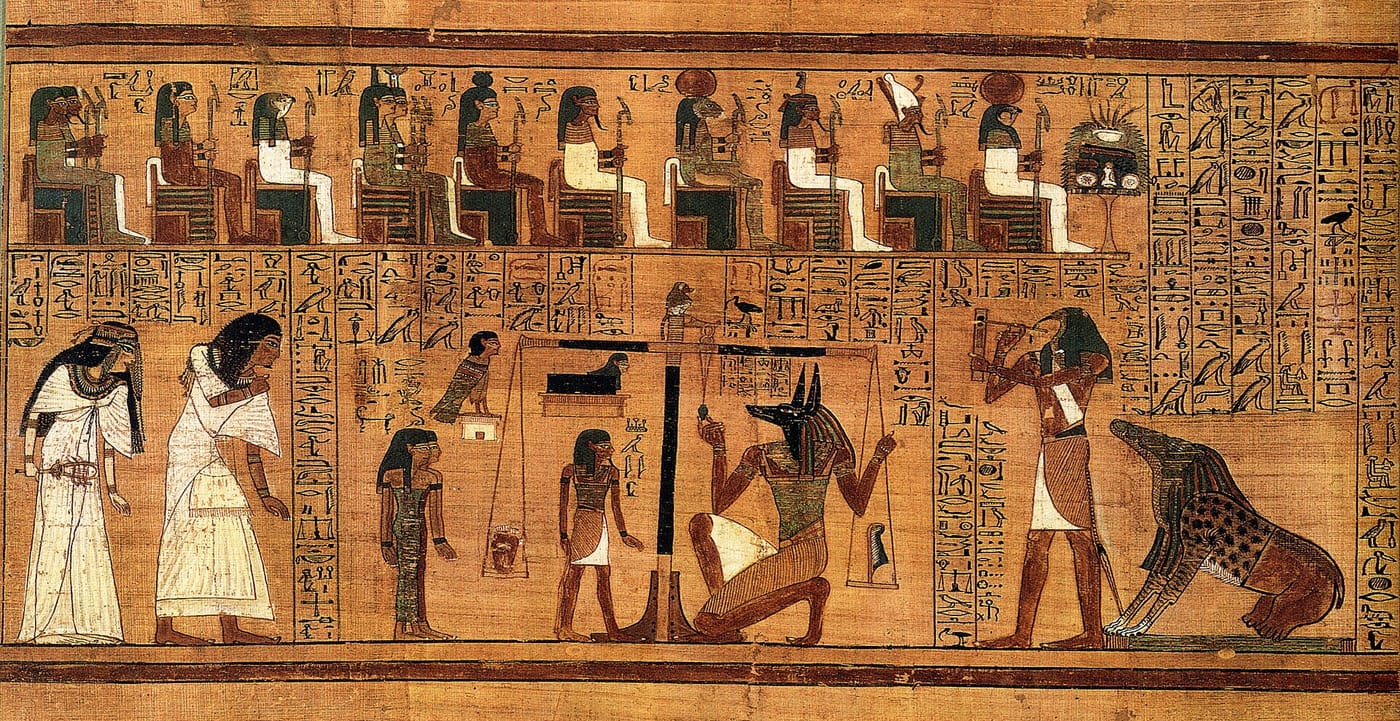
Photograph courtesy of British Museum (photograph of ancient papyrus, c. 1300 BC), Public domain
In many Christian teachings, the soul continues after death and faces judgment, with the hope of resurrection and eternal life with God. Islam similarly teaches a Day of Judgment, with the soul awaiting resurrection and then an accounting of a life's deeds). Judaism holds a range of views, from the older idea of Sheol as a shadowy resting place to later beliefs in resurrection and the world to come, and it has historically put more weight on this life than on detailed maps of the next.
Ancient Egypt offered one of the most vivid journeys on record. The heart of the dead was weighed against the feather of Ma'at, the principle of truth and order, in the presence of Osiris. The texts guiding this passage are collected in what's often called the Book of the Dead.
The Tibetan Buddhist Bardo Thodol describes the bardo, the intermediate state between death and the next birth, as a series of experiences the consciousness moves through. It reads less like a courtroom and more like a guided passage.
Which cultures keep the dead close as ancestors?
For many peoples, the dead don't travel far. They stay part of the family and the community, present and involved.
Across many African traditions, ancestors are honored as active members of the living world. They're remembered, consulted, and cared for, and the bond between the living and the dead is treated as ongoing rather than severed.
In China, reverence for ancestors runs through Confucian practice and daily life, expressed in rites, offerings, and remembrance. In Japan, Shinto and Buddhist customs both make room for the spirits of the dead, honored at home altars and during seasonal observances.
Mexico's Day of the Dead is a well-known public form of this closeness. Families build altars, share food, and welcome the return of loved ones, treating death as a continuation of relationship rather than its end.
What about union, dissolution, or rest?
Some traditions point beyond individual survival altogether.
Certain mystical streams within many religions describe the soul returning to, or merging with, a larger divine whole, so the small separate self dissolves into something greater. This shows up in strands of Hindu, Sufi, and contemplative Christian thought, among others.
Other views describe rest. Some Christian and Jewish teachings speak of the dead sleeping until a future resurrection. And some worldviews, both ancient and modern, hold that consciousness simply ends with the body, and that meaning is found in the life itself rather than in what follows.
Naming this last view matters. A map of afterlife beliefs that pretends everyone expects an afterlife wouldn't be an honest map.
Why do such different pictures keep appearing?
Look across the map and a few patterns stand out. Almost every tradition treats death as a transition rather than a plain full stop, even when the destinations differ sharply. Most tie the next stage to how a life was lived. And many give the living something to do: rites, remembrance, care, preparation.
These shared instincts don't prove any single account true. What they suggest is that the question itself is nearly universal, and the answers reflect the landscapes, histories, and values of the people who shaped them.
If your own curiosity here is really a question about who you are and what your life is for, a Soul Blueprint reading uses numerology as a mirror for that kind of inquiry.
Guided meditation
Sit with the fear of death
The mind cannot argue its way out of this fear. This guided practice meets it a different way.
Listen freeHow should you hold beliefs that contradict each other?
Lightly, and with respect. You don't have to resolve the world's traditions into one answer to learn from them.
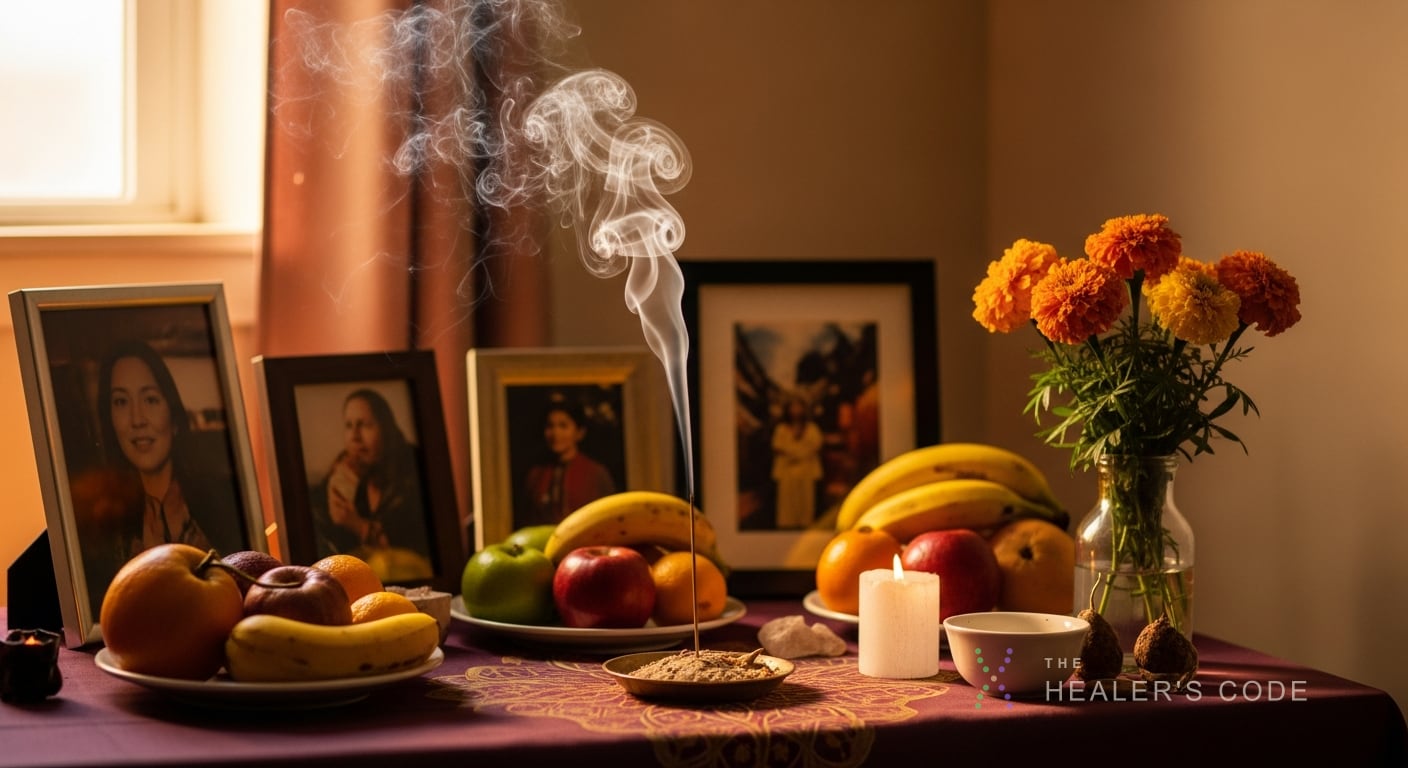
You can notice which picture your own upbringing handed you, and which pictures unsettle or attract you. You can read a tradition's own texts and teachers rather than a summary of them. And you can let the disagreement stand, because the honest truth is that no living person has come back with a confirmed report.
Holding these views side by side, without ranking them, tends to do something quiet and useful. It loosens the grip of fear, widens your sense of what a human life can mean, and brings your attention back to the days you actually have.
Sources
- Bhagavad Gita Verse 2.22 (Sanskrit, translation, and commentary)
- The book of death: weighing your heart - PMC - NIH
- Buddhism in a Nutshell: Anatta or soul-lessness - Buddhanet.net (Venerable Narada Thera)
- Indigenous festivity dedicated to the dead - UNESCO Intangible Cultural Heritage
- Bhagavad Gita Chapter 2 Verse 22
- The Judgement of Ma'at: Weighing of the Heart
- The Weighing of the Heart in the court of Osiris - Egypt Museum
Numerologist and Master Teacher
Brian Wroblewski is the founder of The Healer's Code. He reads charts with the Pythagorean system and teaches people how to understand the numbers they were born with.