
TL;DR
Science cannot give you a verified minute count of awareness after irreversible death. During cardiac arrest, some people who later return report lucid experience, and EEG work including the AWARE studies shows the dying brain is not always instantly silent. The evidence stops at survival, which is why honest research will not sell you a clock.
Title: How Long After Death Are You Aware?
You cannot get a verified minute count of awareness after death. When the heart stops, blood stops reaching the brain within seconds, and ordinary waking consciousness fails with it. Interviews, EEG traces, and the AWARE studies still report that some people describe experience during resuscitation. The dying brain is not always the instant blank that older textbooks described.
No study has timed, minute by minute, how long you persist after the last beat when no one brings you back. Cardiac arrest research maps the body and the electrical activity of the brain. Near-death reports map what some people later say they lived through. The two overlap in places and leave large gaps in others.
The timeline that exists starts at arrest, moves through lost blood flow and CPR, and ends where the instruments go quiet and only the interviews remain. Stay with what was measured, what was recalled, and where both run out. Grade the evidence yourself.
What happens in the minutes after your heart stops?
When your heart stops, blood pressure collapses and the brain is cut off from oxygenated blood within seconds.
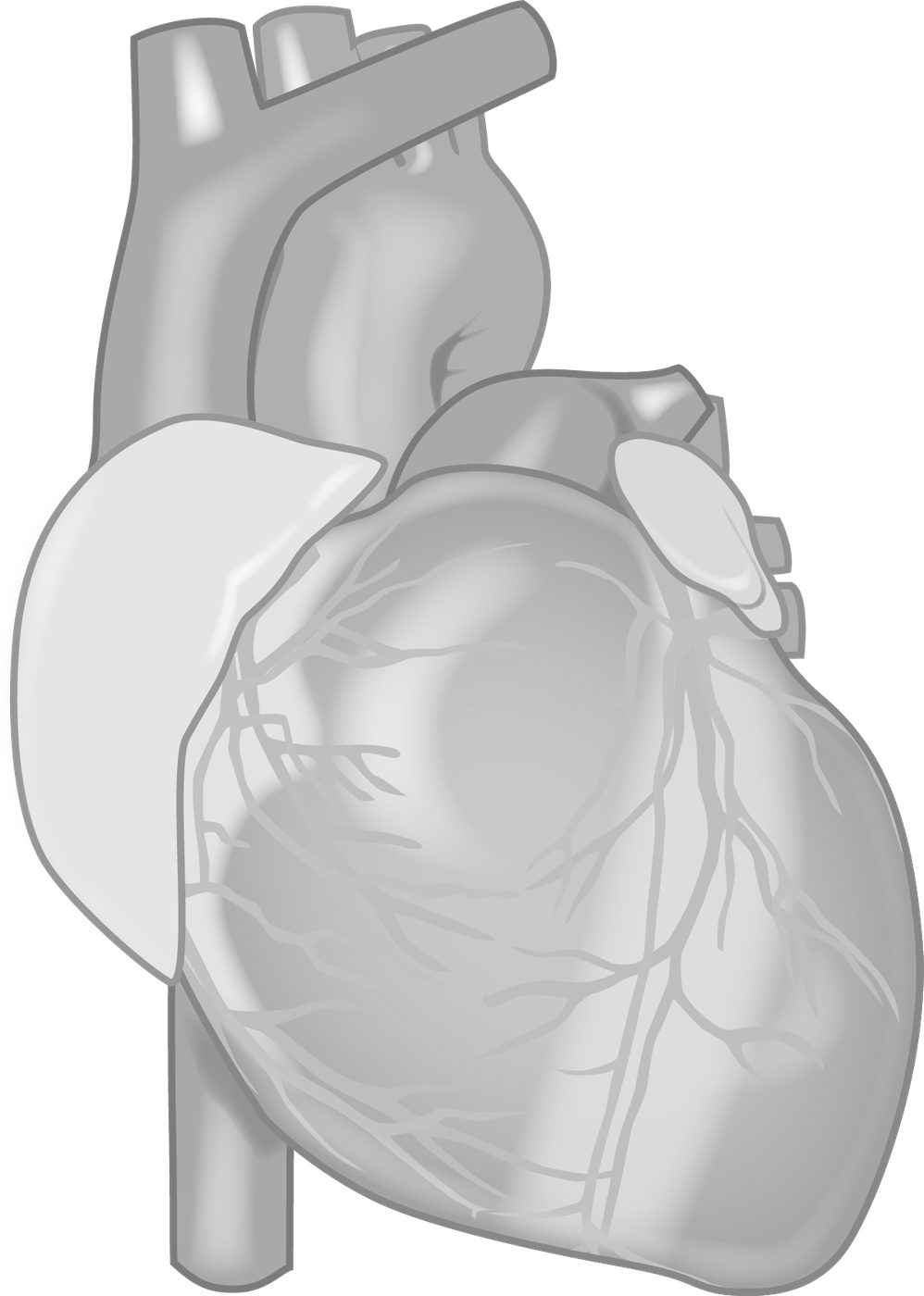
Photograph courtesy of National Institute of Allergy and Infectious Diseases (NIAID), National Institutes of Health, Public domain
Ordinary waking consciousness, the kind you use to read this, does not survive that cut-off in any simple, continuous way.
CPR may start. Chest compressions push some blood back toward the brain, usually much less than a beating heart would send. No pulse, yet not past the point of possible return.
Researchers can study this window because some people come back. Survivors sometimes describe a lucid sequence that did not feel like a dream: a sense of being above the body, a life review, meetings, light, a choice to return. Those reports tell you what memory later held, not a second-by-second clock.
In this research, "after death" means after cardiac arrest in people who were then resuscitated. When resuscitation has stopped and the person does not return, that state sits outside the interview window. No study has a witness from that side.
What do EEG studies show about the dying brain?
EEG reads electrical activity at the scalp. In many cardiac arrest cases, the trace becomes flat once blood flow fails. That is why textbooks long treated the arrested brain as immediately unconscious.
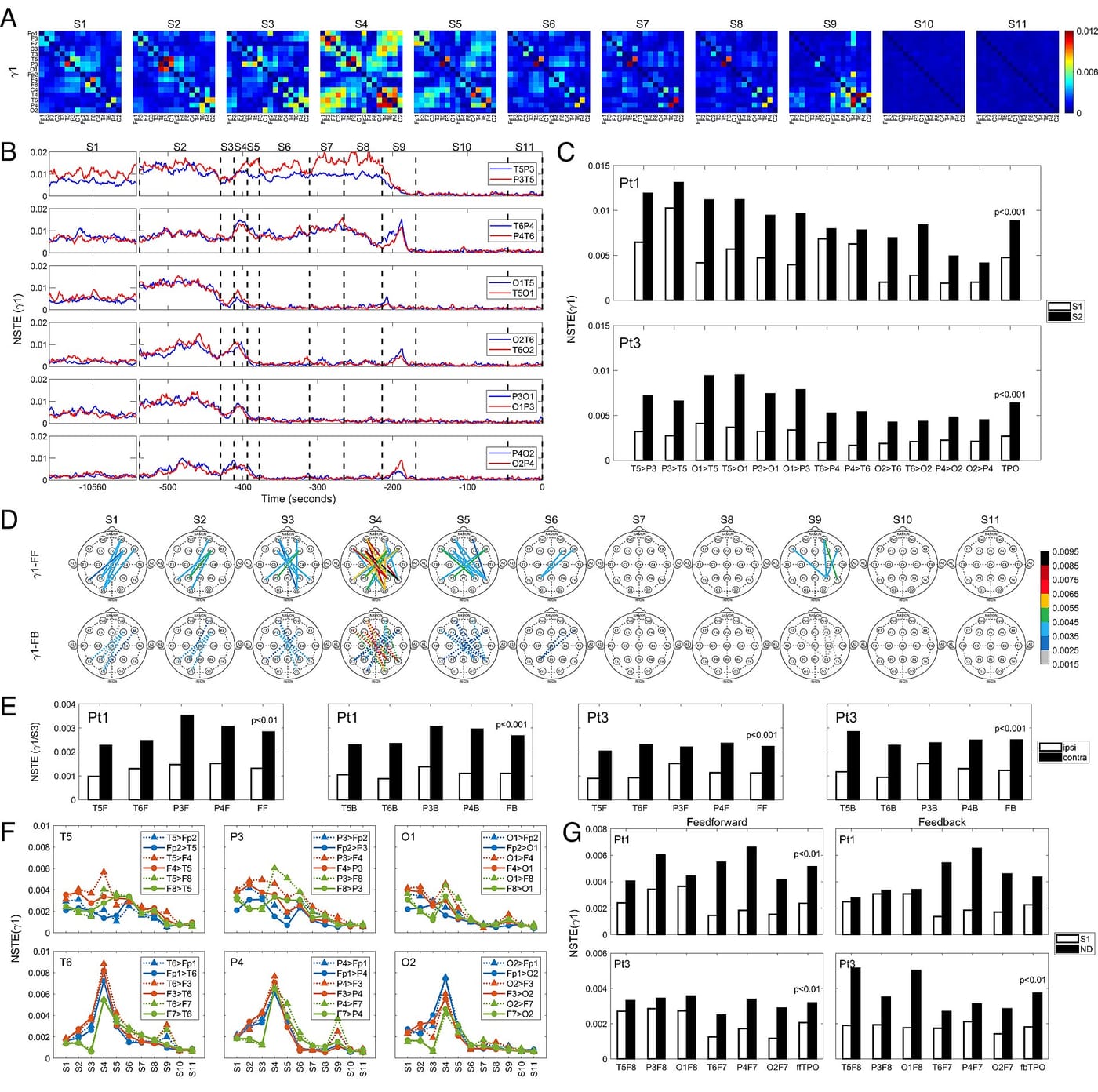
Photograph courtesy of Authors of the 2023 PNAS study (Gang Xu et al.), CC BY 4.0
A handful of rare recordings have complicated the picture. A 2022 case report in Frontiers in Aging Neuroscience, and a 2023 paper in Proceedings of the National Academy of Sciences, described surges of high-frequency gamma activity and increased coupling across brain regions in dying patients who had EEG at the end of life. Similar frequencies appear during attention, memory, and conscious processing in a living brain, and what they mean in a dying brain is still argued.
These traces show that the dying brain can still produce patterned activity, sometimes after the heart has stopped, in the small number of people who were wired at the right moment. A scalp electrode cannot prove that a self was watching.
EEG during CPR, in the AWARE II study, also found brain-wave signatures in some patients that would be compatible with consciousness in a healthy person, even after long arrest. An electrode cannot hand you inner life.
What did the AWARE studies actually find?
The AWARE study, led by Sam Parnia and published in Resuscitation in 2014, followed hospital patients in cardiac arrest. Researchers interviewed survivors and tested whether anyone could recall hidden visual targets placed high in the room, a check on claims of seeing the scene from above.

Photograph courtesy of NYU Langone Medical Center, CC BY-SA 3.0
A later study, AWARE II, published in Resuscitation in 2023, added EEG and cerebral oxygenation measurements during CPR.
Both found that most survivors remembered nothing from the arrest. A smaller group described lucid, structured experiences from the period when the heart was stopped or being pumped by hand. AWARE included at least one detailed report whose observations of resuscitation matched events timed to a period when awareness was not expected. AWARE II reported EEG activity during CPR in frequency bands linked, in healthy people, to consciousness, and a portion of interviewed survivors described recalled experiences of death.
The hidden-image tests did not come back positive, so you cannot treat out-of-body sight as a proven extra sense. These remain among the most carefully designed hospital studies on the question. The sample of people who both survive and can be interviewed is still small, and recalled experience is not proven perception of the room.
Where does the data end?
The data ends at survival, because every story in these studies belongs to someone who returned. You have no direct testimony from irreversible death.

You also have no agreed inner timeline in minutes. Subjective time in crisis is elastic. A person can feel they lived a long sequence in a period the clock called brief. EEG can show activity without telling you what, if anything, it was like to be that brain.
After CPR stops and the person is not revived, science has almost nothing to say about lingering awareness. Cellular processes do not all halt at once, which is a fact about tissue, not a proof that you remain present as a witness for minutes or hours.
Where people fill that gap with certainty, they have left the studies and entered belief. You may hold a spiritual view without pretending the AWARE papers settled an afterlife.
How should you sit with an unanswered timeline?
If you came here because you, or someone you love, came back from that line, the research will not time your experience for you. It can tell you that you are not foolish for taking it seriously, because lucid, structured reports after cardiac arrest are a documented human event.

If the open ending leaves you raw, give yourself a simple, repeatable quiet. Guided meditations are one way to sit with the question this week without forcing a conclusion.
Read one primary paper if you want the source in your hands: AWARE II in Resuscitation (2023), or the 2014 AWARE paper in the same journal. Notice where the authors themselves mark the limits. Then close the tab and step outside. Grade the evidence so you stop living inside other people's oversell.
Sources
Numerologist and Master Teacher
Brian Wroblewski is the founder of The Healer's Code. He reads charts with the Pythagorean system and teaches people how to understand the numbers they were born with.