TL;DR
Panpsychism says some form of experience may be basic to matter, not a late trick of brains. It does not say the universe is a person, and it does not replace science or practice. Contemplative traditions meet it in the simple work of noticing awareness, which you can do this week without signing on to a cosmology.
Panpsychism treats some form of experience as a basic feature of the physical world, not a late product of brains. A stone does not have thoughts like yours, and the universe is not a person with a biography. Contemplative traditions often arrive at a related picture from the inside of practice. Panpsychism tries to say it in the language of philosophy and science.
You are being asked to consider whether consciousness might be more like mass or charge: present in some form wherever there is physical stuff, and only organized into a self when a nervous system is complex enough.
That is the honest center of the question. The rest of this piece is what that view can hold, how it sits next to meditation and the hard problem, and what the argument supports. Nobody has a settled empirical result here.
What does panpsychism actually claim?
Panpsychism is the view that experience is not a special extra that brains add to the world.
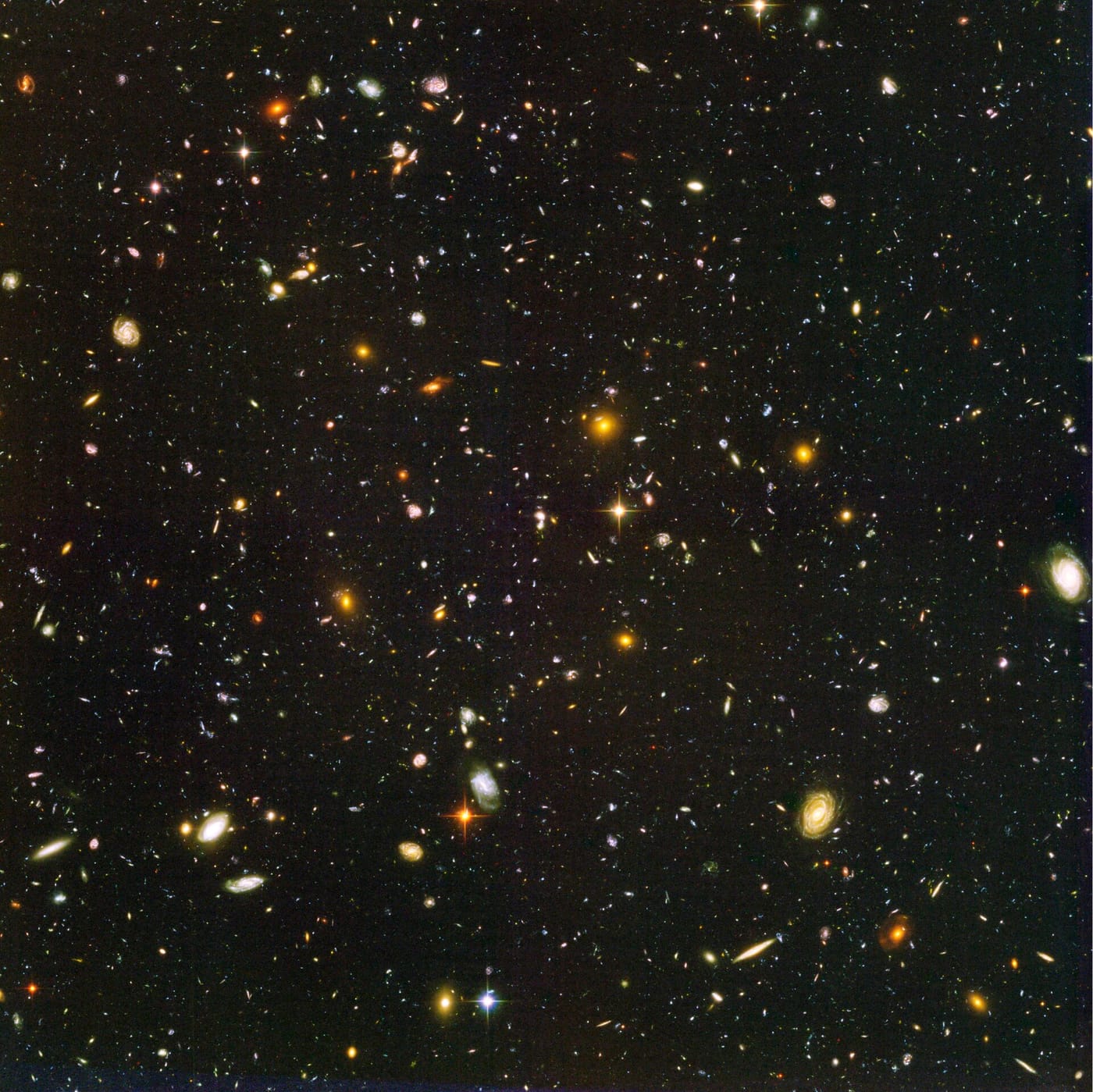
Photograph courtesy of NASA, ESA, and S. Beckwith (STScI) and the HUDF Team, Creative Commons
Some form of it is already there, in whatever the physical world is made of.
You can hold this without thinking a rock is daydreaming. In the version worth your time, "mind" means the bare fact of experience: that there is something it is like, however faint. Personality, memory, and a stream of inner talk are heavier, later things. A particle or a field would have, at most, an extremely simple kind of that. Your mind would be what happens when countless such simples are organized in a living brain.
If physics describes how things behave, panpsychism asks what those things are such that, in you, behavior comes with an inner side. You already know that inner side in the one case you cannot doubt. The proposal is that you are a complex arrangement of something that was never fully empty of experience to begin with.
Galen Strawson and Philip Goff have argued, in different ways, that if you take both physics and experience seriously, this bet becomes hard to avoid. See Strawson, “Realistic Monism: Why Physicalism Entails Panpsychism,” Journal of Consciousness Studies 13, no. 10–11 (2006); Goff, Galileo’s Error: Foundations for a New Science of Consciousness (Pantheon, 2019). Treat it as a claim about what exists, offered because the usual story has a seam that mapping the brain has not closed.
What does panpsychism not claim?
People hear "the universe is conscious" and picture a sky-god with moods.
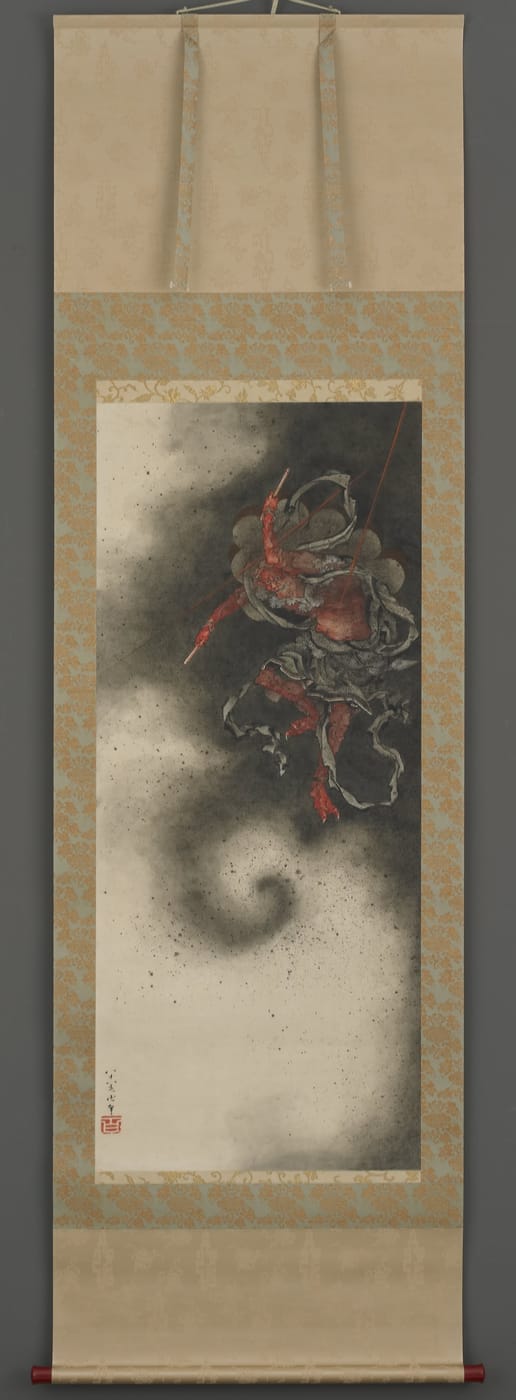
Photograph courtesy of Freer Gallery of Art, Smithsonian Institution, Creative Commons
Careful panpsychism is talking about building blocks.
Some writers defend cosmopsychism, the idea that the whole cosmos is the primary subject and that your mind is a localized eddy in that field. Even then, the claim is about the structure of experience, not about a being who owes you signs, diagnoses, or a plan for your week.
If someone uses panpsychism to sell you destiny, a medical cure, or a financial forecast, they have left the philosophy. Come back to the modest version: experience may go all the way down. Strange enough on its own, without theater.
The combination problem remains. If the smallest parts of the world have tiny experiences, nobody has a settled account of how those become the single, centered feel of your life. Honest writers leave that problem on the table.
Want this read on your own numbers?
Your Blueprint turns these ideas into a personal map, calculated from your name and birth date.
How does the hard problem of consciousness fit in?
The hard problem, as David Chalmers framed it in his 1995 essay “Facing Up to the Problem of Consciousness” (Journal of Consciousness Studies 2, no. 3: 200–219), is this: even if you map every neuron, you still have not explained why there is something it is like to be you.
Photograph courtesy of DannyGolcman, Creative Commons
Physical description is brilliant at structure, function, and cause, and quiet about interiority. Panpsychism is one reply: stop waiting for experience to appear from non-experience. Let experience be there from the start, and let brains organize it.
You do not have to accept panpsychism to take the hard problem seriously. Emergence is still a live option. So is the view that we have misdescribed the physical. Panpsychism is one attempt to keep both physics and the fact of experience, without pretending the second will pop out of the first if you wait.
Neuroscience can map correlates of experience with real skill, and still has not produced experience from a description that contains none. That tension is live. Panpsychism names it without running an experiment that settles it.
How does panpsychism sit beside contemplative traditions?
Many contemplative paths train you to notice awareness itself, not only the contents that pass through it. That practice does not require a theory that electrons feel. It does require that you stop treating consciousness as a rumor.
You already have a laboratory. It is the fact that you are aware right now. Contemplative traditions did not wait for a metaphysics paper. They trained attention, ethics, and the willingness to see the self as less solid than it pretends to be.
In Advaita Vedanta, consciousness is spoken of as the ground of appearance, not a product of the body. In some Buddhist schools, you investigate mind as the condition in which world and self are known, without adding a cosmic personality. Christian mysticism and Sufi practice also turn toward a presence that is not identical with your private thoughts. Do not flatten every path into one slogan. Some deny a universal self. Some insist on it.
Panpsychism is an outside-in story and contemplative work is inside-out; they can rhyme without being the same song. Where they meet is practical: both refuse to treat consciousness as a side effect you can ignore. This week, use guided meditations to rest in that noticing. Let panpsychism be background music, not the lyrics you have to memorize.
What can you do with this idea this week?
Sit for ten minutes and attend to experience as experience: sound, breath, the simple fact that there is a scene at all.

The thing you can test this week is awareness here, not a theory of the cosmos. Feel the breath. Hear whatever is sounding. When the mind jumps to "the universe is alive and it loves me" or "this is all nonsense," let both of those be thoughts. Return to the scene.
If you want reading, choose one philosopher who argues the case and one contemplative source, not a feed of cosmic claims. Then close both and come back to the room you are in.
Kindness toward animals, plants, and people does not require you to settle the metaphysics. If the question makes you more careful with life, that is already a good use of it. If it makes you vague and unaccountable, drop the theory and keep the practice.
Sources
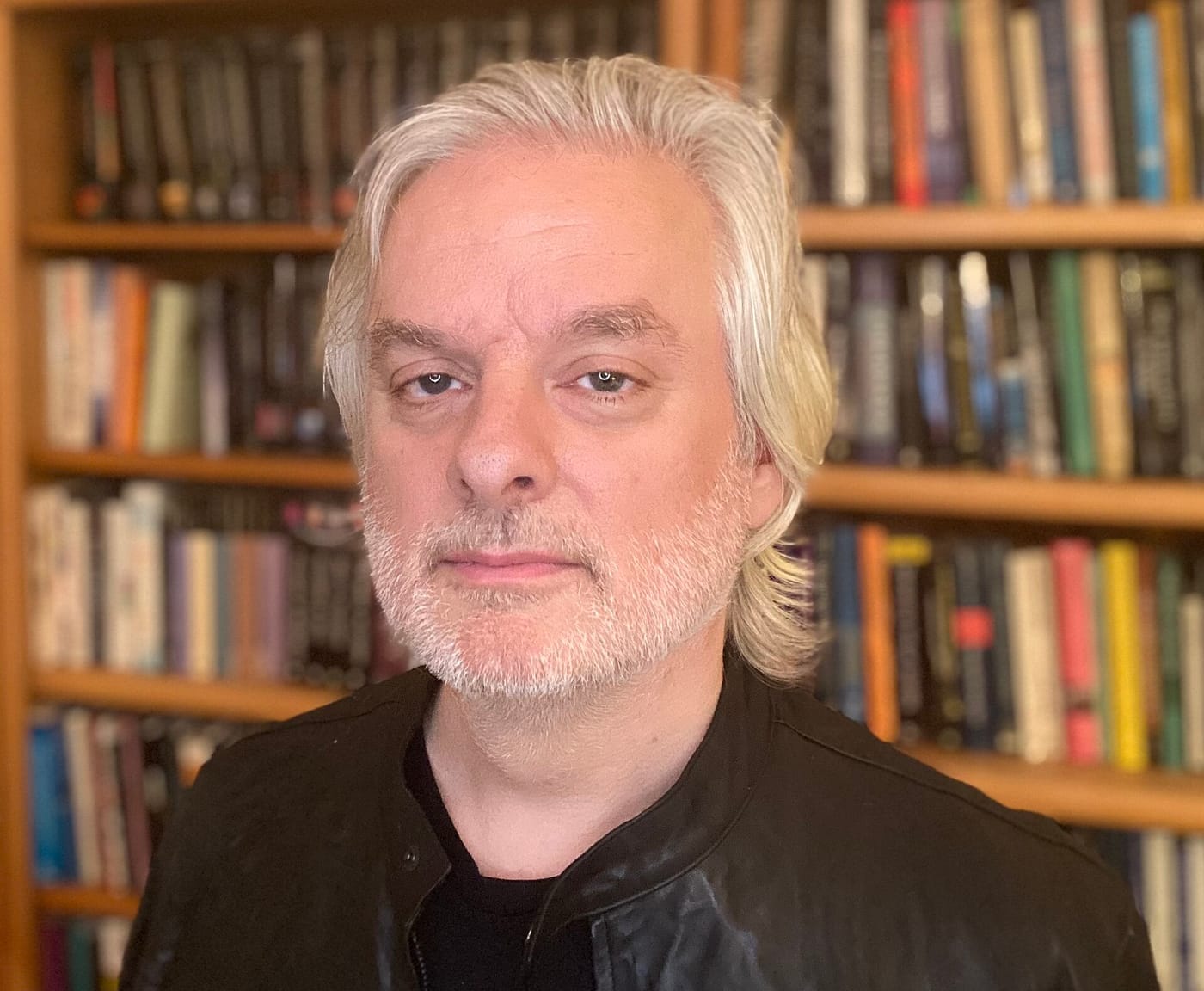
Brian Wroblewski
Numerologist and Master Teacher
Brian Wroblewski is the founder of The Healer's Code. He reads charts with the Pythagorean system and teaches people how to understand the numbers they were born with.