TL;DR
The hard problem of consciousness is the question of why physical brain activity is accompanied by felt experience rather than happening "in the dark." Finding the brain region behind a color or a memory answers a different, easier question: which mechanisms correlate with which experiences. Explaining the correlation is not the same as explaining why there is any feeling there at all.
The hard problem of consciousness asks something simple and maddening: why is any physical process in your brain accompanied by a felt experience at all? You can map every neuron that fires when you see red, and you still haven't explained why seeing red feels like something, instead of being handled silently, the way your body regulates blood pressure without you ever noticing. Finding the brain region tells you where and how. The hard problem asks why there's a "what it is like" in the first place.
That gap is why pointing to a brain area doesn't close the case.

It answers a real question. Just not the one being asked.
What is the hard problem of consciousness?
The philosopher David Chalmers named it in the 1990s, in his 1995 paper "Facing Up to the Problem of Consciousness." He split the territory into what he called the "easy problems" and the "hard problem."

Photograph courtesy of HerbertErwin, CC BY-SA 3.0
The easy problems aren't easy in daily life. They cover how the brain discriminates colors, integrates information, focuses attention, controls behavior, and reports on its own states. They're "easy" only in the sense that we know what a solution looks like: a mechanism.
The hard problem is different in kind. It asks why all that mechanical processing comes with subjective experience attached. Why is there something it is like to be you, tasting coffee, feeling grief, watching a sunset? A machine could, in principle, process the same information and produce the same behavior with no inner life at all. So why isn't that what happens in you?
Philosophers call the raw felt qualities of experience "qualia": the redness of red, the ache of a headache, the particular tone of a friend's voice. The hard problem is the problem of qualia.
Why doesn't finding the brain region solve it?
Because a correlation isn't an explanation of why the experience exists.
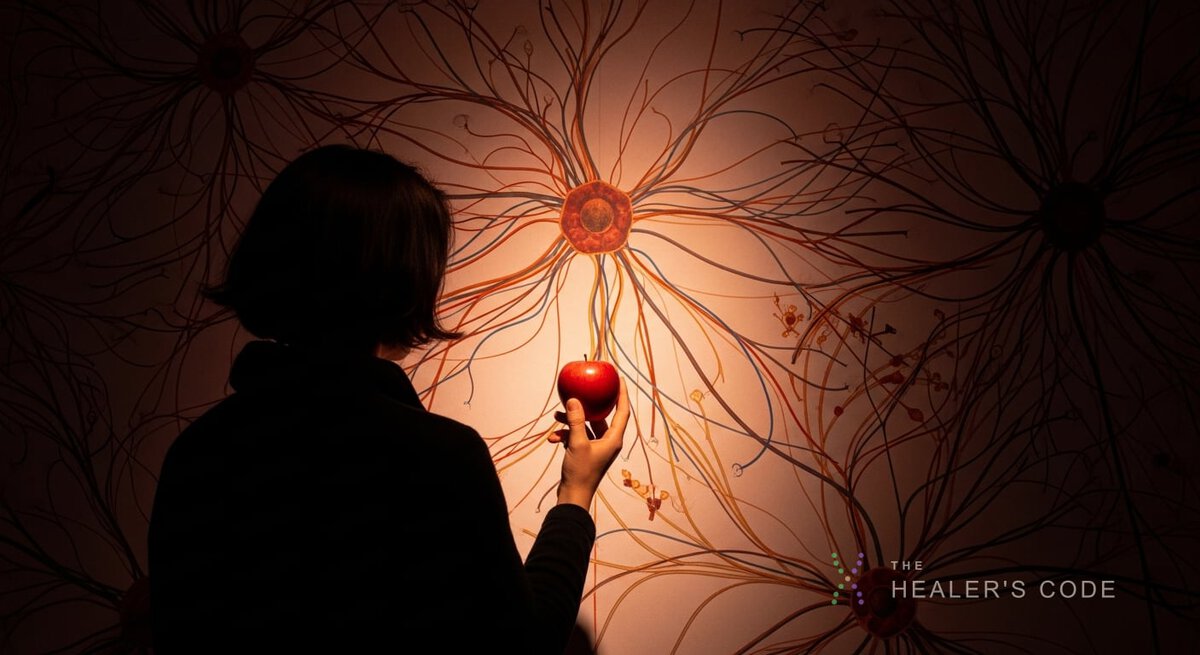
Say researchers find that a specific pattern of activity in your visual cortex shows up whenever you see red. That's a real finding. It tells you which brain state goes with which experience. Scientists call these neural correlates of consciousness, and mapping them is careful, valuable work.
But look at what the correlation doesn't touch. It doesn't tell you why that firing pattern produces an experience instead of nothing at all. You could still ask: why doesn't that exact pattern ever occur with no feeling attached? Nothing in the physical description forces an answer either way.
Here's the plain version. Imagine a complete wiring diagram of the brain, down to the last connection, with every part's function labeled. Someone born unable to see color could study that diagram for a lifetime and learn every fact about the mechanism. They still wouldn't know what red looks like. That missing piece is the hard problem in a single image.
For where the research actually stands rather than where the argument does, see what science understands about consciousness.
Isn't consciousness just what the brain does?
Maybe. That's a defensible position, and plenty of serious researchers hold it. But saying it doesn't make the puzzle vanish.
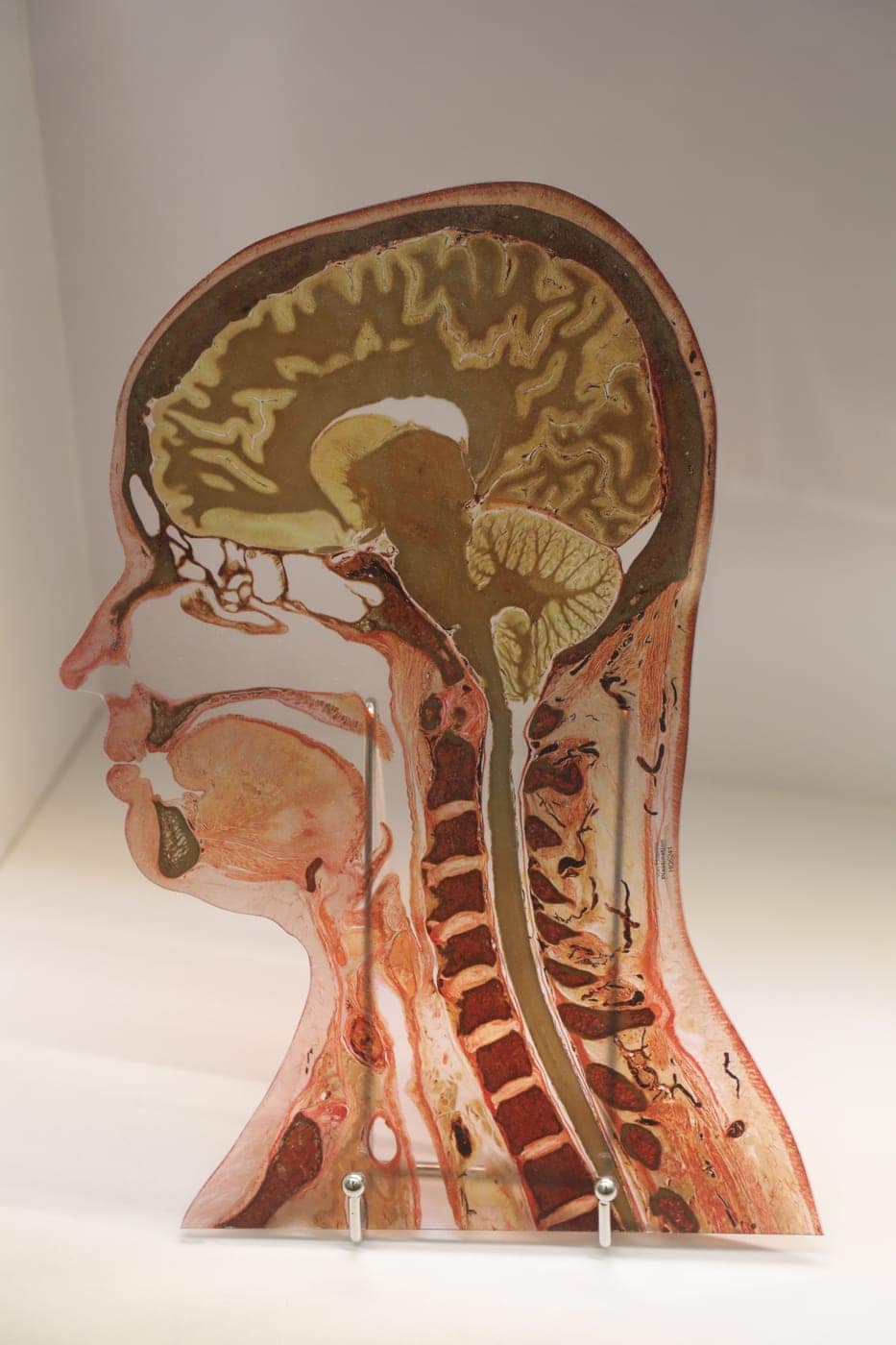
Photograph courtesy of Caldwbr, CC BY-SA 4.0
Even if consciousness is entirely produced by the brain, and there's good reason to think experience depends on the brain, you still owe an account of how physical activity gives rise to felt experience. "The brain does it" names the source. It doesn't describe the bridge.
Compare it to water. Once you know water is H2O and how those molecules behave, wetness is fully accounted for. There's no leftover mystery about why H2O feels wet. Many hope consciousness will end up the same way: that a future theory will make the felt quality feel just as obviously explained. Others argue there's a stubborn residue here that no amount of mechanism will dissolve. That debate is live, and it isn't settled.
The honest summary: we don't currently have a theory that explains why physical processes come with experience attached, and reasonable people disagree about whether we ever will.
What are the main ways people try to answer it?
There's no consensus, but the serious attempts tend to sort into a few camps.

Photograph courtesy of Frans Hals, Public domain
Physicalist approaches hold that experience is entirely physical, and that once neuroscience matures, the hard problem will look less hard, or dissolve as a confusion. On this view, the "gap" is a feature of our current ignorance, not the world.
Illusionist approaches take a sharper line: the felt "extra something" is itself a kind of introspective misread. Consciousness feels non-physical to us, but that feeling is what needs explaining, not a further fact about the world.
Panpsychist approaches go the other direction. They suggest experience, in some very basic form, is a fundamental feature of matter, the way mass or charge is. Complex minds get built from simple experiential ingredients. This sidesteps the gap by never starting with purely "dead" matter.
Dualist and property-dualist approaches hold that experience is a genuinely distinct feature of reality, not reducible to physical description, even while depending on the brain.
Each has costs. None has won. Being clear that the question is open does more for you than pretending one camp has closed it.
Why does this matter for your inner life?
Because it changes how you hold the tools you use to understand yourself.

Photograph courtesy of Andy Li, CC0
If science can't fully explain why your experience exists, that's a reason for humility all around, not a license to believe anything you like. It means your first-person life, the texture of your attention, your moods, your sense of meaning, counts as real data. Not a distraction from the "real" story happening in neurons.
Practices built around attention and reflection meet you exactly where the hard problem lives: inside experience itself. That's the ground of quiet observation you can practice with guided meditations, where you watch experience directly instead of just theorizing about it.
What can you honestly say you know?
You can say brain activity and conscious experience are tightly linked, and that specific experiences track specific neural states. That much is well supported.
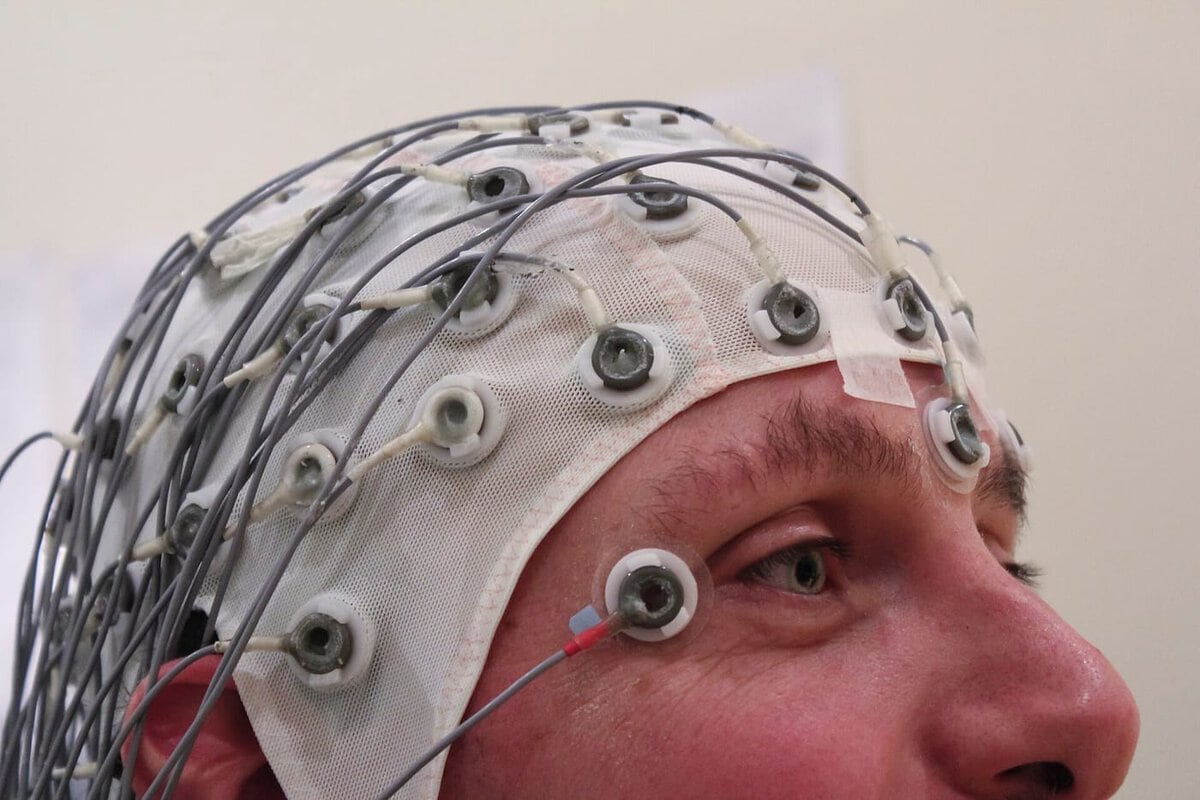
Photograph courtesy of Chris Hope, CC BY 2.0
You can say we don't yet have an accepted explanation for why any of that activity feels like something. That's the hard problem, and it stays open.
And you can hold both without anxiety. Not knowing the deepest answer doesn't make your experience less real. If anything, it makes it the most direct thing you have.
Sources
- Formal definition of numerology and its Pythagorean theoretical basis (Encyclopaedia Britannica)
- Facing Up to the Problem of Consciousness (David J. Chalmers, 1995)
- Qualia (Stanford Encyclopedia of Philosophy)
- A framework for consciousness (Crick & Koch, Nature Neuroscience, 2003)
- Panpsychism (Stanford Encyclopedia of Philosophy)
- Dualism (Stanford Encyclopedia of Philosophy)
Numerologist and Master Teacher
Brian Wroblewski is the founder of The Healer's Code. He reads charts with the Pythagorean system and teaches people how to understand the numbers they were born with.