
TL;DR
Many traditions describe an inner faculty that seems to know things you never consciously studied. This article looks at six of them, using each tradition's own vocabulary as it is used within that tradition, without translating one into another or ranking them. The point is not to prove they are the same thing, but to notice how carefully each culture named this experience.
The Knowing You Did Not Learn: Six Traditions Name the Same Quiet Voice
You've had the experience. A certainty shows up with no chain of reasoning behind it. You knew something was off in a room before anyone spoke. You read a person correctly the moment you met them. Plenty of traditions have noticed this and given it a name, and the names are not interchangeable. Below are six, each described in its own terms, so you can hear the differences instead of blurring them into one word.

One note before we start. These are living vocabularies inside living traditions, each with its own internal arguments and schools of thought. Treating them as synonyms flattens centuries of careful thinking. The goal here isn't to translate one into another, or to crown a winner. It's to sit with six ways of paying attention, described in broad strokes rather than settled doctrine.
What does Hinduism call this inner knowing?
In much of Hindu thought, the term you'll run into is buddhi. In the Samkhya framework and the language of the Bhagavad Gita, buddhi is usually described as the faculty of discernment, the higher intellect that discriminates and decides, distinct from manas (the processing mind) and ahamkara (the sense of "I").

Photograph courtesy of Palagiri, CC BY-SA 3.0
Buddhi isn't just a feeling that shows up uninvited. It's more often described as the clearest instrument of the inner apparatus, the part that perceives rightly once it's no longer clouded. When people talk about sharp intuitive judgment in this frame, buddhi is usually the word on the table.
Keep a separate idea nearby: antahkarana, the inner instrument as a whole, of which buddhi is one function. Don't collapse the two. Buddhi is a specific faculty, not a catch-all for "the inner voice."
What is the term in Buddhist thought?
Tread carefully here, since Buddhism is many traditions and the vocabulary shifts underfoot. One term that comes up often is prajna (Pali: panna), usually rendered as wisdom or insight. In Buddhist usage, prajna gets distinguished from mere information; it's described as a direct seeing into the nature of things, cultivated through practice rather than handed to you unearned.
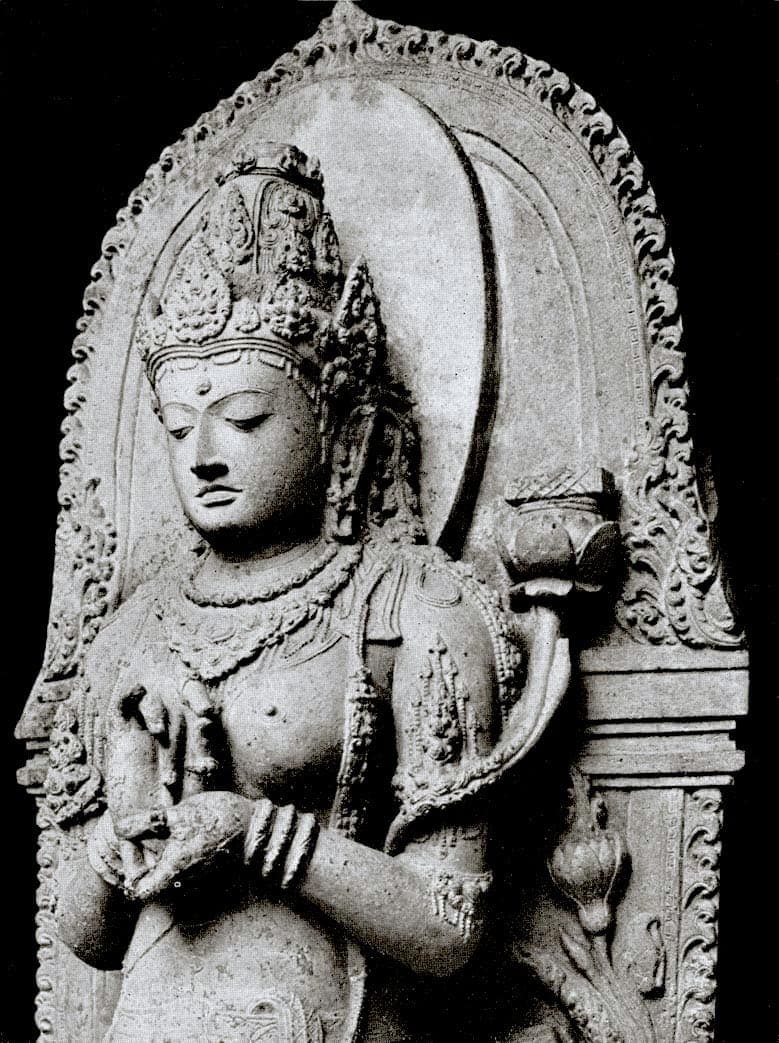
Photograph courtesy of Indische Kunst, Berlin 1925, Public domain
That distinction matters. Prajna is treated as the fruit of a path, discussed alongside ethical conduct (sila) and meditative concentration (samadhi). It's knowing, but knowing that ripens over time.
A separate word, vijnana, means consciousness or discriminative awareness, and it isn't the same thing as prajna. If you take one idea from this section, let it be this: in many Buddhist frames, the deepest knowing is trained, not simply received.
What do Sufi and broader Islamic traditions name it?
In Sufi vocabulary you'll meet qalb, the heart, understood not as the muscle but as a spiritual organ of perception. Alongside it sits ma'rifa, an experiential, intimate knowledge of the divine, set apart in this tradition from ilm, discursive or acquired knowledge.

The line between ma'rifa and ilm is central to how these words get used. Ilm is what can be taught, and taught again. Ma'rifa is knowledge tasted directly, tied in Sufi writing to the purified heart. When a Sufi describes knowing something without having learned it, this is usually the vocabulary in play.
You may also come across firasa, a kind of perceptive insight or discernment. Keep these words in their own lane. Ma'rifa, firasa, and qalb are related in this tradition but they are not one flat concept.
Is there a word for it in Jewish mysticism?
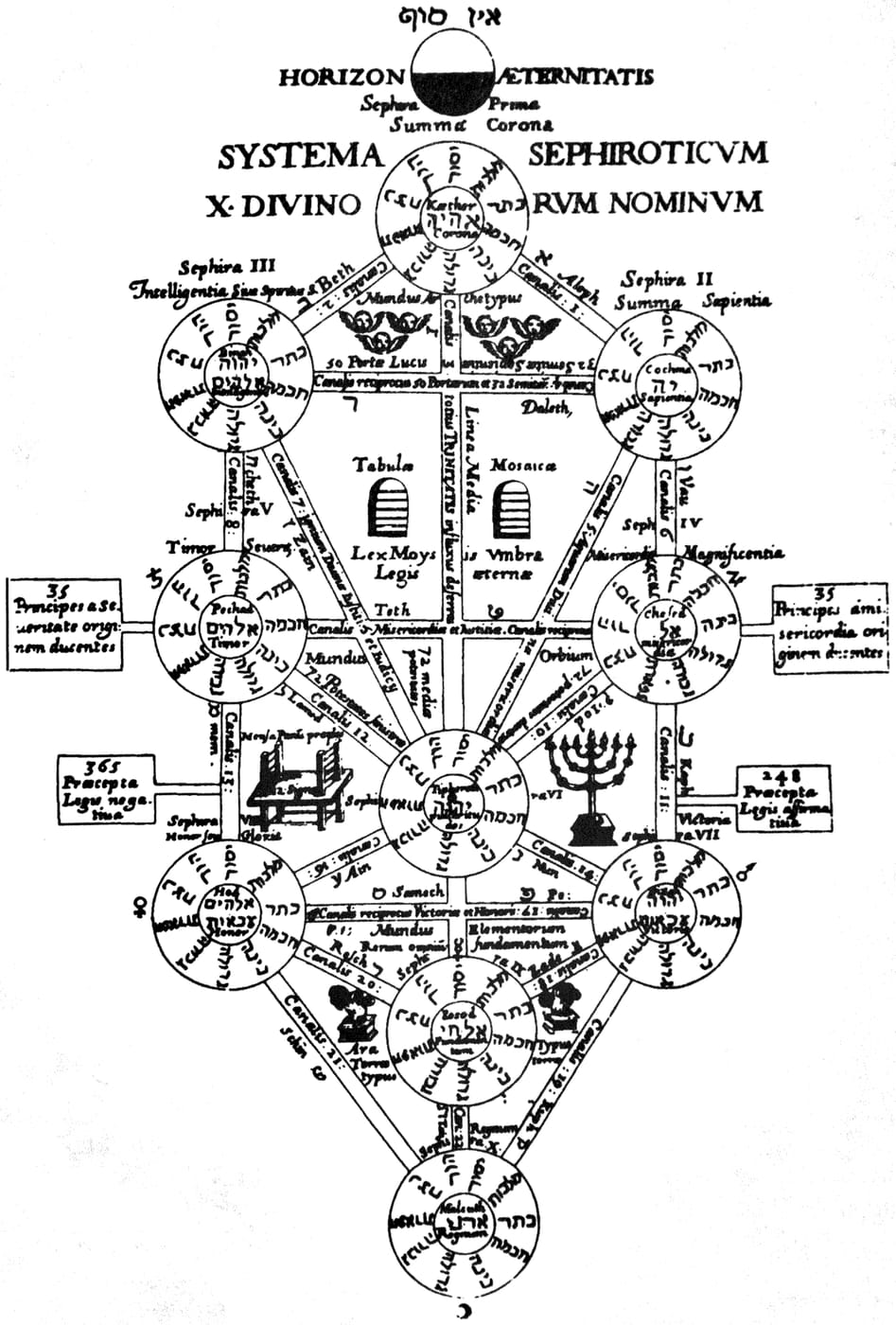
In Kabbalah, the vocabulary of the sefirot includes Binah and Chokhmah. Chokhmah is the flash of insight, the seed of an idea before it takes shape. Binah is the faculty that catches that flash and works it into understanding.

Photograph courtesy of Christian Knorr von Rosenroth / Wikimedia Commons, Public domain
So in this frame, the sudden knowing and the slow working-out of it get different names entirely. Chokhmah gets compared to a lightning strike of insight. Binah is the deliberate comprehension that follows after.
These are technical terms inside a specific mystical system, not casual stand-ins for intuition. Used loosely, they lose their edge. Used carefully, they name two distinct movements of the mind, at least as this tradition frames them.
What about Taoism and Chinese thought?
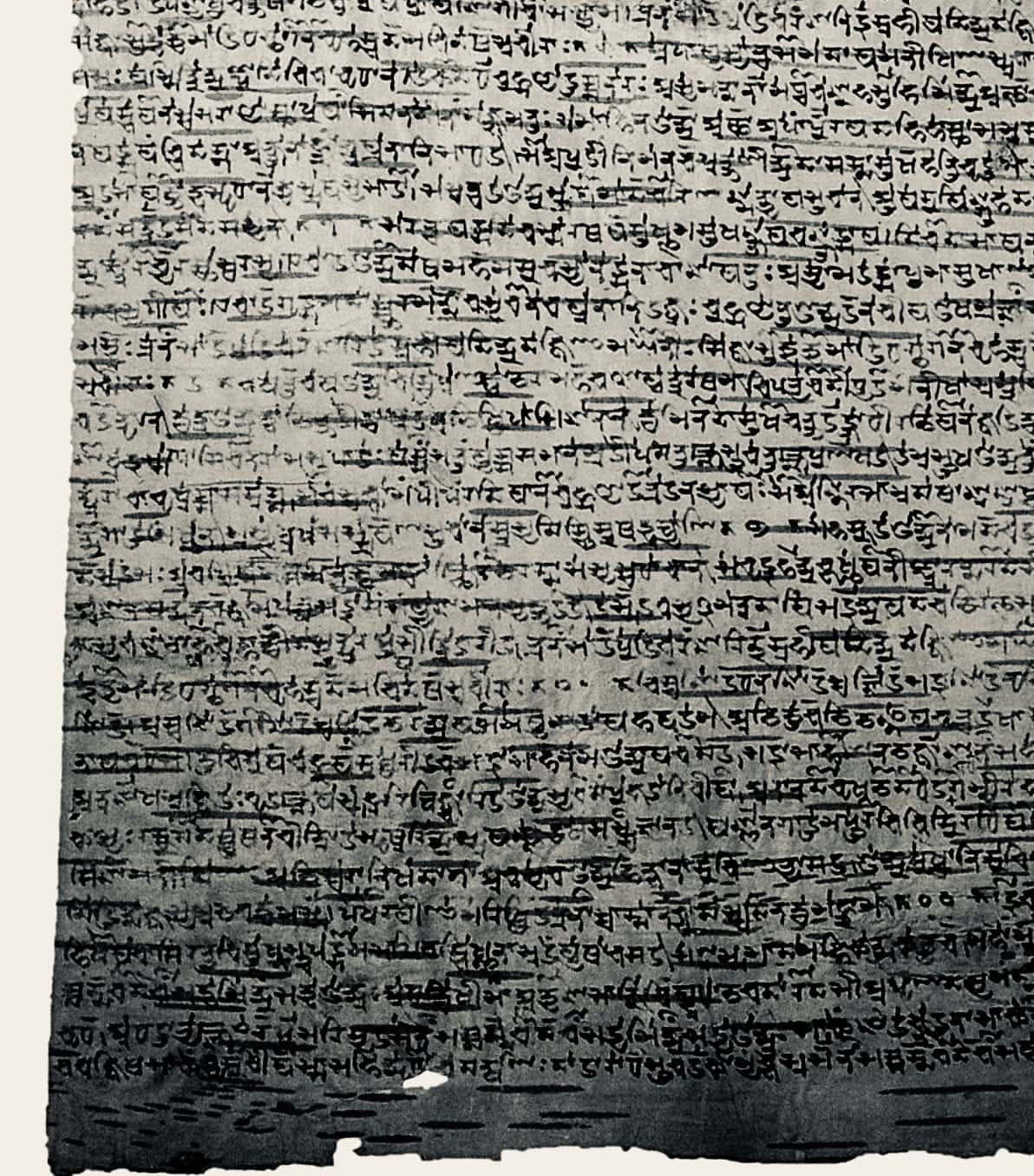
Here the relevant idea often rides on the notion of acting in accord with the Tao, and the practice sometimes called wu wei, usually translated as non-forcing or effortless action.

Photograph courtesy of Yumeto, CC BY-SA 4.0
The knowing here is less a faculty you consult and more an alignment you inhabit.
There's also ziran, meaning something close to spontaneity or self-so, the natural way a thing behaves when nobody's interfering with it. Knowing what to do without deliberation, in this frame, means moving with ziran instead of against it.
Notice how different this framing is from the others. It isn't primarily about a special organ of perception. It's about clearing out interference so a fitting response can arise on its own.
How can you compare these without collapsing them?
Set them side by side and the differences teach as much as the overlaps. Buddhi is a faculty of discernment. Prajna is trained insight. Ma'rifa is tasted, intimate knowledge. Chokhmah is the flash before understanding. Ziran is naturalness with nothing in the way. And numerology, in the reflective sense we use here, is a mirror, not a voice.
Photograph courtesy of Athanasius Kircher, Public domain
The honest conclusion here is small, and worth keeping anyway. Many cultures have watched the human mind know more than it was taught, and each described what it saw in its own careful language. You don't have to pick a winner to be moved by how closely people have paid attention. Naming the faculty is one thing and training it is another, which is where developing clairvoyance picks up. If you want to keep exploring these questions with others, the community is a good place to do it.
A short caution on borrowing words
If you take one habit from this piece, make it this: use a word the way its tradition uses it, or say plainly that you're speaking loosely. Calling your gut feeling "my prajna" or "my ma'rifa" isn't a compliment to those traditions. It borrows the prestige of a term while setting aside the path it came from.
Photograph courtesy of Ms Sarah Welch, CC0
Respect, here, mostly looks like precision. You can admire six vocabularies at once without pretending they're one.
Sources
Numerologist and Master Teacher
Brian Wroblewski is the founder of The Healer's Code. He reads charts with the Pythagorean system and teaches people how to understand the numbers they were born with.