TL;DR
The brain is required for the waking life you know, but that does not settle whether it produces consciousness, filters it, or expresses something already fundamental. Those three views make different predictions about damage, anesthesia, expanded states, and whether experience can outrun the hardware. Use those forks, not slogans, to test what you currently treat as obvious.
You cannot yet close this question with a single lab result. The brain is required for the waking, reportable experience you have each day, but required is not the same as created. Three positions remain testable: the brain produces consciousness, the brain filters it, or consciousness is fundamental and the brain is one of its expressions.
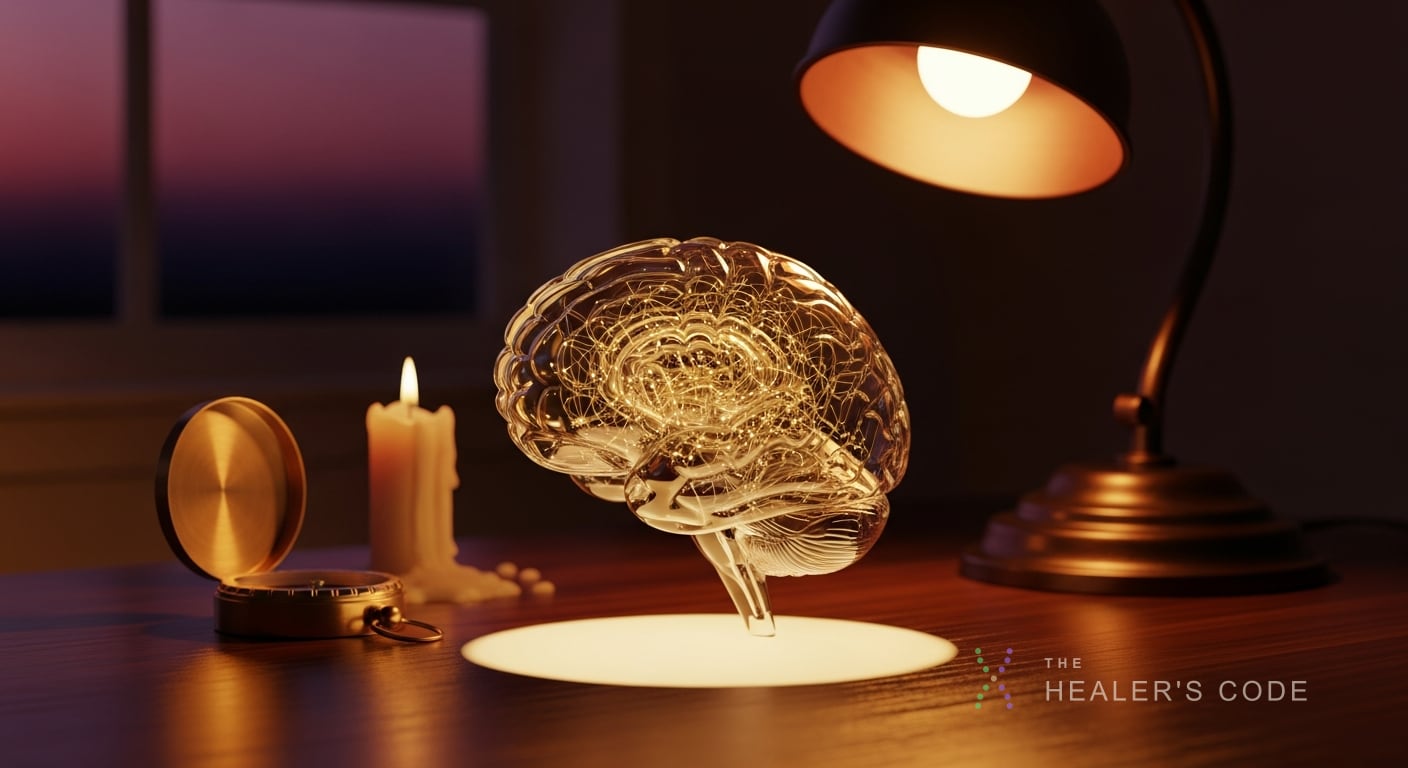
If the brain produces consciousness, experience is generated by neural activity the way a speaker produces sound. If the brain filters it, the tissue is more like a radio or a reducing valve, narrowing a wider field so you can live a life. If consciousness is fundamental, experience is already in the picture, and brains are how it takes a particular form.
This week, treat the question as a working map rather than a belief. Notice when you assume production, when you assume reception, and what would change your mind. Here are the three positions in plain language, the evidence that leans each way, and the findings that would force a choice.
What does it mean to say the brain produces consciousness?
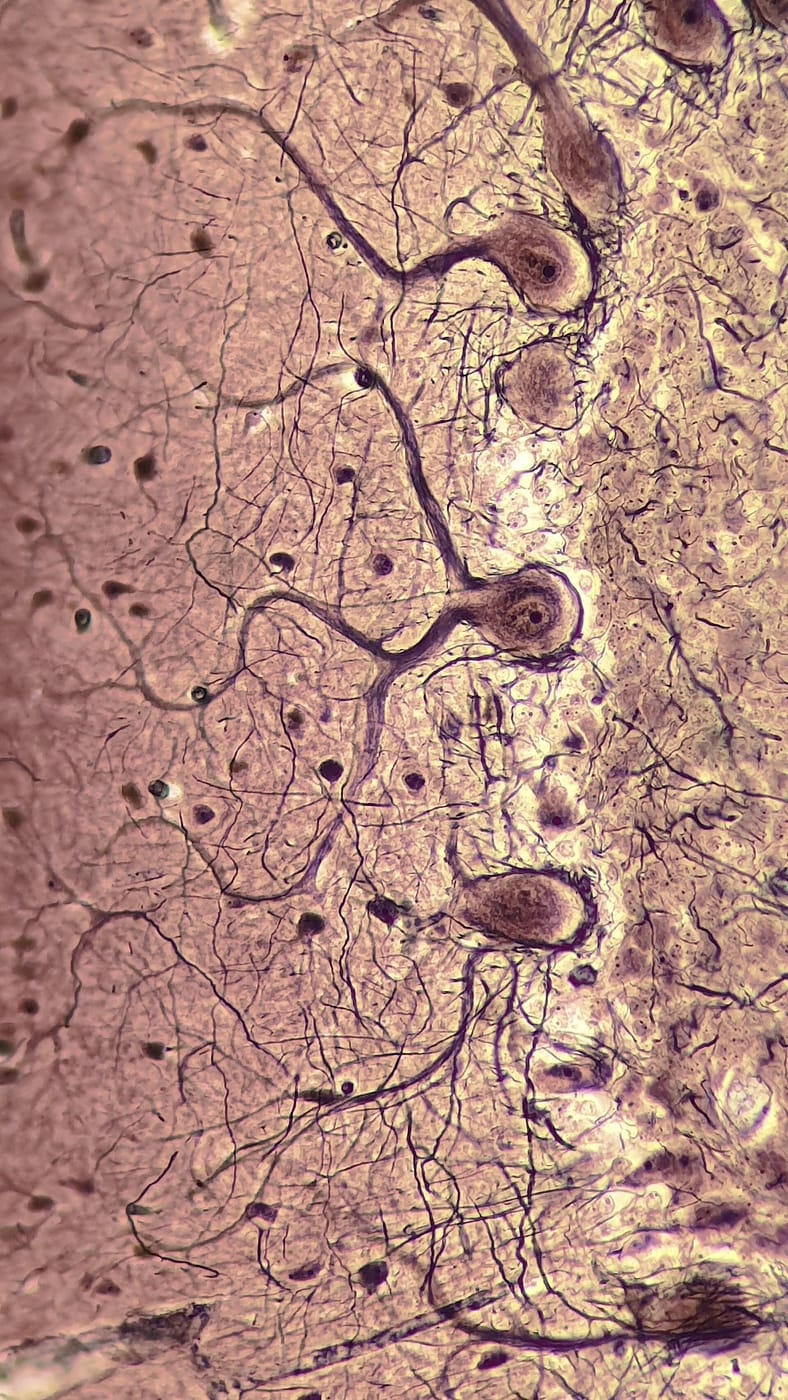
Ask most working neuroscientists how experience happens and you get the producer view: when neurons fire in the right patterns, experience appears.
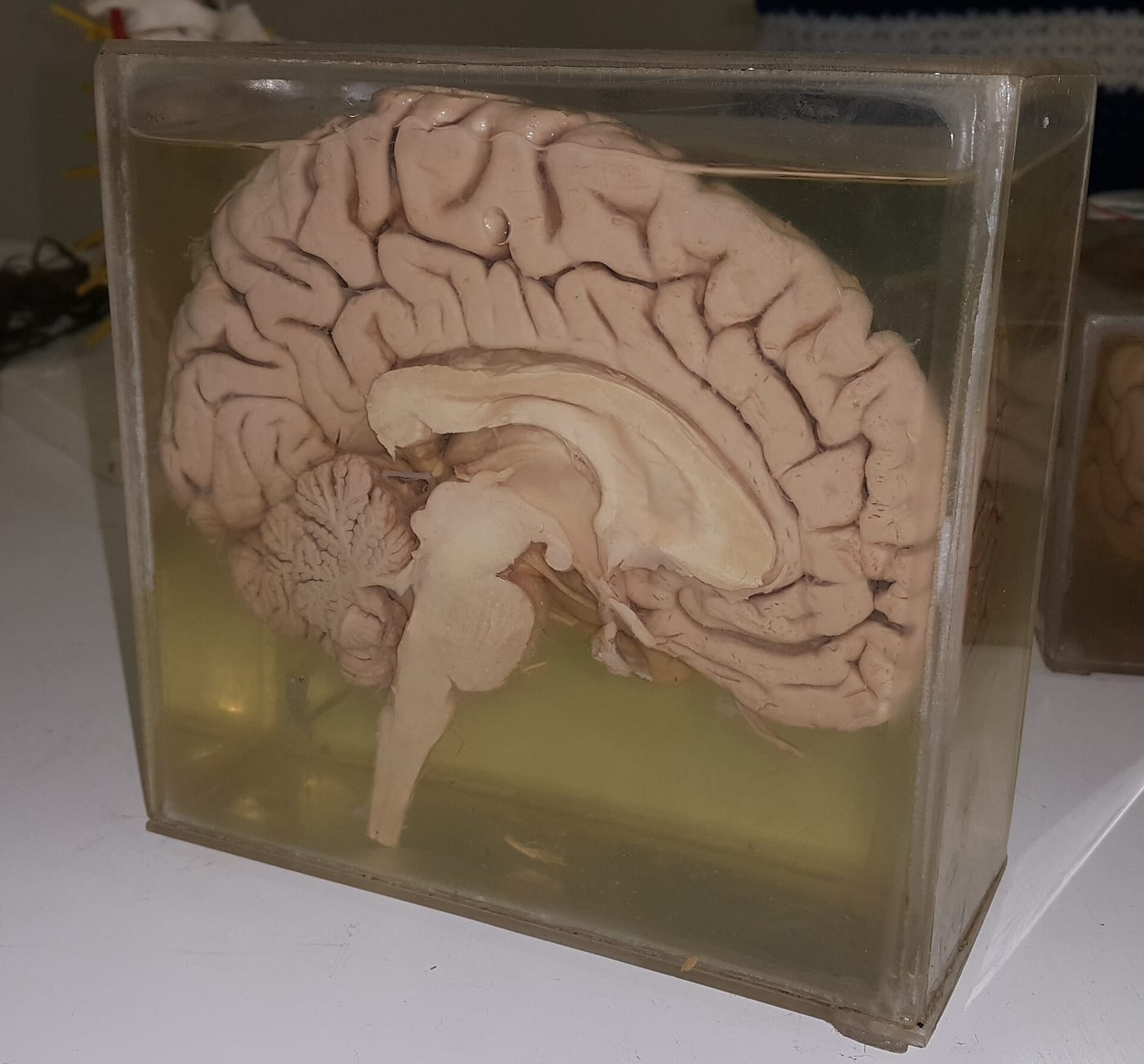
Photograph courtesy of Lennart Rikk, Creative Commons
Damage the tissue, and experience changes. Quiet the tissue with anesthesia, and waking awareness drops away. Stimulate a patch of cortex, and a flash, a smell, or a mood can arrive on cue.
You already live inside this correlation. A migraine aura, a stroke, a night of no sleep, a sip of coffee: the mind moves when the brain moves. The producer view says that movement is the source, not an accompaniment.
The remaining puzzle is why those patterns should feel like anything at all. David Chalmers named this the hard problem in his 1995 paper "Facing Up to the Problem of Consciousness." Mapping which circuits track which experiences does not, by itself, explain why there is an inner show. The producer view can still be true, and it still has more work to do than a brain scan can finish.
If this view is right, you should not find rich, structured experience when the relevant brain activity is gone. You should, given time, be able to build experience in another substrate if you copy the right causal pattern. Fail either test and the view is under pressure. Pass both and production becomes the simplest story, even while the other two remain standing.
What does the filter view ask you to consider?
The filter view keeps the brain in the center of your daily life without making it the author of awareness.
Photograph courtesy of Themium, Creative Commons
The tissue selects, constrains, and shapes what you can live through in a given hour.
Think of attention as a narrow beam. You already know that most of what could be noticed is not noticed. The filter view extends that fact: the brain may be what keeps the field small enough to walk, speak, and remember a name. Aldous Huxley, drawing on Henri Bergson, called this a reducing valve in The Doors of Perception. William James, in Human Immortality, had already argued that the brain might transmit consciousness rather than produce it.
What would count for this view is a mismatch: more experience, or a different kind of experience, when brain activity drops, disorganizes, or is badly damaged, in a way the producer story cannot absorb as leftover noise. Reports of sudden clarity near death belong in that argument. So do some psychedelic states where usual networks quiet while the inner world expands. Work associated with Robin Carhart-Harris on the default mode network is the scientific hook people reach for now. Those findings apply the right kind of pressure without closing the case.
If the filter is right, shutting the brain down should not always shut you down. At least sometimes, it should take the valve off.
Want this read on your own numbers?
Your Blueprint turns these ideas into a personal map, calculated from your name and birth date.
What if consciousness is fundamental?
On this view, consciousness is part of the furniture of the world, as basic as mass or charge, and brains are how it becomes a particular, reportable life. You can hold this without theater. Some philosophers, including Galen Strawson and Philip Goff in Galileo's Error, argue that if physical science describes structure and relation, something has to be the intrinsic nature of that structure, and experience is a candidate.

Photograph courtesy of Art Uncut, Creative Commons
Other versions make mind the ground and matter the appearance. Integrated Information Theory, developed by Giulio Tononi and discussed at length by Christof Koch, tries to give consciousness a measurable structure and, in some readings, treats it as a basic feature of certain physical systems rather than a late product of brains alone.
The combination problem is the tax this view pays: how do tiny sparks of experience become the single field you call "I"? Until that is solved, fundamental remains more stance than mechanism.
Evidence that would favor it is indirect. If production keeps failing to close the hard problem, and if filter effects keep showing experience that outruns the hardware, you are left needing mind in the picture from the start. A real theory would also make new, risky predictions about which systems are conscious, including ones that do not look like brains.
What evidence would actually separate these three views?
Correlation will not do it. Every serious position agrees that, in ordinary waking life, brain and experience move together. You need a fork: a result that one view can swallow and another cannot.

The producer view wants a complete mapping from neural dynamics to reportable experience with no remainder, no rich experience when those dynamics are gone, and experience engineered in a non-biological system built to the same causal pattern. Anesthesia, lesions, and stimulation already lean this way. They do not finish the job, because a filter can fail too, and a fundamental view can still say the brain is how mind localizes.
The filter view wants repeated, well-controlled cases where the inner world expands or clarifies as the usual brain machinery winds down, plus a theory of what is being filtered. Terminal lucidity, if it holds up under careful study, and psychedelic states with reduced default-mode activity alongside richer experience, are the candidates on the table. If those dissolve into ordinary producer mechanisms, the filter loses its best empirical hook.
The fundamental view wants a theory that predicts consciousness outside brains in a testable way, and then those predictions landing. Until then, you are fitting mind to the remainder the other two leave behind.
What would change your mind this week is smaller than a prize-winning result. Pick one claim you currently treat as obvious. Write down what observation would force you to drop it. Then watch your next strong mood, pain, or insight, and ask which of the three stories it requires. You can sit with that question in guided meditations if you want a quiet container, not a conclusion.
Sources
- Facing Up to the Problem of Consciousness
- Human Immortality: Two Supposed Objections to the Doctrine
- The Doors of Perception
- Neural correlates of the psychedelic state as determined by fMRI studies with psilocybin
- Why Physicalism Entails Panpsychism
- Integrated information theory: from consciousness to its physical substrate
- Galileo's Error: Foundations for a New Science of Consciousness
Brian Wroblewski
Numerologist and Master Teacher
Brian Wroblewski is the founder of The Healer's Code. He reads charts with the Pythagorean system and teaches people how to understand the numbers they were born with.