TL;DR
The shadow is the material you edit out of the room. The work is to notice it without making it your identity, and without turning the meeting into theater.
The shadow is not a villain living under the floor. It is the material you keep out of the sentence. The irritation you smile over. The want you call unreasonable. The grief you renamed as being fine.
C. G. Jung gave that material a name. In Aion he wrote a chapter called "The Shadow." Violet de Laszlo included that chapter in Psyche and Symbol, a selection from his writings. The same opening chapters, on the ego, the shadow, and the anima and animus, open Collected Works, Volume 9, Part 2. This blog post borrows the name and stays in plain language. It does not summarize those chapters, and it is not a clinical reading.
You are not broken because that material exists. Worth and the unedited part share the same room. Shadow work is the decision to stop pretending the room is empty.
What is the shadow, in plain language?
Call it the part of you that learned it was not welcome. Not a diagnosis. Not a demon. A pattern that still runs when you are tired, hurried, or trying to be liked.
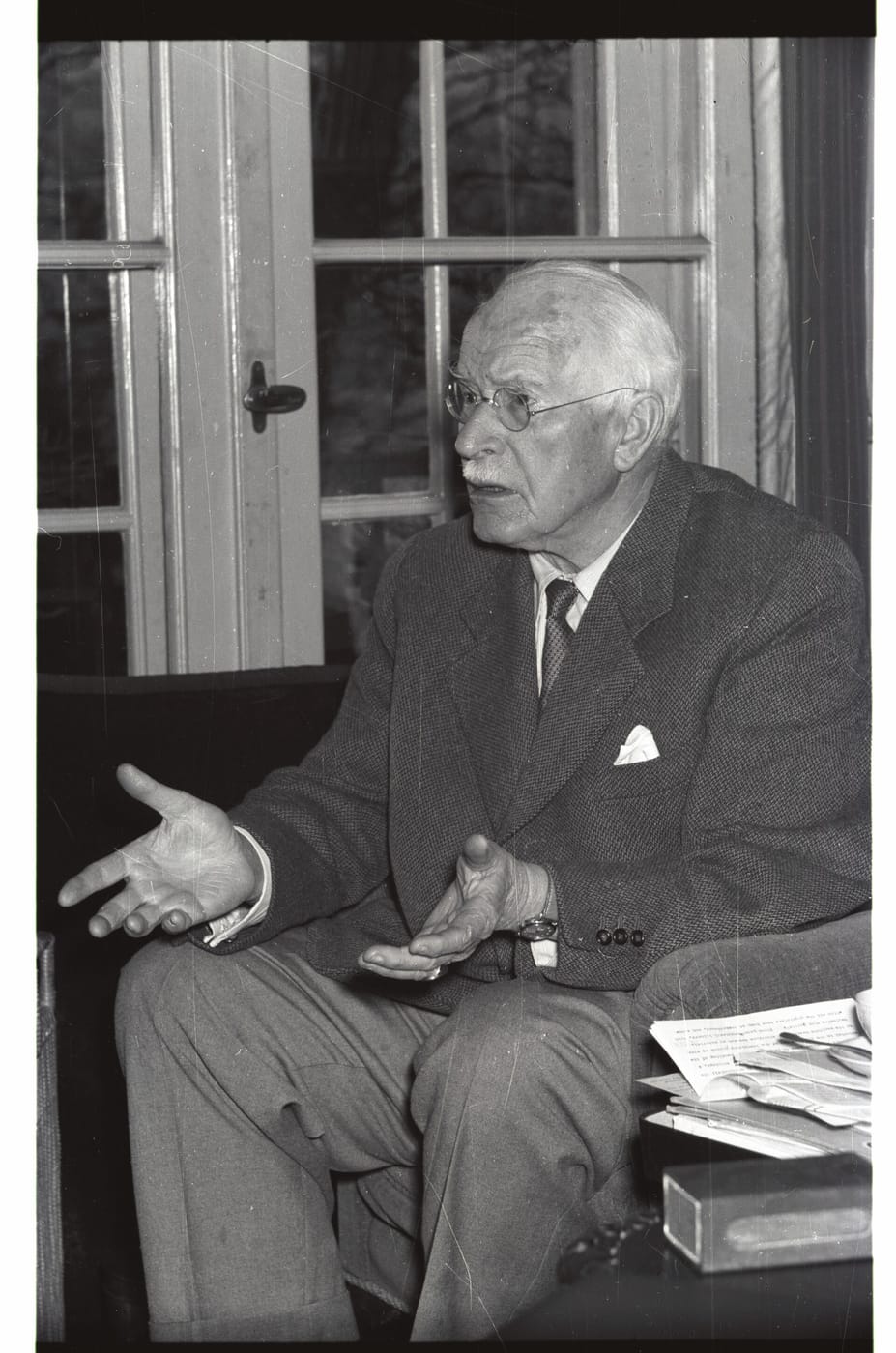
Photograph courtesy of Comet Photo AG (Zürich), ETH Library, CC BY-SA 4.0
It shows up as the snap you did not plan, the envy you will not admit, the tenderness you joke away. You already know the costume. The work starts when you can name the person under it without recruiting an audience.
Jung's chapter is a map from another century. Your afternoon is smaller than that map. You do not need the whole system to notice one reaction you keep editing out. The name is useful because it stops you from calling the reaction "just how I am" or "nothing." It is something. It has a job. The job is usually protection, belonging, or not being seen in a way that once cost you.
Why does meeting it feel like a threat?
The pattern kept you in the group. Naming it can feel like losing the group. So the body tightens, the mind supplies a reason to wait, and the day fills with anything else.
Photograph courtesy of Jules Verne Times Two, CC BY-SA 4.0
That alarm is information. It is not a verdict. Fear and intuition can use the same tightness. Shadow work does not ask you to obey the alarm or to crush it. It asks you to stay long enough to hear what the part is protecting.
Often the threat is social, not mystical. If you say the envy out loud, someone might think less of you. If you admit the tenderness, the joke stops working. The body remembers those costs even when the room you are in now would not charge them. Meeting the shadow is letting that memory finish its sentence without letting it book the rest of the week.
What does the work look like on an ordinary day?
Pick one reaction from the last day. Write the sentence you actually had, not the polite version. Ask what it was guarding. Then ask what a cleaner next move would be, one you could do before tonight.

Photograph courtesy of Shixart1985, CC BY 2.0
That is the whole method in miniature. No ritual is required for the first pass. If you want the longer map of how attention, story, and practice fit together, it lives in the method. The same walk has a picture: you meet what you built, and you can leave.
Do this once, with one reaction. Do not collect a pile of parts and call the pile progress.
A useful limit: one page, one reaction, one next move. If the page turns into a case against yourself, you have left the work and started a prosecution. Stop. The point is recognition, not a verdict. You can come back tomorrow with a different reaction. You do not have to finish your personality in a sitting.
What is shadow work not?
It is not a public confession. It is not a reason to harm anyone, including you. It is not proof that you are the problem in every room. And it is not an episode in the meditation library. If you want a guided session later, that shelf is separate. This blog post is the meeting, in words.
Photograph courtesy of Saul Vielmetti, CC BY-SA 4.0
When the part has been named, you still choose the next hour. The shadow does not get the calendar. You do.
If a teacher, a friend, or a page offers you a dramatic version, check it against this smaller one. Did they ask you to meet one true sentence, or did they ask you to become a story? The first is the work. The second is theater, and theater is how the unedited part stays in charge while looking like progress.
Sources
Numerologist and Master Teacher
Brian Wroblewski is the founder of The Healer's Code. He reads charts with the Pythagorean system and teaches people how to understand the numbers they were born with.