TL;DR
Long before spreadsheets, many ancient cultures treated numbers as carriers of meaning, not just tools for counting. The Pythagoreans in particular taught that number was the pattern underneath reality, and that idea shaped centuries of thought. Modern numerology is a descendant of that tradition, best used as a mirror for reflection rather than a forecast.
Ancient cultures treated numbers as more than counting tools because they kept noticing the same thing: number describes the hidden order of the world. The seasons. The intervals of music. The movement of the stars. To many early thinkers, that kind of regularity meant numbers weren't invented, they were discovered, a language already woven into things. Modern numerology inherits this instinct, and it works best when you use it the way those thinkers did: to see pattern and meaning, not to predict the future.
Why did ancient people think numbers meant something?
Because number kept showing up wherever order lived.
Photograph courtesy of G Rosa, Public domain
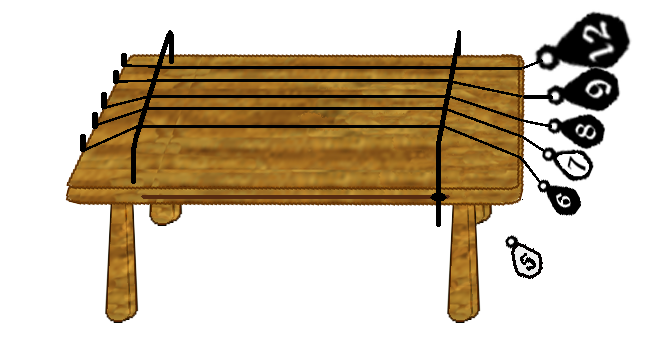
Watch the sky long enough and you'll count cycles: days, moons, the returning positions of stars. Pluck a taut string and shorten it by a clear ratio, and it sounds a pleasing note. Repetition and proportion were everywhere, and they could be measured.
For people who didn't separate mathematics from meaning the way we do now, that was striking. If number governed the music of a string and the turning of the seasons, then number seemed to touch something fundamental. It felt less like arithmetic and more like a glimpse of how reality was built.
So counting became contemplation. A number wasn't only a quantity. It was a quality, a character, a doorway into something larger, a distinction later scholars would draw as the difference between mathematics and number mysticism.
What did the Pythagoreans actually teach about number?
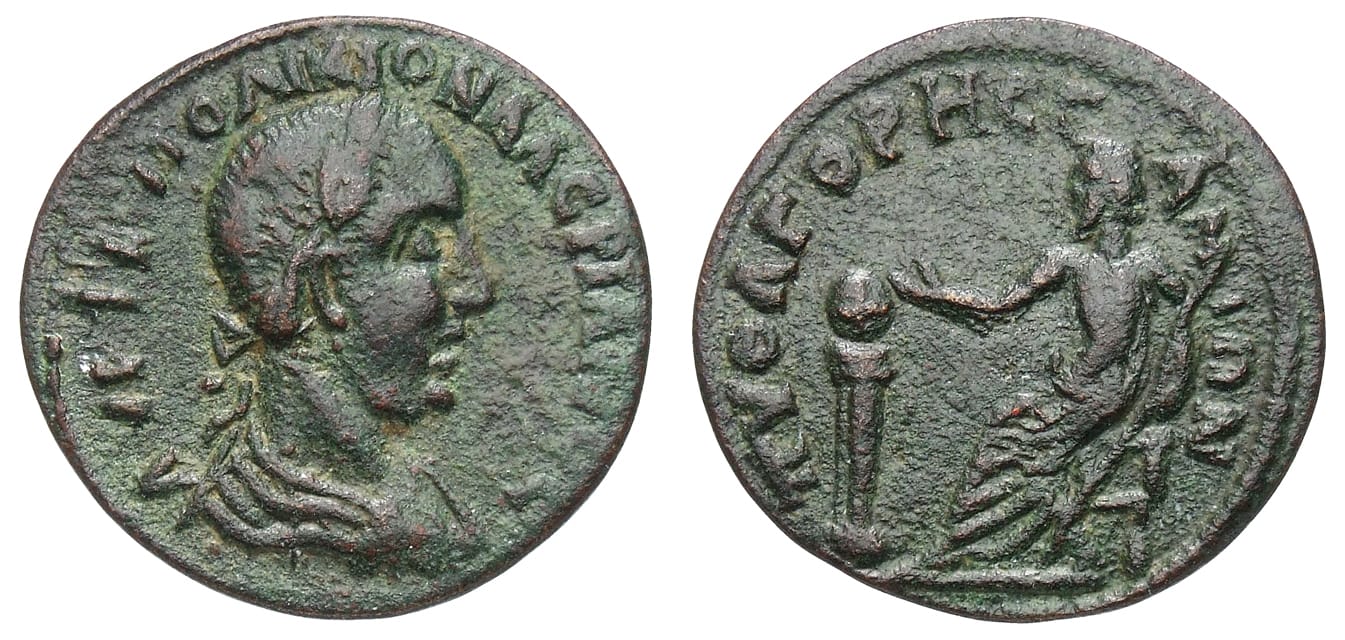
The Pythagoreans, followers of the Greek thinker Pythagoras in the sixth century BCE, are among the clearest ancient sources for the idea that number underlies reality.
Photograph courtesy of Münzkabinett, Staatliche Museen zu Berlin, Public domain
Aristotle, writing later, reported that they held number to be the principle of all things, the pattern the visible world takes its shape from. That account comes down to us through Aristotle's Metaphysics, and like much of what we know about early Pythagorean thought, it reflects how a later thinker characterized their views rather than a surviving text from the Pythagoreans themselves, as the Stanford Encyclopedia of Philosophy's entry on Pythagoreanism explains.
One discovery attributed to this tradition anchors the idea in something testable: harmonious musical intervals correspond to simple whole-number ratios of a vibrating string. That's not mysticism. It's an observation about acoustics you can still test today. But it seems to have convinced the Pythagoreans that beauty and order could be expressed as number, and they stretched that conviction out to cover the whole cosmos.
They also gave individual numbers meaning. One stood for the source or unity, two for division and difference, three for harmony, four for stability and the material world. This is the root of reading single digits as carriers of character, a practice numerology still leans on, and it connects directly to how you might calculate your life path number today.
Was this idea limited to Greece?
No. The sense that number carries order shows up in more than one place, though the details differ, and we shouldn't flatten them into one story.
In Mesopotamia, careful record-keeping and early astronomy produced detailed numerical observations of the heavens, and number sat at the center of how those cultures tracked time and celestial events. In China, numerical patterns run through classical texts and the ordering of natural cycles. Jewish tradition developed gematria, a method where Hebrew letters carry numerical values, so words and numbers relate to each other.
These are separate traditions with separate aims, histories, and contexts. What they share is a refusal to treat number as merely practical. Across different civilizations, people sensed that counting and meaning belonged together.
How did that ancient idea survive into today?
Mostly through philosophy.
Plato absorbed the Pythagorean conviction that the world is intelligible through number and form, and his influence carried that idea across centuries of Western thought. Later thinkers in the Neoplatonic and Renaissance traditions kept exploring the qualities of numbers, a lineage traced in our own account of where numerology comes from and what the word means. Even the modern scientist's confidence that nature can be described mathematically echoes this old intuition, though what science actually understands about consciousness shows how much of this territory remains genuinely open.
Numerology as a self-reflection practice is one branch of this long inheritance. It takes the old habit of reading number as character and applies it to the numbers in your own life: your birth date, the letters of your name. The method used at The Healer's Code follows the method Pythagorean system and works with the Master Numbers 11, 22, 33, and 44.
The honest framing matters here. This is a mirror, not a forecast. It can help you notice patterns in how you move through the world and put language to things you already half-know. It isn't medical, financial, legal, or psychological advice, and it doesn't promise or guarantee a fixed future.
Free calculator
Calculate your Life Path Number
Your soul's primary purpose, from your date of birth.
How can you use this history in your own reflection?
Start where the ancients did: with attention and curiosity, not certainty.
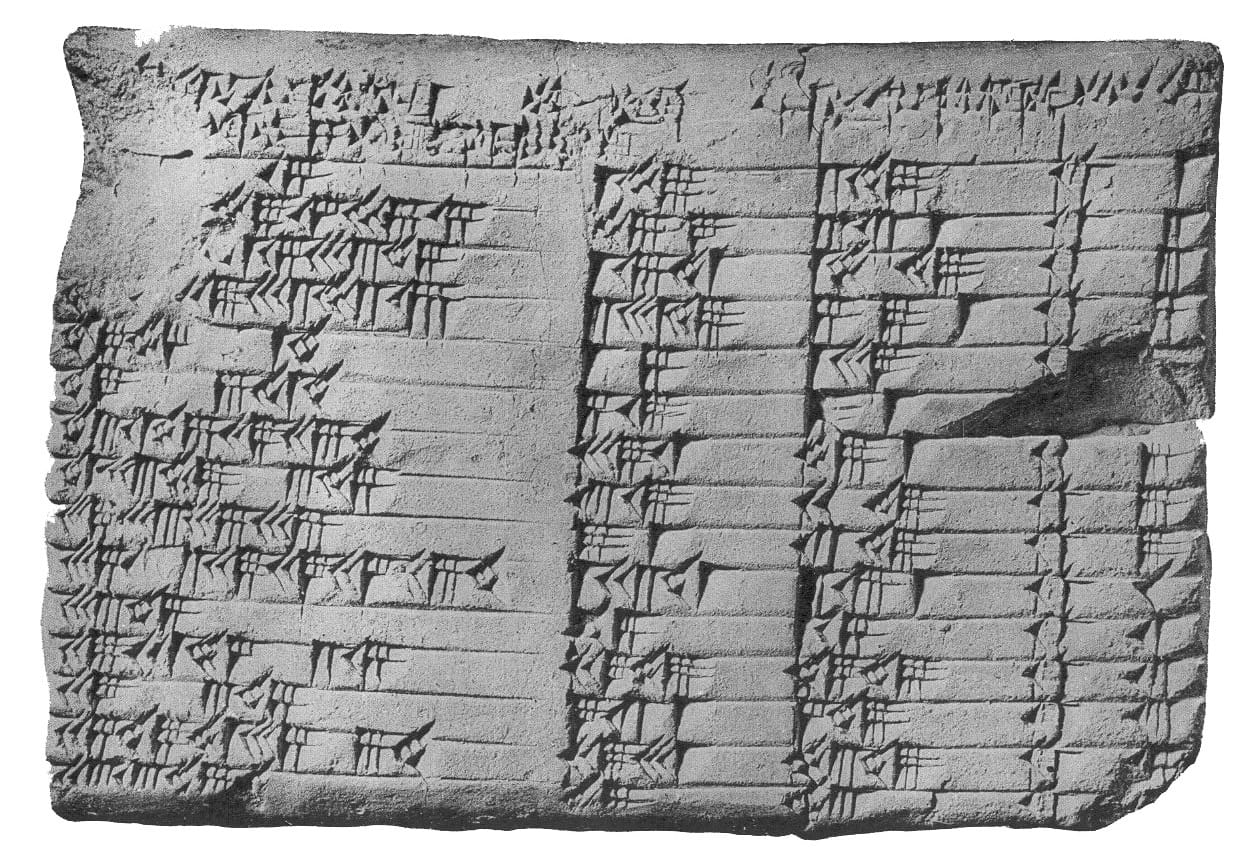
Photograph courtesy of Columbia University, Plimpton Collection, Public domain
Look at the numbers already present in your life. Your birth date and your full given name are the two anchors most numerology methods use. Reducing them with the Pythagorean system gives you core numbers to sit with, and if you want to go further you can also learn what your personal year number means and how to calculate it.
Then read those numbers the way you'd read a good question. Not "this is what will happen," but "what does this quality show me about how I meet the world?" A number tied to independence, for example, is an invitation to examine where you lead and where you isolate. Sitting with this kind of reflection pairs well with guided meditations that help you slow down enough to actually notice the pattern.
That's closer to the original spirit of the practice than any prediction. If you want a structured place to begin, you can get your Soul Blueprint and use it as a starting point for reflection rather than a script for the future. You can also explore these ideas alongside others in the community.
The oldest idea here is also the most durable one: pay close attention to pattern, and you may understand yourself and your world a little more clearly.
Sources
- Scholarly reference definitions of individual number meanings 1-9 (Encyclopedia.com)
- Distinction between mathematics and number mysticism (numerology) (Encyclopaedia Britannica)
- General overview of number symbolism across cultures and history (Encyclopaedia Britannica)
- Academic entry on Pythagoreanism and its numerological philosophy (Stanford Encyclopedia of Philosophy)
- Pythagorean number symbolism and mystical properties of numbers 1-10 (Encyclopaedia Britannica)
- Aristotle's Metaphysics (Internet Classics Archive)
- Gematria | Hebrew, Numerology, Alphabetical | Britannica
Numerologist and Master Teacher
Brian Wroblewski is the founder of The Healer's Code. He reads charts with the Pythagorean system and teaches people how to understand the numbers they were born with.