
TL;DR
Wu wei in the Tao Te Ching is action without forcing. You still do the real work of your life. You practice it this week by choosing one arena, dropping the extra struggle, and taking the next step that fits the hour you are in.
Wu wei in the Tao Te Ching is action without forcing. You still do the real work of your week. You practice it by noticing where you push, then taking the next step that fits the hour you are in.
What does the Tao Te Ching mean by wu wei?
Wu wei is two Chinese words put together: wu, without, and wei, making or forcing. The teaching is a kind of doing that does not wrestle the world into a shape it will not hold.
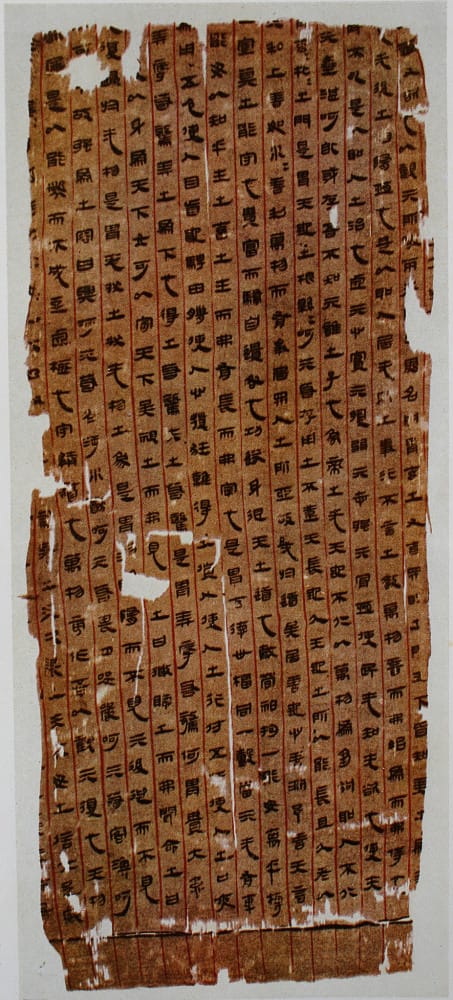
Photograph courtesy of Hunan Province Museum, Public domain
You already know the other kind in your body. You lean on a conversation until it snaps. You rebuild a simple plan until nobody can use it. Your jaw is tight, and the result is smaller than the effort.
The Tao Te Ching points you toward a different posture. Move like water around what will not move. Meet what is soft with care, and what is hard without theater. Do the thing, then do not keep doing it in your head.
A creek does not argue with a stone. It finds the path the land already offers. Hold that picture, and still show up. Just stop adding a second fight on top of the first.
How is wu wei different from checking out?
Where checking out leaves the room, wu wei stays and drops the extra fight.

You still cook dinner. You still answer the client. You still tell the truth in the hard conversation. You refuse to treat every hour as a problem you must overpower.
The difference lives in the next minute. Stay here, with less strain in the shoulders, and with a cleaner next move.
If your week is full, this matters more, not less. A forced meeting often creates extra recovery work. An honest, well-timed meeting often ends the thread. Cut the waste that panic adds to work that was already real.
How do you practice wu wei in a busy week?
Pick one arena this week, not your whole life.

Your inbox. The way you leave work. The voice in your head while you wait in the grocery line. Choose the place you already overwork.
For the next seven days, do this before you add effort: ask what the situation already wants. Then do only that.
Send the clear note instead of the perfect one. Leave when the decision is made. Eat lunch without a screen if the hour allows it. If it does not, eat anyway, without punishing yourself for the screen.
When you catch yourself pushing, say it quietly. I am forcing this. Then take the smaller true step. One reply. One call. One honest no.
You will miss it. Wu wei is a return you make in the middle of traffic, not a streak you keep. Come back in the next hour. That is the whole method.
If you want company while you try this, The community is a place to talk about the week as it is.
What do you do when the work still has to get done?
Friday still has to happen, and wu wei only changes how you meet it.

Look at the real constraint: time, energy, the other person's need. Choose the action that fits those facts. Do it fully. Then stop.
The work that must happen still happens. The extra revision that exists only to soothe your nerves can wait, or go. Keep typing if you need to, and drop the commentary you run while you type.
If a decision is due, gather what you can know, decide, and live with the rest of the uncertainty. That remainder is the shape of being human in time.
At the end of the week, skip the grade. Remember one hour where you moved with less fight. Notice your shoulders. Take that memory into Monday, into the same inbox, and try the smaller step again.
Numerologist and Master Teacher
Brian Wroblewski is the founder of The Healer's Code. He reads charts with the Pythagorean system and teaches people how to understand the numbers they were born with.