
TL;DR
Marcus Aurelius, in Meditations 5.20, treats a hindrance as material the mind can convert into the next move. The English phrase "the obstacle is the way" is a modern rendering of that thought. On a hard morning, name the real block, choose one action that uses it, and take that action before you reach for your phone.
Marcus Aurelius the famous stoic meant that a hindrance can become the next move if you keep a usable intention. The English line "the obstacle is the way" is a modern rendering of that thought in Meditations. On a hard morning, name the real block, pick one action that uses it, and do that action before you reach for your phone.
What did Marcus Aurelius write?
He wrote in Greek, for himself. Meditations is private notes from a Roman emperor in the second century.
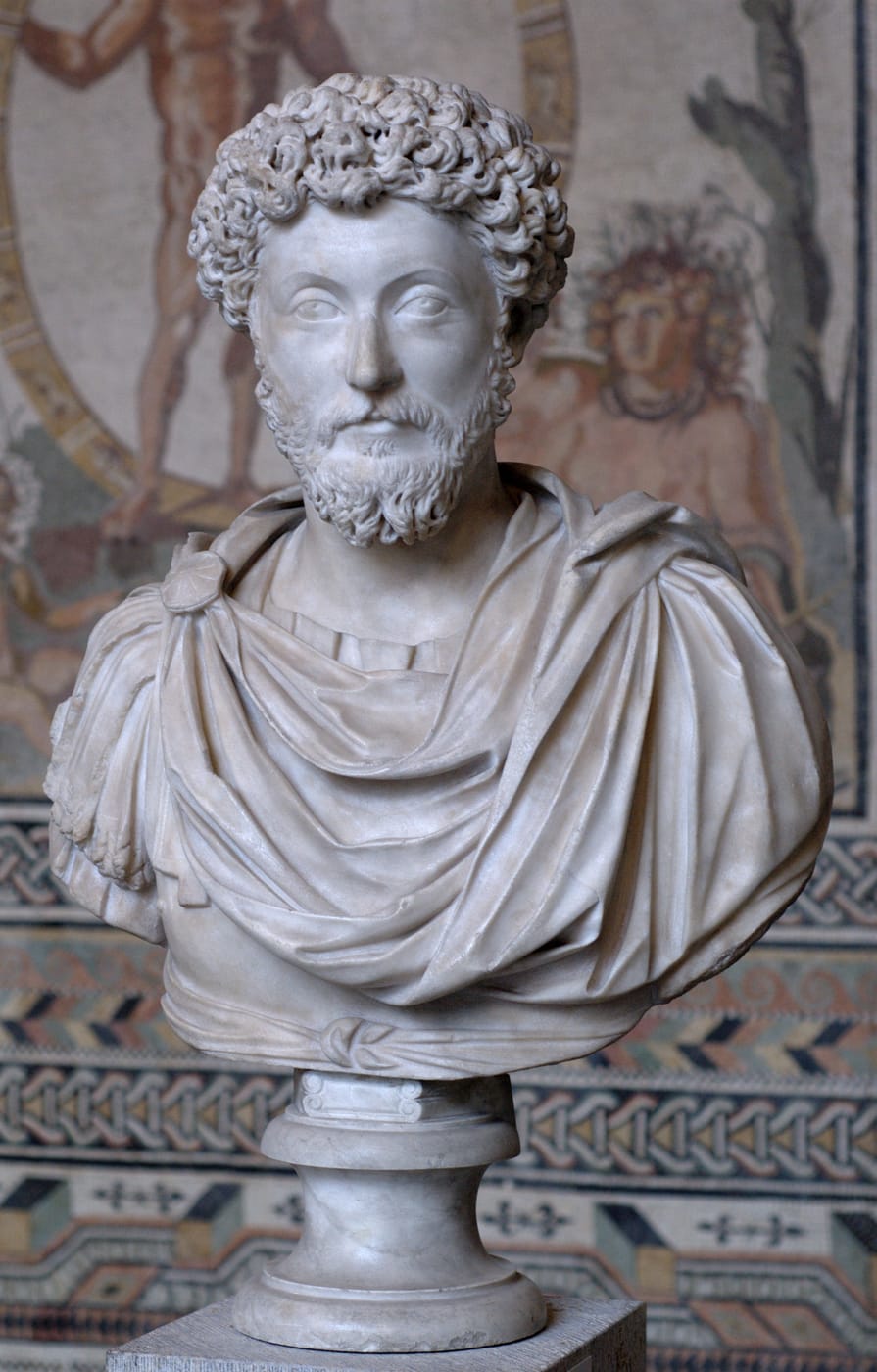
Photograph courtesy of Glyptothek, Munich; photograph by User:Bibi Saint-Pol released to the public domain, Public domain
In Book 5, section 20 of Meditations (standard modern numbering; a widely used English rendering is Gregory Hays, trans., 2002), he writes that the mind can convert a hindrance into an aid. A check on action can still advance the work. What stands in the path can become the path.
He is writing to himself as a man who will be interrupted by people, weather, the body, and public duty. Intention can stay mobile when the plan cannot.
You do not have to admire him to see the move. When the path is blocked, the block becomes the next honest task.
The outer plan can stop and your next choice is still yours.
Why does a hard morning make the idea feel useless?
Because you wake already behind. The body is heavy. The mind wants a verdict: this day is already lost.

The first obstacle is often the claim that you must feel ready before you begin, more than the meeting or the bill.
Name that claim. Then treat it as material.
A hard morning gives you a smaller surface to work on. Let it cut the plan down to one true thing.
This week, pick one morning. Do not wait for a better one.
How do you practice it before you leave the house?
Keep it small enough that you can finish it tired.

First, write one sentence that names the obstacle. Use ordinary words. "I do not want to open that email." "My back hurts." "The house is loud."
Second, ask what this block makes possible that ease would hide. Tiredness can make a three-line plan. Dread can make a shorter, truer message. Pain can make you drop the extra task you were using as armor.
Third, take one action that uses the block, a move in the room rather than a speech to yourself: open the draft, put your feet on the floor, send the honest three lines, walk around the block once.
Do this before the feed. Ten minutes is plenty.
If you already work with The method, you know how to sit with a number as a prompt for attention. Sit with the morning the same way. Look at what is there. Choose one response you can keep.
Insight without a next action is only a nicer form of stalling.
What do you do when the obstacle is still there at night?
Some blocks will still be there at night. Ask one question: did I turn any part of the hindrance into a next action?

If you did, that is enough for the day. If you did not, write tomorrow's first action now, while you can still be plain.
The way is the next usable step. You will feel this most on the mornings that do not cooperate.
Sources
Numerologist and Master Teacher
Brian Wroblewski is the founder of The Healer's Code. He reads charts with the Pythagorean system and teaches people how to understand the numbers they were born with.