
TL;DR
The Stoics practiced negative visualization to meet fear in daylight, on purpose, instead of letting it rehearse at night. You briefly imagine a loss, then return to the present. Fear keeps its alarm but loses some of its infinity, and you get a clearer view of what you can still do.
Why the Stoics Practiced Negative Visualization
The Stoics practiced negative visualization so you could meet a feared future in the mind first, on purpose, and come back to the day with a quieter body. You briefly imagine losing what you love, not to summon disaster, but to see that you still know how to stand. After that, fear has less surprise left in it, and more of your attention returns to what is actually here.
What is negative visualization?
The old name is premeditatio malorum, a premeditation of hardships. You sit with a possible loss while you are still safe: health, money, reputation, a person, a plan you have treated as guaranteed.

Photograph courtesy of Marcus Cyron / Antikensammlung Berlin, Creative Commons
Seneca returns to this in his Moral Letters to Lucilius (for example Letters 18, 24, 91, and 107). Epictetus puts a sharp version in the Enchiridion 3, asking you to remember mortality even in a moment of affection. Marcus Aurelius works the same muscle in the Meditations, picturing change so he will not be shocked by it (see, among others, 2.17 and 4.48).
You train the mind to finish the story in daylight, so it stops finishing it for you at night.
Why did the Stoics practice it?
Fear feeds on two things: the shock of the unimagined, and the belief that you could not bear the scene.

If you have never looked at the empty chair, the smaller life, the changed body, the mind fills the gap with infinity. Infinity is what keeps you clenched.
A short, chosen rehearsal puts a frame around the scene. The job ends. The person is gone. The plan fails. Then there is still a next hour. There is still a next kind act. There is still you, choosing.
This sits close to how The method asks you to look at a number. Sit with the pattern without flinching.
What does it do to fear?
Fear is an alarm in the body plus a story about what comes next. The alarm can help when it points to a real problem. The story often outruns the facts you have.

After a few minutes of this rehearsal, the story has an ending you have already seen. The alarm may still fire, but it has less fuel.
You may notice the cup in your hand, the voice in the house, the afternoon you still have. None of that was owed to you.
You may also notice a quiet kind of courage: if the feared day arrived, you would still have a next action.
How do you try it this week?
Name one thing that quietly runs you. A role. A relationship. A number in an account. A clean bill of health you treat as permanent.

Sit for five minutes. Picture it gone, in concrete terms. The room. The silence. The first ordinary problem that would still need doing.
Breathe. Stay the watcher of the scene.
When the five minutes end, name three things that remain: your capacity to choose, one person you could still love well, one task that would still be yours.
Then touch something real. The table. The air. Your feet on the floor.
Do this once this week, not every hour. You want a clean look, then a return.
If graphic images spike panic for you, keep the practice at the level of a sentence: This too can change. Then stop. If you need clinical care for anxiety, go there.
How does this sit with The Healer's Code?
The same move keeps showing up. Look at impermanence without turning away. You see it in Buddhist reflection on change, in the Stoic rehearsal of loss, and in honest self-inquiry. Each one asks you to stop bargaining with what you cannot keep.
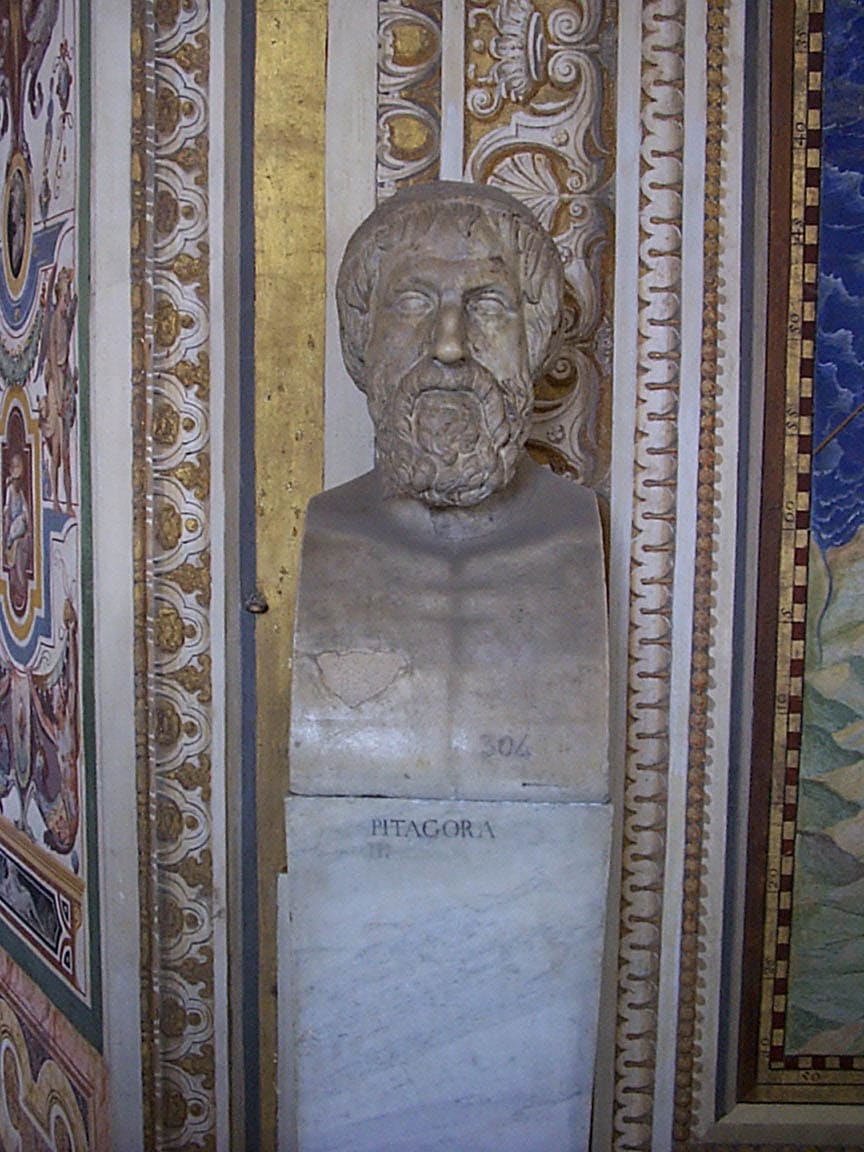
Photograph courtesy of Vatican Museums (photograph by Andargor), Creative Commons
The method is one way to do that looking, through number as a mirror. In the Pythagorean system we use, Master Numbers 11, 22, 33, and 44 are intensified patterns for reflection. You sit with the meaning they carry.
Negative visualization belongs in that same family. You look. You feel what you feel. You come back to the day.
Sources
- Moral letters to Lucilius/Letter 18 - Wikisource
- Moral letters to Lucilius/Letter 24 - Wikisource
- Moral letters to Lucilius/Letter 91 - Wikisource
- Moral letters to Lucilius/Letter 107 - Wikisource
- Epictetus, Enchiridion, chapter 3 - Perseus Digital Library
- The Meditations by Marcus Aurelius Book Two - Internet Classics Archive
- The Meditations of the Emperor Marcus Antoninus/Book 4 - Wikisource
Numerologist and Master Teacher
Brian Wroblewski is the founder of The Healer's Code. He reads charts with the Pythagorean system and teaches people how to understand the numbers they were born with.