
TL;DR
Consciousness does not create reality the way viral physics posts claim. The observer effect is about measurement interacting with a system, not about your thoughts collapsing the world. Your attention still changes your life by changing what you notice, how you perceive, and what you choose next.
Does consciousness create reality? Not the way popular physics memes suggest. The observer effect describes how measuring a system changes it. In quantum experiments, that measurement is an interaction with equipment, not a human mind staring at a particle until it behaves. Your awareness shapes your life through attention, perception, and choice, which is a different claim from thoughts constructing matter from nothing.
If you have been told that quantum physics proved you create reality with your mind, you were sold a shortcut. How subjective experience arises at all is still open. Physicists disagree about what measurement even means. Mind-matter experiments exist, mixed, modest, and easy to overread. You do not need a cosmic law that thought equals matter in order to take your inner life seriously.
This week, treat the question as two. Does looking change a physical system? Sometimes, when looking means measuring. Does your mind change your world? Yes, through what you attend to, how you perceive, and what you do next. Keep those apart and the science gets quieter, and more useful.
What is the observer effect, if it is not your mind?
In the lab, the observer effect is a physical interaction. To measure a system, you couple it to something else: a detector, a screen, a field.
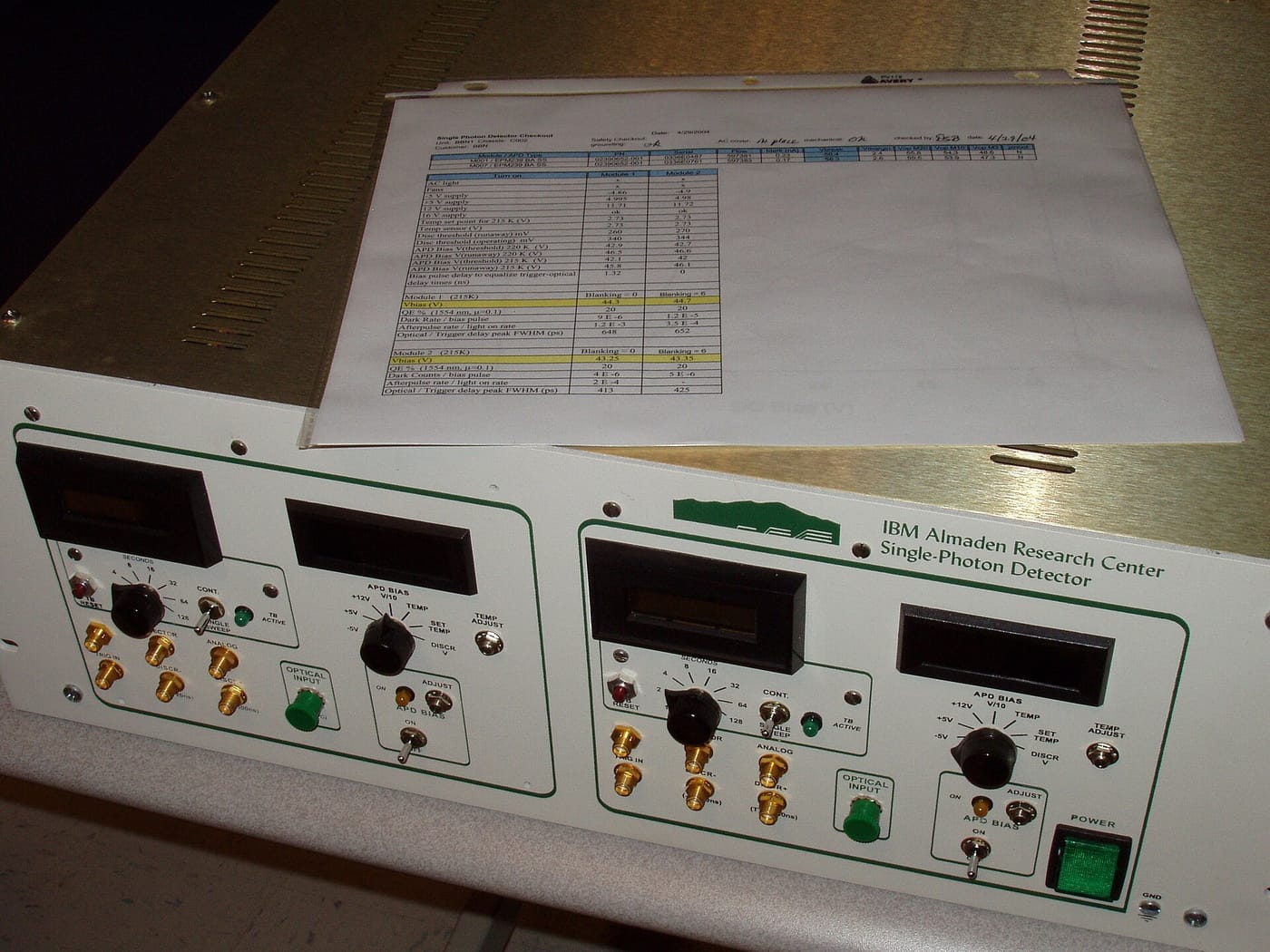
Photograph courtesy of Daderot, Creative Commons
That coupling can change what happens next.
When popular posts say the observer collapses the wave function, they borrow a real puzzle and swap in a person. In a double-slit setup, a which-path detector needs to become correlated with the particle and leave a record, with or without a soul in the room. The interference pattern fades because the system is no longer isolated.
You can picture it as gossip. A quiet superposition is a rumor that has not been written down. Once the environment holds a copy of which way, the rumor has been filed. Decoherence describes how that filing happens through ordinary interaction with light, air, and apparatus.
Your eyes are tissue that interacts, so the measurement is that contact rather than a separate mental force.
A thermometer changes a cup of tea by a little. Quantum measurement is stranger because complementary properties cannot all be sharp at once, and because the theory speaks in probabilities until a record is made. That strangeness is not a permission slip for the claim that your mood built the table.
Why do people mix quantum physics with consciousness?
The word observer sounds like a person, and a few serious thinkers asked whether a mind is required to finish a measurement. That is how the mix got started.

Photograph courtesy of U.S. Department of Energy, Creative Commons
Eugene Wigner explored that possibility in his essay “Remarks on the Mind-Body Question” (1961). It remains an interpretation, a way of talking about where the quantum story becomes a fact you can write down. In working experiments, a detector does that job.
The hard problem is a different door. Philosopher David Chalmers named it in 1995: even if you mapped every function of the brain, you would still face why there is inner experience at all (Chalmers, “Facing Up to the Problem of Consciousness,” Journal of Consciousness Studies, 1995). That question is unfinished, and an unfinished mystery does not prove that experience selects physical outcomes.
You mix them because you want your inner life to matter at the scale of the cosmos. It already matters at the scale of a day, without conscripting physics into a pep talk.
If a teacher tells you quantum physics has proved the law of attraction, ask what they mean by measurement. Ask whether they are talking about a detector or a desire. Watch how quickly the lab language disappears.
Want this read on your own numbers?
Your Blueprint turns these ideas into a personal map, calculated from your name and birth date.
What does mind-matter research show?
Mind-matter research asks a fair question: can intention or attention correlate with a physical system outside the body? The honest picture is mixed and modest, too thin to carry the slogan that you create reality with your thoughts.
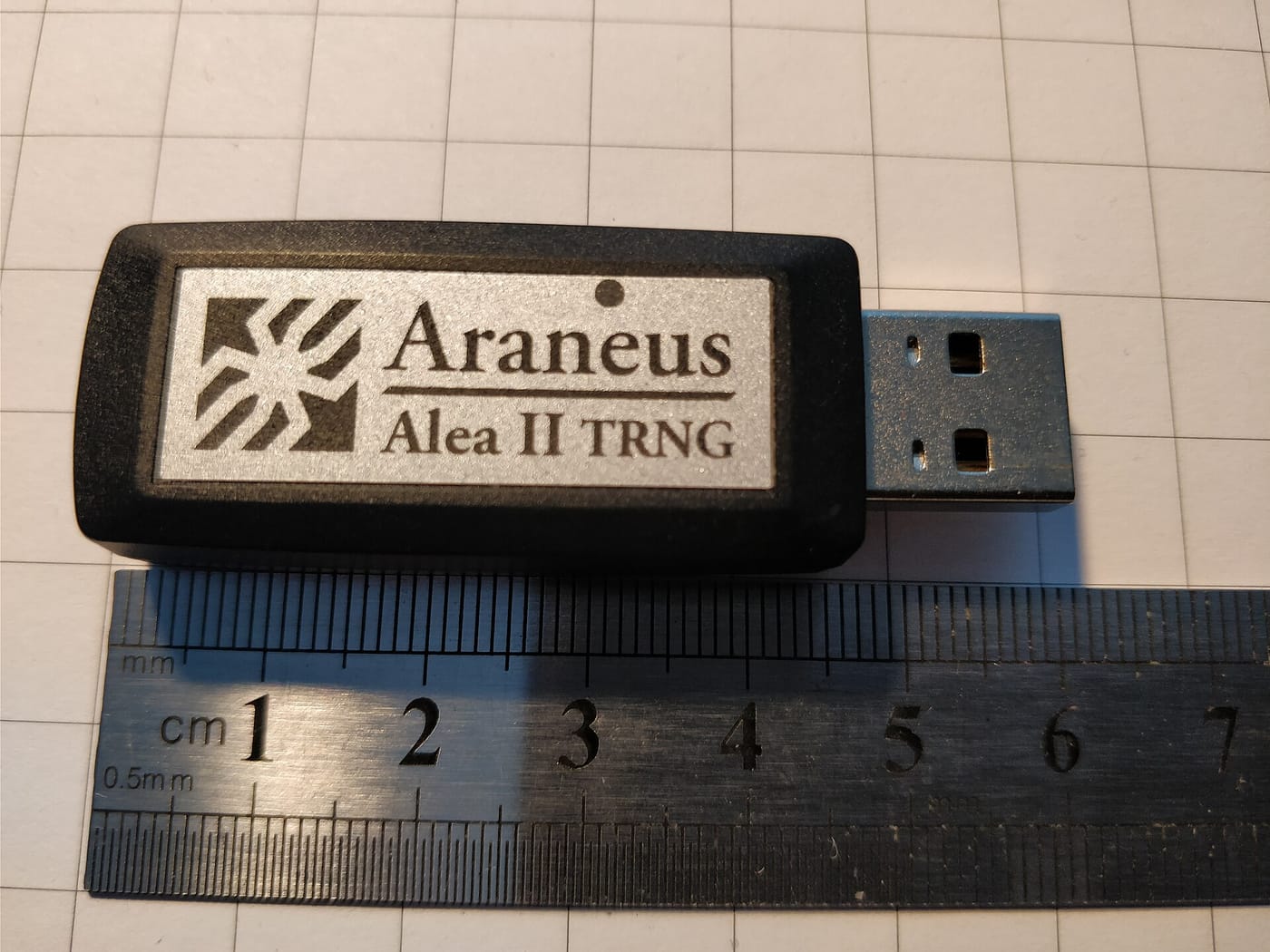
Photograph courtesy of Fisuaq / Araneus Information Systems, Creative Commons
Labs have studied whether people can shift random number generators, influence optical systems, or correlate healing intention with biological targets. Some teams report small effects. Other teams do not see them. Methods vary. Analyses vary. That pattern shows up in many fields, which is a reason to stay calm rather than to crown a new law of nature.
I will not hand you a fake success rate. If someone quotes a precise percentage for mind over matter, treat that number as a story until you can read the paper, the sample, and the failed replications beside it.
Curiosity is legitimate, and if correlation exists in these designs it appears small, far from omnipotence. You can keep your integrity in that gap.
Your inner work does not become less worthy if the universe is not a wish catalog. Prayer, meditation, and attention training have other jobs. They change the one who is looking.
How does attention change your life without writing the laws of matter?
Your mind changes your world by changing what you notice and what you do. Attention selects, perception interprets, and choice follows, often quietly.
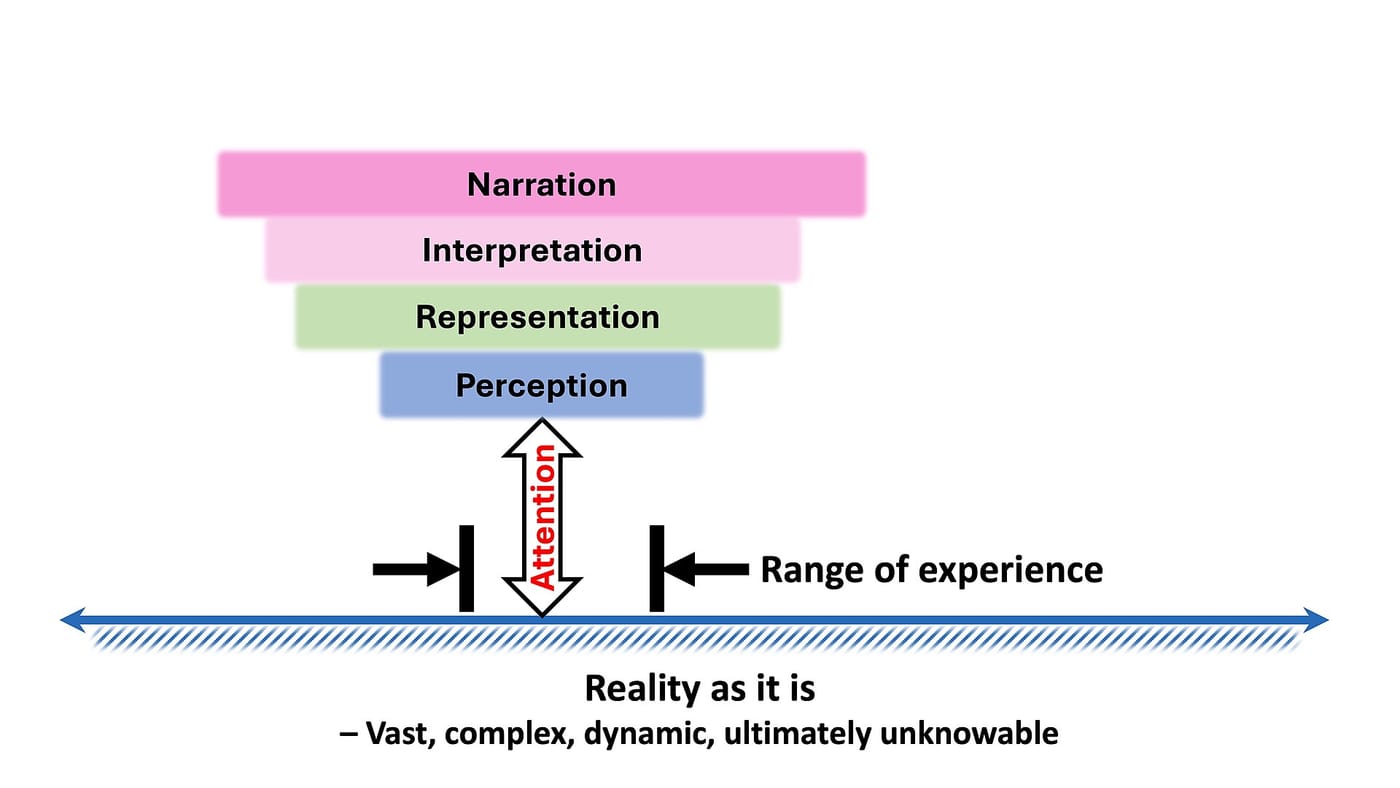
Photograph courtesy of Lbeaumont, Creative Commons
You have lived this. Walk into a room hungry and you see food. Walk in after a fight and you see exits. The room stayed put while your map changed. Then you acted on the map, and the next hour was different.
Perception is not a pane of glass. Your nervous system predicts, fills gaps, and favors what it already believes. That is why a week of honest attention can soften a relationship that seemed frozen. You started hearing the other sentence. You answered it.
The work that is yours lives in what you feed, what you repeat, and what you refuse to see, rather than in collapsing electrons or decorating a vision board and calling it physics.
If you want a practice that trains that muscle, use the guided meditations. Sit for one of them this week and notice the moment a thought claims to be the whole world. Name it as a thought. Return to the breath, or the body, or the sound in the room. That return is attention, doing its real job.
What can you practice this week?
This week, work in one place: the first hour after you wake, or the next hard conversation, or the moment you reach for your phone.

Pick one. When the sentence "I create this" shows up, split it. Did you measure something, notice something, or choose something? Write those three words on a card: measure, notice, choose. Keep the card where you already look. For seven mornings, take two minutes and sort yesterday into those three piles. You will find that "I manifested it" often means "I finally saw it" or "I finally moved."
If a coincidence delights you, let it. Wonder does not require a false physics. If a wish fails, do not take it as proof you are spiritually defective. The world is larger than your plotline, and that is a mercy.
You came here because you care about consciousness. Care for it as a science of attention and perception, and as a mystery that is still honest about what it does not know. That stance will hold when the slogans thin out.
Sources
Brian Wroblewski
Numerologist and Master Teacher
Brian Wroblewski is the founder of The Healer's Code. He reads charts with the Pythagorean system and teaches people how to understand the numbers they were born with.