
TL;DR
Dennett argued that consciousness is parallel drafts in the brain, not a show in a Cartesian Theater. Critics say he tracked function and report and left out felt experience. You can use both: watch for the invented inner watcher, and do not dismiss the simple fact that it feels like something to be you.
You don't need a private movie screen behind your eyes for your life to be conscious. In Consciousness Explained (1991), Daniel Dennett argued that what you call a stream of experience is a set of parallel drafts competing in the brain, not a finished show in a central theater. Critics including John Searle and David Chalmers say that picture explains reports and functions, and still leaves out what it is like to be you.
What did Dennett claim consciousness is?
For Dennett, consciousness is not an extra inner glow sitting on top of brain events, but what happens when some of those events win enough influence to shape what you remember, say, and do next.
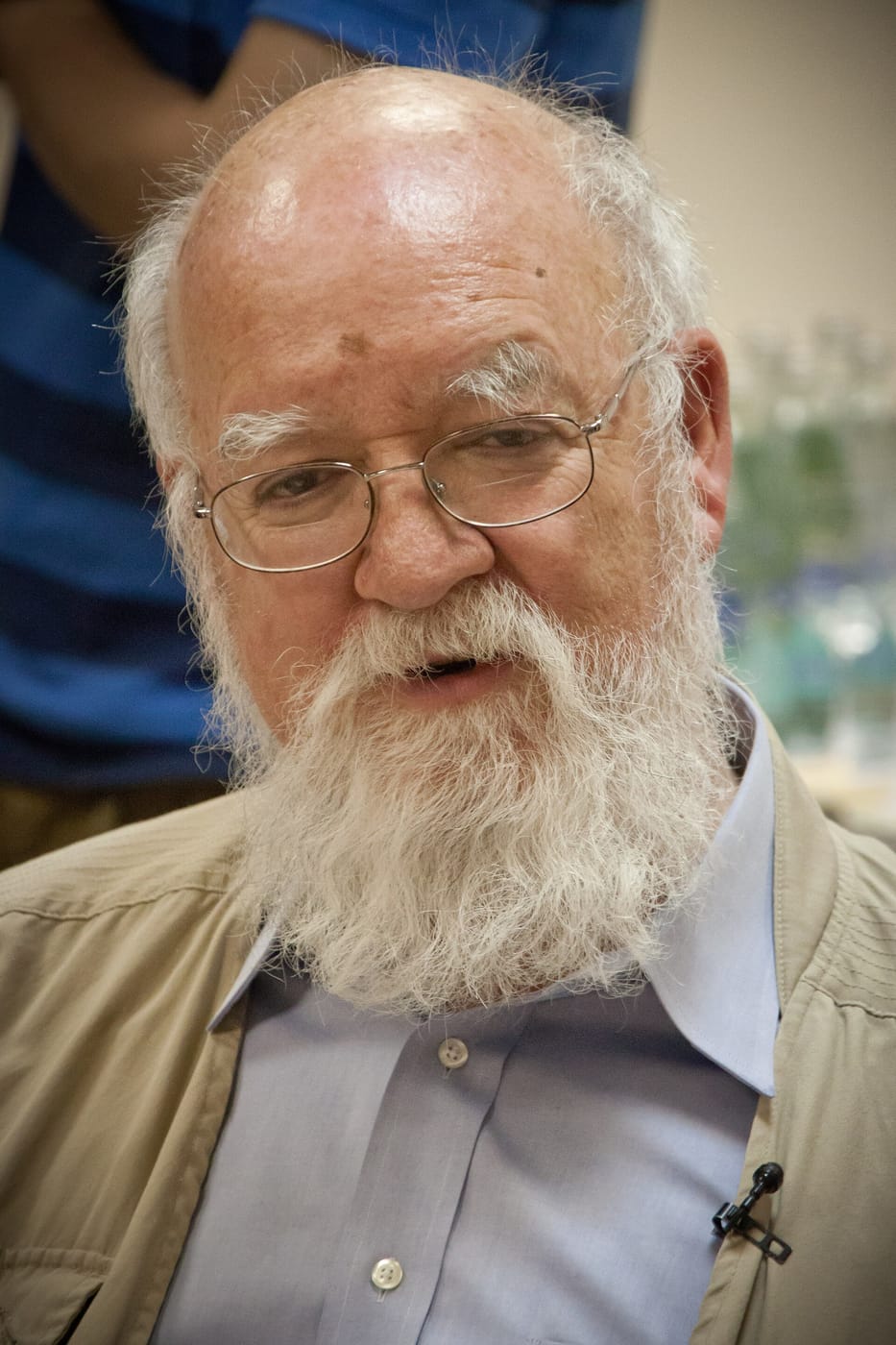
Photograph courtesy of Dmitry Rozhkov, Creative Commons
He called this the Multiple Drafts model. Many editorial processes run in parallel. There is no single, official version of "now" until a probe, a question, a memory, or an action makes one version count.
That is why he offered heterophenomenology: a method that takes your first-person reports seriously as data about how things seem to you, without treating the seeming as a second object floating in a private room.
If you have ever tried to catch the exact instant a thought became yours, you already have the intuition he was after. The catch itself changes the draft.
He pressed the same point in the essay "Quining Qualia" (1988). The classic list of what a quale is supposed to be (private, ineffable, intrinsic, immediately known) does not survive a careful look. He wanted some of those properties quined, discarded as a confused idea.
You can disagree with that last move and still use the first one. Watch how fast a story of "I saw it happen in here" forms after the fact.
Why did he reject the Cartesian Theater?
You have probably lived as if there is a place behind your eyes where the world is presented to you. Dennett named that picture the Cartesian Theater and spent Consciousness Explained taking it apart.
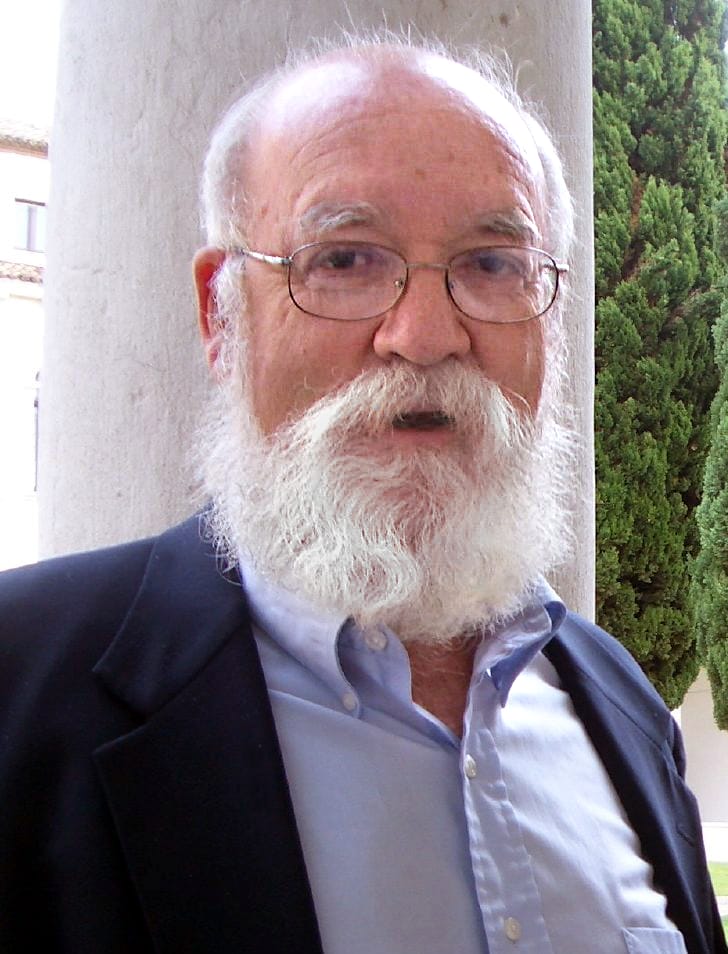
Photograph courtesy of David Orban, Creative Commons
If experience only becomes real when it arrives on an inner stage, you still have to explain the audience.
The audience problem is the homunculus. A little inner witness who watches the show would need their own brain, their own theater, their own witness. The regress does not stop unless you drop the theater.
He also rejected a precise moment of consciousness, a finish line where content "becomes conscious." In the Multiple Drafts picture, timing is messy. What you later report as the order of events can be a reconstruction, not playback from a master tape.
The point is not to distrust your life, but to distrust a spatial metaphor: the idea that consciousness is a location.
That metaphor has a grip on most of us. Dennett's wager was that this picture is what makes the mystery look unsolvable.
Want this read on your own numbers?
Your Blueprint turns these ideas into a personal map, calculated from your name and birth date.
What do critics say he explained away?
Several philosophers say Dennett changed the subject: a strong story about access, speech, and competition that never touches the feeling itself.
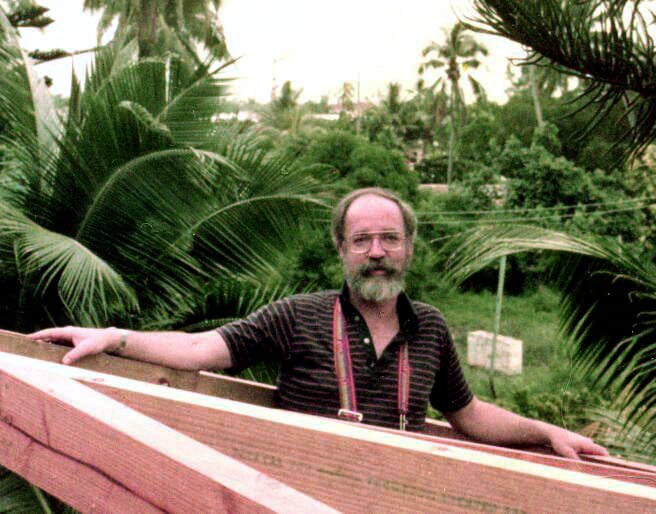
Photograph courtesy of Hayford Peirce, Creative Commons
David Chalmers drew the line in "Facing Up to the Problem of Consciousness" (1995): the easy problems are discrimination, report, attention, and control, and the hard problem is why any of that should feel like something from the inside.
John Searle, in The Mystery of Consciousness (1997), argued that Dennett's theory amounts to denying that consciousness exists. For Searle, you cannot replace the felt fact with a third-person account of judgments about feeling and still claim you have explained the felt fact.
Thomas Nagel's "What Is It Like to Be a Bat?" (1974) is still the short version of what they want saved: there is something it is like to be you, and a complete list of functions can still miss that.
Don't lump them. Chalmers leaves room for a science that still takes experience as real, while Searle wants feeling treated as a biological, higher-level brain property. They meet Dennett at the same joint: seeming is not the same as seeming to seem.
If you have ever finished a clever theory and still thought, but this headache is not a report, you understand the complaint in your own body.
How do you work with this without picking a side?
You don't have to join a camp this week. Use Dennett as a tool for catching the fake inner screen, then give the felt quality of attending a few quiet minutes without rushing to a verdict.
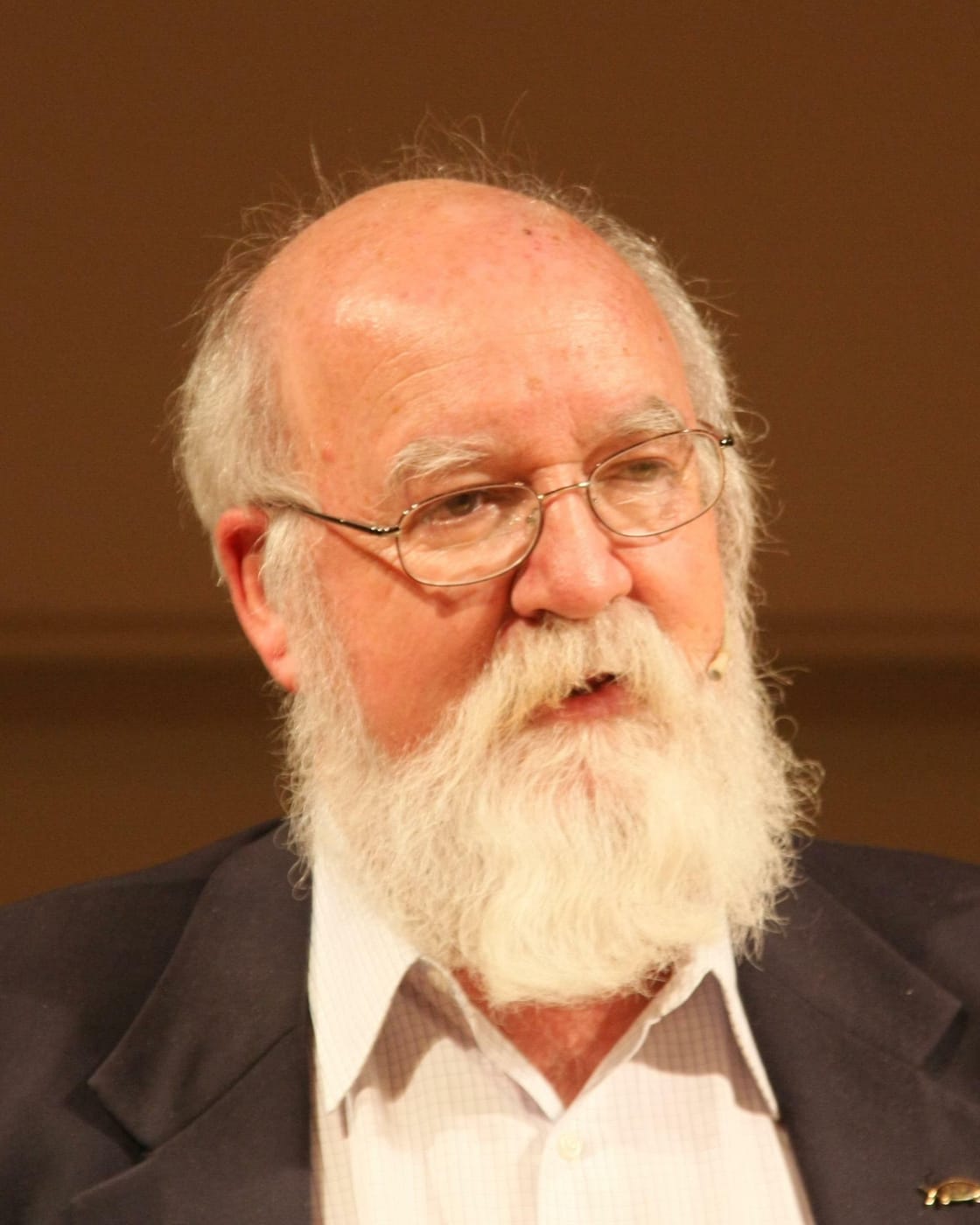
Photograph courtesy of Mathias Schindler, Creative Commons
Here is an optional practice, offered only as a way to notice how stories about experience form, not as medical, psychological, or spiritual advice. Sit for ten minutes. You can use one of the Guided meditations if you want a voice in the room. When a thought appears, notice how quickly a narrator claims it. That claim is the Cartesian Theater trying to restaff itself.
Then notice the part Dennett's critics will not let you skip: the simple that-it-feels-like-this. Don't inflate it into a metaphysics or shrink it into a verbal report. Let it be the data.
If you want a page of homework, read the Cartesian Theater discussion in Consciousness Explained and one critic, Chalmers (1995) or Nagel (1974). Two short sittings. One question in a notebook: where did I invent a watcher today?
Treat debates about consciousness as a way of getting more honest about attention, perception, and the stories you tell about both. Loyalty can wait.
Sources
- Dennett, D. C. (1988). Quining qualia. In A. J. Marcel & E. Bisiach (Eds.), Consciousness in Contemporary Science. Oxford University Press.
- Dennett, D.

Photograph courtesy of Jonas Magnus Lystad, Creative Commons
C. (1991). Consciousness Explained. Little, Brown and Company.
- Chalmers, D. J. (1995). Facing up to the problem of consciousness. Journal of Consciousness Studies, 2(3), 200–219.
- Nagel, T. (1974). What is it like to be a bat? The Philosophical Review, 83(4), 435–450.
- Searle, J. R. (1997). The Mystery of Consciousness. New York Review Books.
Sources
Brian Wroblewski
Numerologist and Master Teacher
Brian Wroblewski is the founder of The Healer's Code. He reads charts with the Pythagorean system and teaches people how to understand the numbers they were born with.