
TL;DR
Consciousness has not been shown to be a quantum process, and the brain is not treated as a quantum computer in standard neuroscience. Penrose and Hameroff proposed quantum events in microtubules as a basis for awareness, and that remains a hypothesis, even where microtubule experiments look interesting. Use a plain test: if no one can name interference, entanglement, or a failed classical model, quantum is being used as magic.
You asked whether consciousness is quantum, and whether your brain is a quantum system. There's no evidence that awareness is a quantum computation. Standard neuroscience doesn't treat the brain that way as a whole.
Roger Penrose and Stuart Hameroff proposed that quantum events inside microtubules, tiny protein tubes in neurons, could be the physical basis of conscious experience. That idea remains a hypothesis. Some laboratory work has been interpreted as showing quantum-like signatures in microtubule proteins. Those reports don't show that seeing, choosing, or feeling is a quantum process.
The word quantum often works as magic, a prestige label for anything mysterious. Physics has a plain test. A system is treated as quantum when it shows interference, superposition, or entanglement that ordinary statistics can't explain. Warm, wet tissue usually destroys those signatures very quickly. That's the obstacle.
Stay with the question anyway. Attention and perception are already strange enough. What follows is a map of the Penrose-Hameroff claim, the microtubule experiments, and a test you can run whenever someone uses quantum the way a magician uses a cape.
What did Penrose and Hameroff actually propose?
Penrose argued that understanding can't be reduced to a computer program, and that a deeper physical process, tied to how quantum possibilities become one outcome, might be involved in conscious moments.
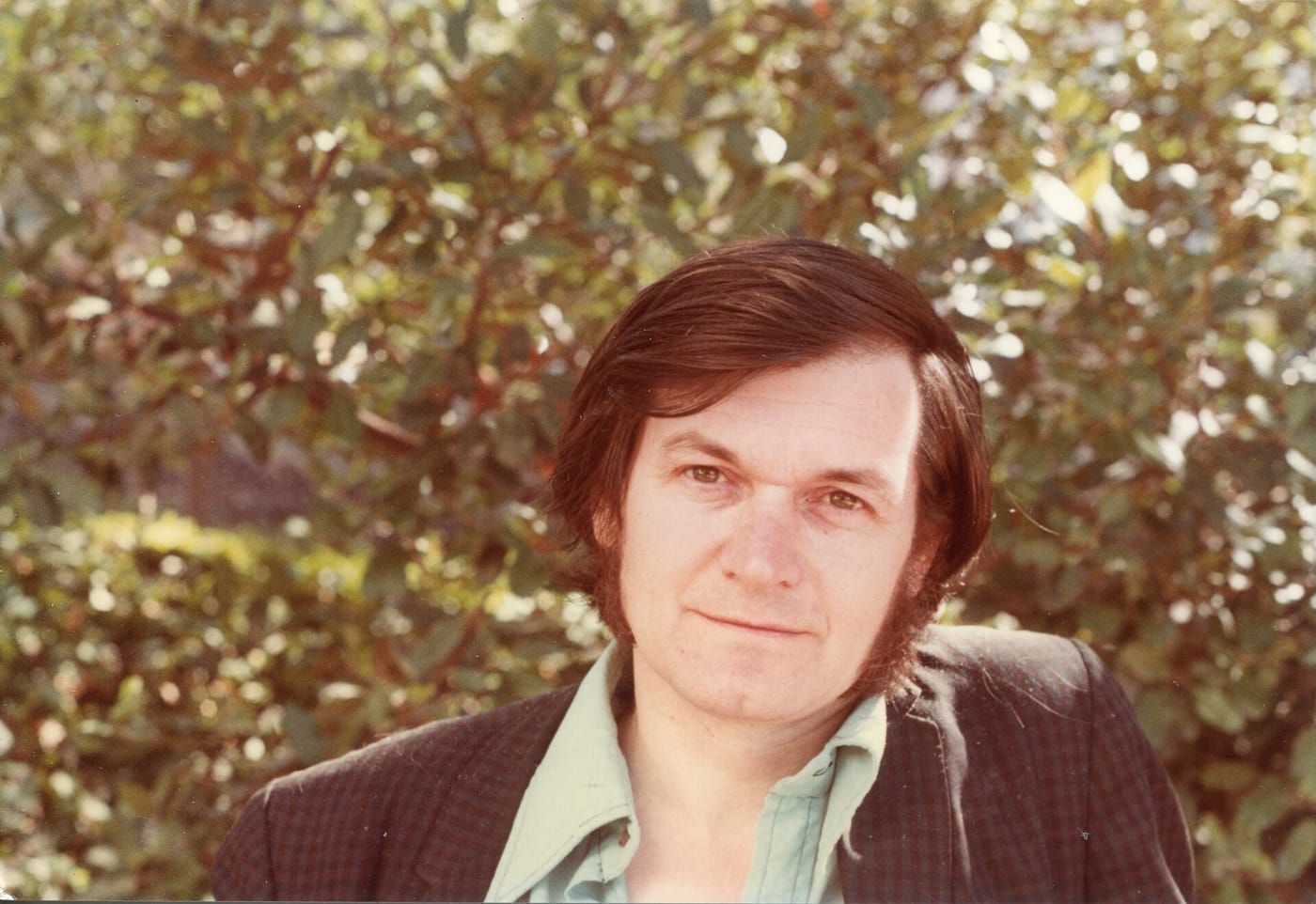
Photograph courtesy of George Bergman, Creative Commons
Hameroff offered a biological home for that process: microtubules, the protein scaffolding inside neurons.
Their joint theory is called orchestrated objective reduction, often shortened to Orch OR. In ordinary quantum theory, a range of possible states persists until something definite happens. Penrose suggested that gravity itself forces that range to become one fact, and that this objective reduction could be a candidate for a moment of awareness. Hameroff's part was orchestration: biology wouldn't wait on random collapse. Microtubules would time and structure those events so they could matter for thought.
You don't have to accept the theory to see why it was offered. It tries to do two hard jobs at once. It tries to say why experience isn't just a program running on wet hardware. It also tries to name a place in the cell where physics could meet that experience.
Take it as a proposal with a mailing address. Microtubules.
Why do physicists say the brain is too warm and wet?
The brain isn't a vacuum chamber.
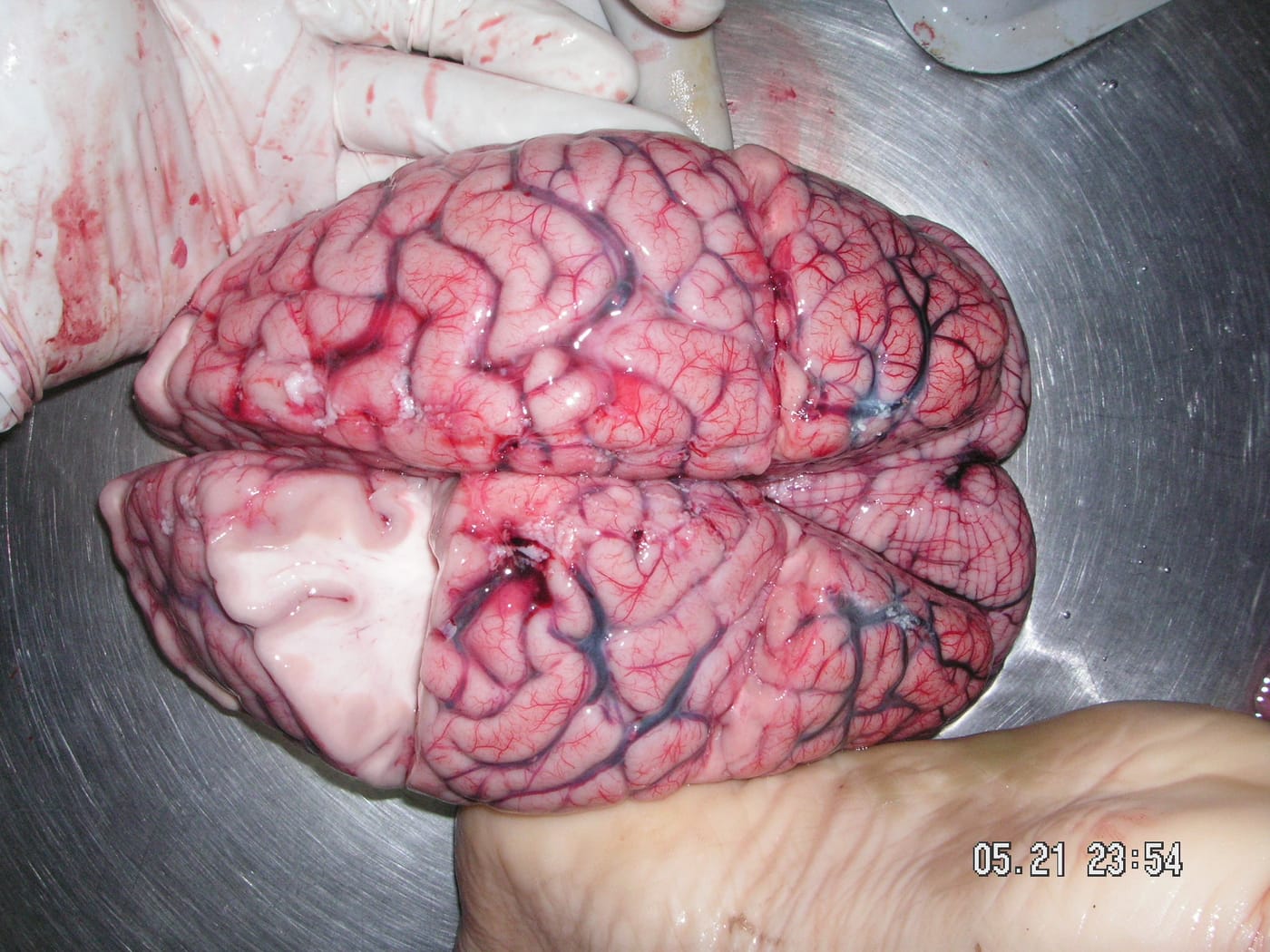
Photograph courtesy of Suseno, Creative Commons
It's body temperature, soaked in water, and constantly jostled by ions. Quantum coherence, the fragile condition you need for superposition and interference, usually collapses in that kind of environment.
This is the core scientific objection, and it's offered in good faith. In the lab, quantum effects are often protected with cold, isolation, and vacuum. Your cortex has none of those luxuries. If a superposition in a protein dies before a neuron can use it, the quantum story never reaches the scale of seeing a face or choosing a word.
Hameroff and colleagues argue that microtubule structure might shield coherence longer than a naive calculation allows, and that the relevant events could be very fast. Other physicists argue the shielding isn't enough. You're looking at a live disagreement about timescales and isolation.
Notice what the fight is about: whether a quantum signature can survive long enough to do cognitive work, which is a different question from whether you feel real.
Want this read on your own numbers?
Your Blueprint turns these ideas into a personal map, calculated from your name and birth date.
What do the microtubule experiments actually show?
A microtubule is a hollow tube made of the protein tubulin.
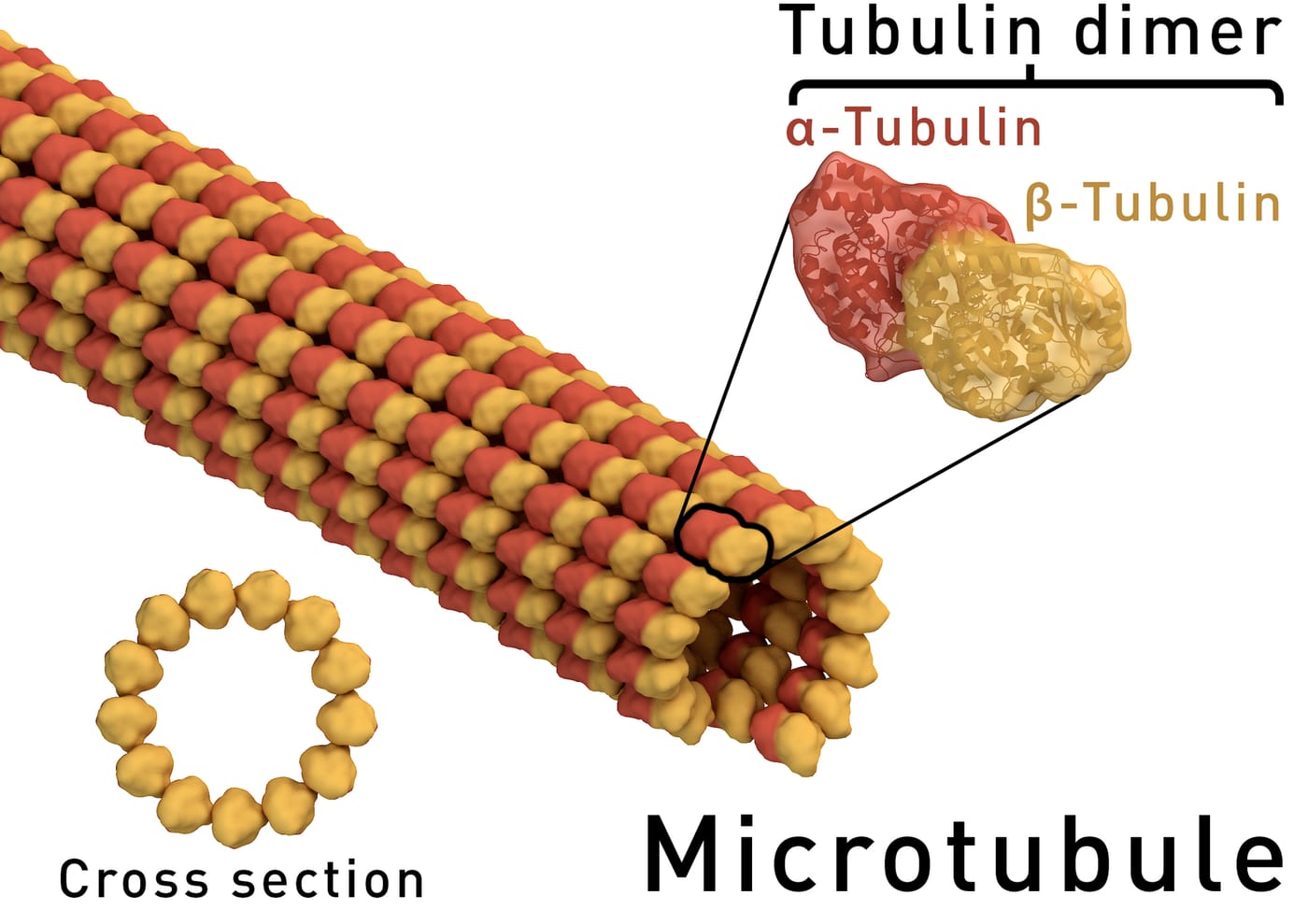
Photograph courtesy of Thomas Splettstoesser, Creative Commons
It helps a cell keep its shape and move cargo. Hameroff's claim is that tubulin can hold quantum information, and that networks of microtubules could support coordinated quantum events that match moments of awareness.
Researchers have reported optical, vibrational, and electronic effects in microtubules and in tubulin that they interpret as quantum. Anesthesia has been used as a clue, because some anesthetics disrupt consciousness and also interact with proteins in ways that might, if the theory is right, matter inside microtubules. Those lines of work are worth watching and easy to over-read.
What would actually settle it isn't a pretty graph. You'd need a quantum signature that can't be explained classically, in conditions that resemble a living neuron, on a timescale that could affect firing or binding, with a clear link to reported experience. We don't have that chain. Until we do, microtubule results are evidence about proteins.
If a headline says the brain is a quantum computer, read the methods. Ask what was measured. Ask whether the sample was alive. Ask whether consciousness was in the experiment at all.
How do you tell real quantum from quantum used as magic?
Here's the plain test. If someone can't tell you which quantum signature was measured, interference, entanglement, or a superposition that a classical model fails to fit, they're using the word as atmosphere.
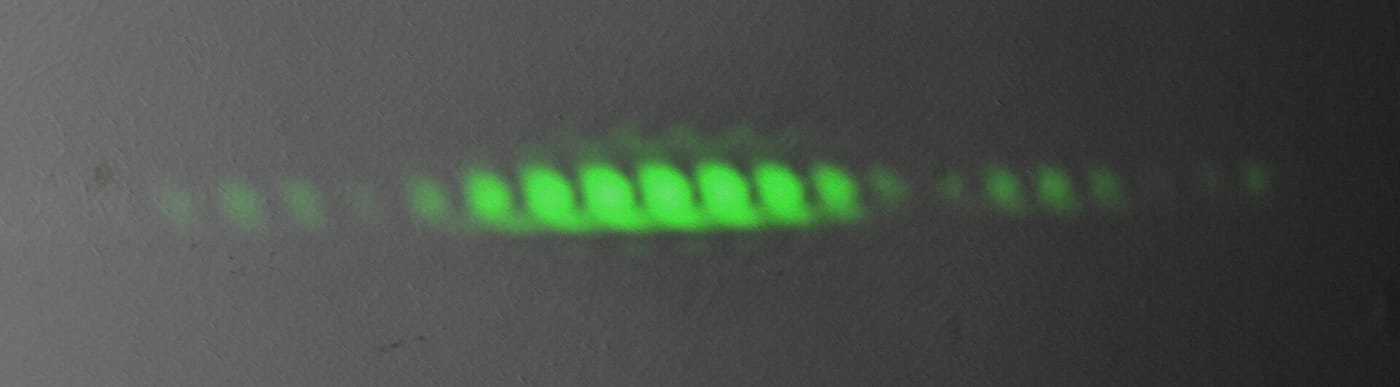
Photograph courtesy of Graham Beards, Creative Commons
Interference is the clearest of the three. Waves that can cancel and reinforce leave a pattern no ordinary coin-flip story can copy. Entanglement is a correlation between parts that stays too tight for local classical causes. Superposition is the both-at-once that those patterns require. If the speaker can't point to one of those, they're borrowing the prestige of a lab without bringing the lab.
Treat every quantum consciousness claim like a receipt. Ask what interfered with what. If the answer is a feeling in the chest, you've been sold atmosphere. If the answer is a measurement, you can keep listening.
You can respect wonder without letting a vocabulary do your thinking.
What should you do with attention while the science is unfinished?
You don't have to wait for microtubules to settle the hard problem before you take your own awareness seriously. Consciousness is the fact that there is something it is like to be you, right now.

The hard problem, as philosophers use the phrase, is why physical processes should be like anything from the inside. Quantum theory doesn't dissolve that question by sounding more exotic. A quantum brain would still leave you with the same gap: why this activity, however fancy, is accompanied by the blue of the sky or the sting of a memory.
So do something small and local. Sit with one ordinary object, a cup on the table, a window, the weight of your own hands, for five quiet minutes. Notice seeing. Notice that noticing. If you want a simple structure for that, use one of the Guided meditations as a way to watch attention itself.
That practice will neither prove nor disprove Orch OR. It will put you in contact with the thing the theories are trying to explain, which is more honest than decorating your mind with a word the experiment hasn't earned.
Sources
Brian Wroblewski
Numerologist and Master Teacher
Brian Wroblewski is the founder of The Healer's Code. He reads charts with the Pythagorean system and teaches people how to understand the numbers they were born with.