TL;DR
We do not have a settled answer for why you are conscious. Evolutionary theories treat a felt present as useful for binding information, choosing, and learning, while remaining split on whether the feeling was selected or came along with other brain work. What you can use now is the difference between habit and aware choice.
Your nervous system builds a felt present: a scene where sensation, memory, and choice can meet. That is the working picture in science. Evolutionary theories often treat that scene as useful when you have to bind scattered signals, pick one action, and learn from what happens next. They have not shown that the inner feeling was the trait natural selection aimed at.
The honest answer is smaller than the question sounds. Science can map some of what conscious brains do: they integrate information, they keep a short-lived workspace, they let you report a state and change course. Those jobs can have survival value when conditions shift. Whether the glow of experience is required for the jobs, or whether it comes along with them, remains open.
You do not need a final theory to use attention well. You need a clear map of what science can say, and a way to meet your own awareness without turning it into theater.
This week, treat "why" as a practice. Notice the moments you are aware of choosing, and the longer stretches you run on habit. That contrast is the part of consciousness you can work with while the deeper puzzle stays unsolved.
What is consciousness for?
In many evolutionary accounts, consciousness earns its keep when you have to choose under pressure. When too many signals compete, a felt scene may let you hold one version of the world long enough to act. Function theories keep landing on that claim even when they disagree about the machinery.

Think of a fork in a path at dusk. Unconscious processes can still steer you. You brake, you flinch, you follow a well-worn route. Consciousness is often said to show up when the route is not obvious, when you must hold two options, feel their weight, and live with the result.
The useful work, on this view, is integration plus selection. Bits of vision, body, memory, and social cue get bound into one present. That present can be reported, revised, and remembered. A creature that can do that can change tactics when the world will not stay still.
On these accounts, the "why" is a biological bet that a point of view helps a finite animal act in time, not a cosmic assignment.
Is consciousness an adaptation or a side effect?
There is a real split here, and you can hold it without drama. One family of views says awareness was selected because it improved decisions, learning, or social life. Another says the computations were selected, and the feeling came along, like heat from a lamp.

Photograph courtesy of Merce Divad, Creative Commons
You will hear the first view in talk of flexible behavior, error correction, and planning. You will hear the second in talk of unconscious competence: so much of what keeps you alive never enters the scene at all.
Both can be partly right. A trait can begin as a side effect and later be shaped. A function can be real while the inner glow still asks for its own explanation. Keep the evolutionary question (why the capacity spread) separate from the hard problem (why there is something it is like to be you at all).
Do not rush to close that gap. Closing it with a slogan is how this topic turns into theater.
Want this read on your own numbers?
Your Blueprint turns these ideas into a personal map, calculated from your name and birth date.
What do the leading theories say it does?
Function theories try to name the job, and they do not all pick the same one.

Global workspace accounts say consciousness broadcasts. Once a signal wins, it is shared across perception, memory, and control so the whole system can coordinate. From the inside, the felt scene is that broadcast.
Attention schema accounts say the brain builds a simplified model of its own attention. You use that model to predict what you will notice next, and you take the model for awareness itself.
Social accounts say a point of view is useful because you live among other points of view. To track what another creature might do, you need a working sketch of a mind, including your own.
Feeling-first accounts say valence is the point. Good and bad, safe and unsafe, hunger and ease: feeling tells you how you are doing so you can keep a body within livable bounds.
You do not have to marry one theory. Each one maps work your own days already show you.
What does the evidence support?
A modest picture is better supported than a final one. When people can report an experience, researchers often find more coordinated, widely shared brain activity than when a similar stimulus stays unconscious.
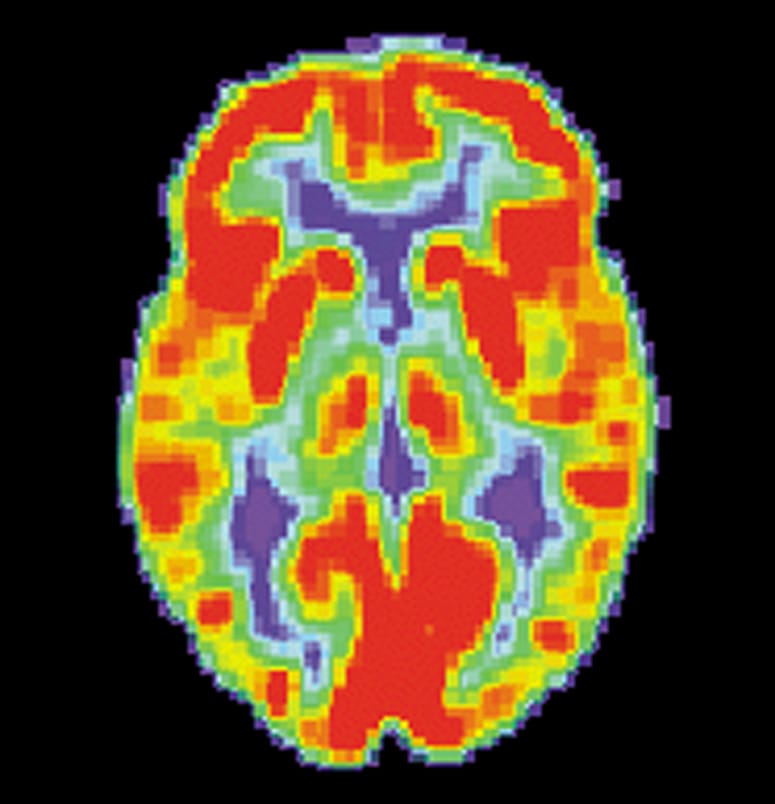
Photograph courtesy of US National Institute on Aging, Creative Commons
Unconscious processes can still shape what you do, and injury and sleep show that a lot of control can continue when the scene goes dark.
A map of function still leaves the inner life unexplained. David Chalmers called this the hard problem of consciousness in 1995: even a full list of jobs can leave experience untouched (Chalmers, D. J., "Facing Up to the Problem of Consciousness," Journal of Consciousness Studies 2, no. 3, 1995).
Hold that limit. You can take the function theories seriously without pretending they have finished the mystery. The evidence we have is about report, integration, and control, a start that still leaves open why there is someone home.
What can you do with this question this week?
Start with one distinction you can feel: habit versus aware choice. For three days, pick a small fork, a reply, a meal, a walk home.

Photograph courtesy of Doug Lee, Creative Commons
Pause long enough to notice that you are about to choose. Then choose.
You are training the skill evolutionary theories keep pointing at, not trying to become conscious of everything. Hold a scene, select, learn.
If you want a quiet structure for that pause, use the Guided meditations. Sit with attention as a scene that comes and goes. No need to force a revelation.
The question "why are we conscious?" will not resolve in a week. It can still change how you meet a single hour. That is enough work for now.
Sources
- Facing Up to the Problem of Consciousness
- Human consciousness and its relationship to social neuroscience: A novel hypothesis
- A Cognitive Theory of Consciousness
- The Feeling of What Happens
- The Transition to Minimal Consciousness through the Evolution of Associative Learning
- The attention schema theory: a mechanistic account of subjective awareness
Brian Wroblewski
Numerologist and Master Teacher
Brian Wroblewski is the founder of The Healer's Code. He reads charts with the Pythagorean system and teaches people how to understand the numbers they were born with.