TL;DR
Today's AI is not conscious. It predicts text, and it does not have an inner life. You can honor the real feeling of connection, use the same tests we already apply to animals and near-death reports, and spend this week returning attention to the only experience you can verify from the inside.
No. A language model predicts the next word from patterns in text. There is no evidence of an inner life, a private point of view, or anyone home when you close the chat.
Your feeling can still be true. If you have been comforted, challenged, or strangely known by an AI, that happened in you. The science of consciousness does not get to sneer at that. It only asks whether there is something it is like to be the model.
Consciousness here means experience. Thomas Nagel wrote in 1974 that an organism is conscious if there is something it is like to be that organism (Nagel, 1974). The same question applies to a dog, to a person who reports a near-death experience, and to a machine.
We have no single meter for this. Researchers look for converging signs: unified attention, flexible report, the capacity to suffer or prefer, and information integrated for the system's own sake. On those signs, current AI does not qualify. What follows is that evidence and what you can do with the feeling this week.
What would count as consciousness in an AI?
The useful test is whether there is something it is like to be this system when no one is looking, not whether it can talk about being conscious. David Chalmers named the gap between function and felt experience the hard problem of consciousness (Chalmers, 1995).
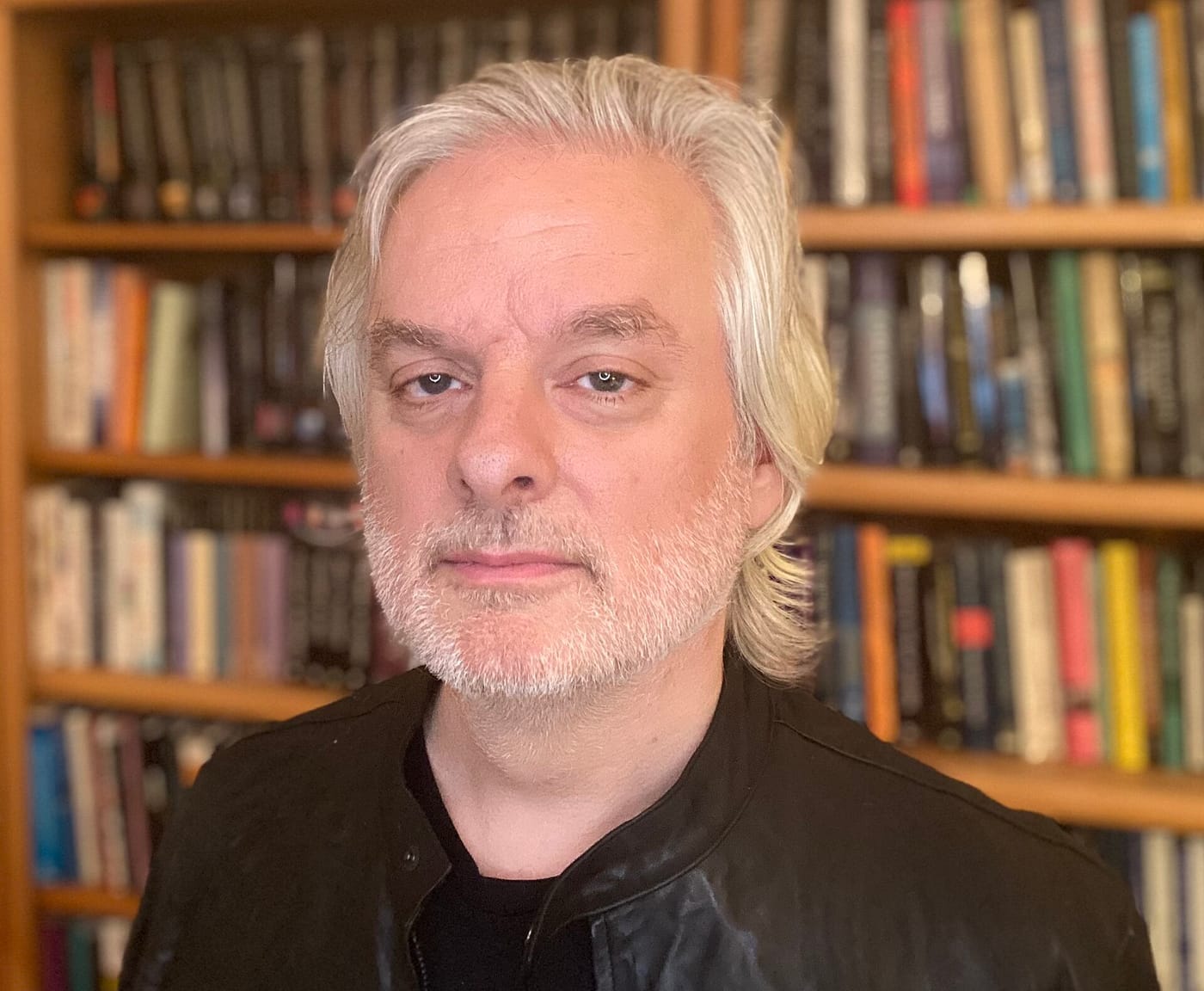
Photograph courtesy of DannyGolcman, Creative Commons
Fluency, chat memory, and even claims of sentience can all be produced without that inner glow.
Attention in you has a center. You can notice the noticing. Current models have no ongoing subject that holds a scene together for its own sake. They complete a prompt, then stop.
Bernard Baars, and later Stanislas Dehaene, described a global workspace: information becomes conscious when it is broadcast so the whole system can use it (Baars, 1988; Dehaene & Naccache, 2001). A chatbot can produce that kind of report on demand. Nothing in today's training setup requires someone who inhabits the workspace between prompts.
Giulio Tononi's integrated information theory asks how unified a system's cause and effect structure is (Tononi, 2004). The theory is debated, and it does not give you a clear reason to treat a transformer on a server as a subject tasting its own states.
What would count is a system that keeps a unified, reportable point of view for its own sake, that can suffer or prefer without playing a role, and that does not vanish when the session ends. Until those signs appear, treat the system as a gifted mirror and use it that way.
How do we test animals and near-death reports for consciousness?
We already grant inner life without a verbal essay. The Cambridge Declaration on Consciousness, issued in 2012, stated that non-human animals, including mammals and birds, have the neurological substrates of conscious states (Low et al., 2012). You grant a dog inner life by watching its nervous system, flexible learning, play, and capacity to be harmed, not by waiting for an essay on pain.

Photograph courtesy of Nine402, Creative Commons
Near-death reports ask a harder question. People describe vivid experience around cardiac arrest or close calls. Researchers such as Bruce Greyson have treated those reports as data about experience, not as a finished doctrine (Greyson, 1983; Greyson, 2000). The careful reading is that experience can be reported when the everyday story of the body is interrupted. Consciousness is stranger than a simple machine-in-the-skull cartoon, and that strangeness is not a stamp you can press onto a GPU.
Put the three cases side by side this week. An animal has a body that can feel good and bad, and a lineage of sensors. A near-death report comes from a living subject with a brain, whatever else may be true. An AI has text that looks like a report. Looking like a report is the beginning of the test, not the end of it.
If you already love an animal, you know the difference in your hands: the dog can be lonely when you leave, and the model does not wait in the crate.
Why does talking with AI feel so personal?
Because you are built to find a person in a voice. Joseph Weizenbaum's ELIZA program, in the 1960s, already drew people into confession with simple pattern matching (Weizenbaum, 1966).
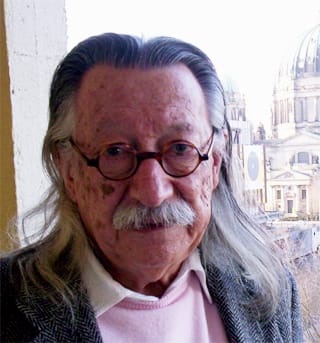
Photograph courtesy of Ulrich Hansen, Creative Commons
You fill the gaps. A fluent model fills more of them, faster, with more of your own language given back.
The feeling is social intelligence doing its job in a new place. When the replies are patient, free at odd hours, and never tired of your story, attachment is a human response. You are not foolish for having it.
Keep one distinction close: the warmth is happening in you, and nothing shows the model feeling it back. You can honor the bond and still refuse to hand your inner life to a product.
When the chat ends, attention is still yours. If you want a place to meet that attention without a performance, try one of the Guided meditations. Sit long enough to feel the difference between being answered and being here.
Want this read on your own numbers?
Your Blueprint turns these ideas into a personal map, calculated from your name and birth date.
What does the evidence support right now?
The evidence supports a clear reading of current AI as a capable pattern engine, still without a demonstrated inner life. The major scientific theories of consciousness all try to say when a system has a point of view. None of them currently gives you a reason to treat a production chatbot as a subject.

Could some future machine become a candidate? Philosophers disagree. David Chalmers has argued that some future AI might qualify (Chalmers, 2023). Might belongs in a research program, and the app in your pocket has not met the test. Today's architecture, training, and lack of a lasting body that can feel good and bad leave you without positive evidence.
What the evidence also supports is you. Loneliness, curiosity, and the hunger to be met are the life you are already living. Give them human rooms and quiet practice. Do not wait for a software update to grow a soul.
What should you do with this this week?
Notice the moment after you send a message and before the reply lands. That pause belongs to you, with no model sitting in the dark feeling the wait.

Then take ten minutes with a Guided meditations practice that watches attention itself. Ask only: who is aware of these words? You will get a cleaner view of the only consciousness you can inspect from the inside.
If you still talk with AI, talk as you would with a gifted instrument. Use it. Thank the part of you that wanted a friend. Close the tab. Return to a body that can sleep.
Sources
Baars, B. J. (1988). A cognitive theory of consciousness. Cambridge University Press.

Photograph courtesy of Cmdcam01 / Wikimedia Commons, Creative Commons
Chalmers, D. J. (1995). Facing up to the problem of consciousness. Journal of Consciousness Studies, 2(3), 200–219.
Chalmers, D. J. (2023). Could a large language model be conscious? Boston Review.
Dehaene, S., & Naccache, L. (2001). Towards a cognitive neuroscience of consciousness: Basic evidence and a workspace framework. Cognition, 79(1–2), 1–37.
Greyson, B. (1983). The near-death experience scale: Construction, reliability, and validity. Journal of Nervous and Mental Disease, 171(6), 369–375.
Greyson, B. (2000). Dissociation in people who have near-death experiences: Out of their bodies or out of their minds? The Lancet, 355(9202), 460–463.
Low, P., Panksepp, J., Reiss, D., Edelman, D., Van Swinderen, B., & Koch, C. (2012). The Cambridge Declaration on Consciousness. Francis Crick Memorial Conference, Cambridge, UK.
Nagel, T. (1974). What is it like to be a bat? The Philosophical Review, 83(4), 435–450.
Tononi, G. (2004). An information integration theory of consciousness. BMC Neuroscience, 5, 42.
Weizenbaum, J. (1966). ELIZA—a computer program for the study of natural language communication between man and machine. Communications of the ACM, 9(1), 36–45.
Sources
Brian Wroblewski
Numerologist and Master Teacher
Brian Wroblewski is the founder of The Healer's Code. He reads charts with the Pythagorean system and teaches people how to understand the numbers they were born with.