TL;DR
Psilocybin becomes psilocin in your body, which activates serotonin 2A receptors and loosens the brain's usual patterns of communication. This produces the shifts in perception, ego, and emotion that define the experience. Research is promising for conditions like depression, but the work is done in careful clinical settings, not casually.
Psilocybin, the active compound in certain mushrooms, gets converted in your body to psilocin, which binds to a specific serotonin receptor called 5-HT2A. That single action ripples outward, loosening the brain's habitual patterns of communication and producing the shifts in perception, emotion, and sense of self that people describe as a psychedelic experience. Researchers at places like Johns Hopkins and Imperial College London are now studying this in clinical settings for conditions such as depression and end-of-life anxiety.
This is an explainer, not an invitation, and not medical advice. Psilocybin is a powerful substance, its legal status varies widely, and the research described below happens under medical supervision with screening, preparation, and support.
What actually happens in your body when you take psilocybin?
Psilocybin itself is largely inactive. Once ingested, your body strips off a phosphate group and turns it into psilocin, the compound that does the real work.
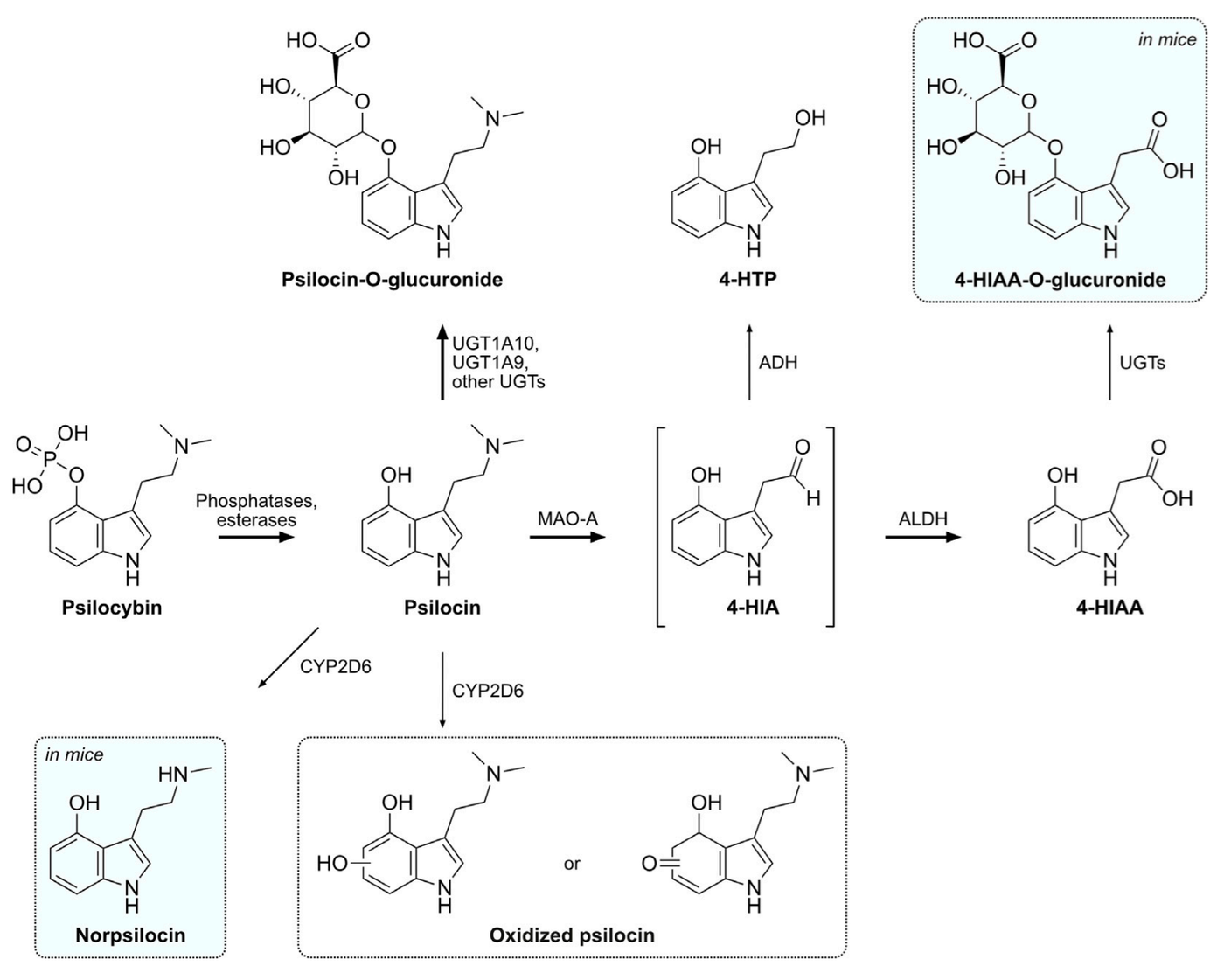
Photograph courtesy of Jan Thomann et al., Public domain
Psilocin closely resembles serotonin, one of the brain's key signaling molecules. Because of that resemblance, it fits into serotonin receptors, especially the 5-HT2A receptor, which is dense in regions tied to perception and higher-order thinking.
Effects usually begin within 20 to 40 minutes, build to a peak, and taper off over several hours, though timing shifts with dose, individual physiology, and whether the mushrooms were taken on an empty stomach.
Why does one receptor change your whole experience?
The 5-HT2A receptor sits on neurons in the cortex, the outer layer of the brain involved in thinking, perceiving, and integrating information.
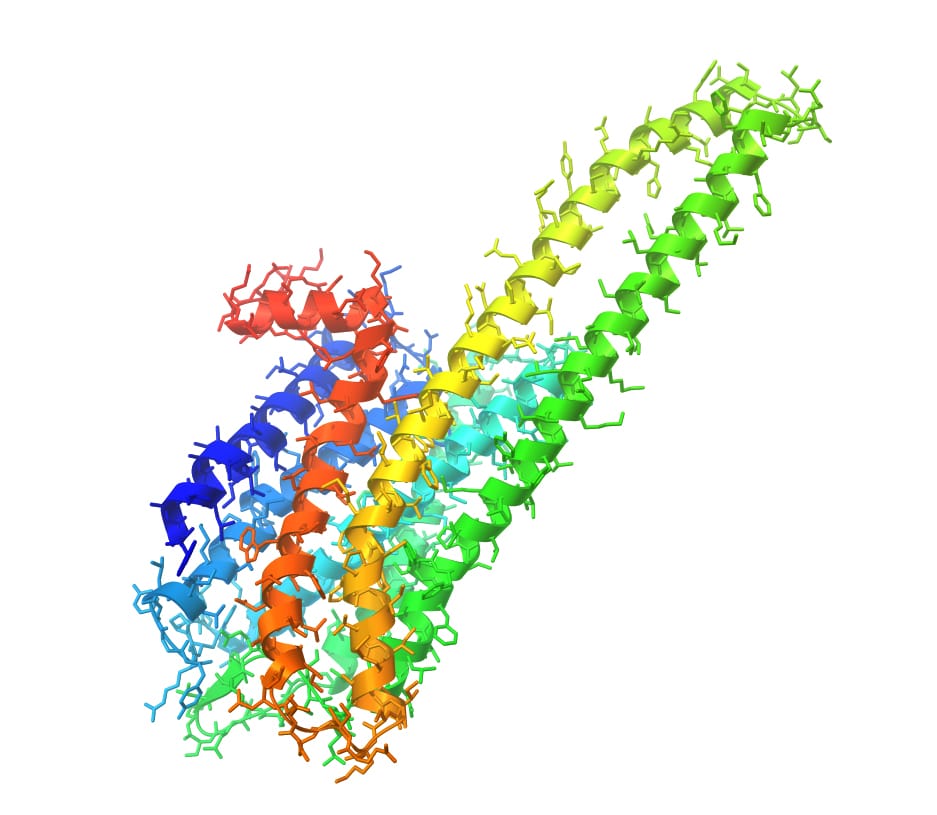
Photograph courtesy of DrLee, CC0
When psilocin activates these receptors, it changes how excited those neurons get and how they fire together.
Researchers at Imperial College London have described this as a flattening of the brain's normal hierarchy, where rigid, top-down patterns give way to more flexible, fluid activity. That flexibility is one explanation researchers have floated for why old thought patterns can feel less fixed during and after the experience, though this remains an active area of study rather than settled fact.
What is the default mode network, and why does it matter?
The default mode network is a set of brain regions most active when you're not focused on the outside world: daydreaming, ruminating, thinking about yourself. Research has linked it to your ongoing sense of being a continuous, separate self, a topic explored further in What Science Actually Understands About Consciousness.
Under psilocybin, activity in this network tends to drop and its connections loosen, according to neuroimaging studies. Some people report that this coincides with a feeling of the ego softening or dissolving, sometimes called ego death, a subjective description rather than a measurable clinical outcome.
That loosening is often what people mean when they talk about feeling connected to something larger, or seeing their problems from a wider vantage point. These are reported subjective experiences, not guaranteed effects, and they echo some of what's discussed in Consciousness and Astral Travel: What Leaves, What Stays, and How to Practice Safely.
What does the research actually show?
The science is early but genuinely interesting. Small, controlled trials have studied psilocybin for treatment-resistant depression, major depressive disorder, and anxiety in people with life-threatening illness. Some of these trials have reported reductions in symptoms among participants, though results vary by study design and sample size.
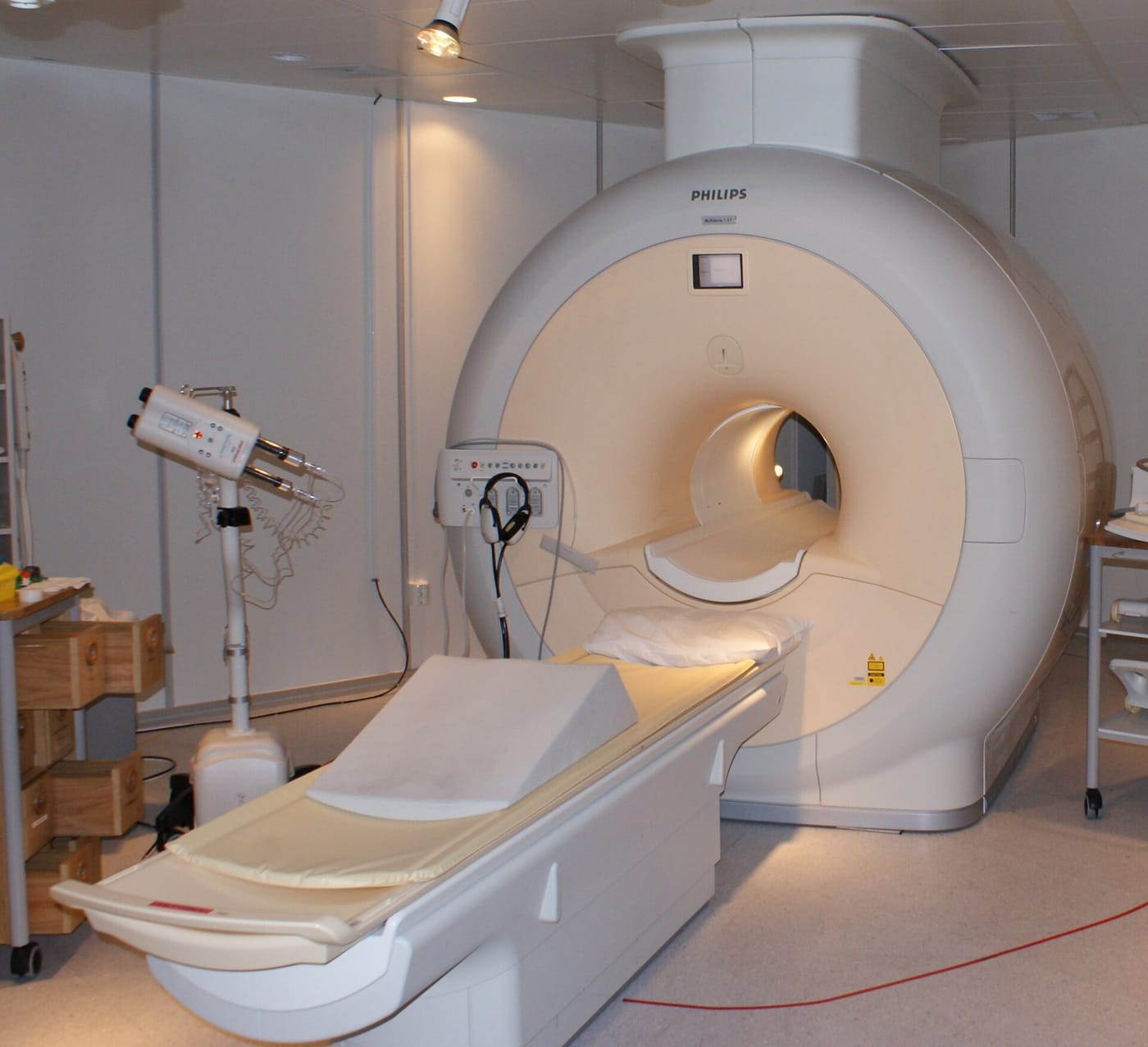
Photograph courtesy of Jan Ainali, CC BY 3.0
Two things are worth keeping in mind. These studies use controlled doses, medical screening, and trained guides who support participants before, during, and after the session. And many trials remain small, so results, while encouraging, aren't conclusive or final.
Regulators have taken notice. The U.S. Food and Drug Administration has granted psilocybin therapy "breakthrough therapy" designation for certain depression research, a status meant to speed up study of promising treatments. That's a signal of research interest, not an approval for general or unsupervised use, and it isn't evidence that psilocybin is an approved treatment for any condition.
Why do set and setting matter so much?
Set means your mindset going in: your intentions, mood, and emotional state. Setting means your physical and social environment. Because psilocybin makes the brain more open and suggestible, these factors are widely believed to strongly shape how an experience unfolds.
The same dose may feel completely different depending on context, which is one reason clinical research invests heavily in preparation sessions, a comfortable setting, and a guide who stays present throughout. Some people find that guided meditations offer a gentler way to explore similar states of openness and reflection.
It's also why researchers emphasize integration, the work of making sense of the experience afterward. A powerful few hours may offer insight for some people, but that insight tends to become useful only when reflected on and applied later. If you value that kind of reflective work, you may appreciate the conversations in the community.
Is psilocybin safe?
Psilocybin carries a low risk of physical toxicity and isn't generally considered addictive the way substances like opioids are. But low physical risk isn't the same as no risk.

Photograph courtesy of Robert van der Horst, CC BY-SA 4.0
The experience can bring up intense fear, confusion, or difficult memories. For people with, or at risk for, certain psychiatric conditions, including psychosis, it can be genuinely harmful. That's why clinical trials screen participants carefully and exclude some people.
There are legal realities too. In many places psilocybin remains a controlled substance, and possession can carry serious legal consequences. None of this article is medical or legal advice. It's a description of what the current science suggests, offered so you can think clearly rather than romantically.
How is this different from other psychedelics?
Psilocybin belongs to a family of "classic psychedelics" that work primarily through the 5-HT2A receptor. LSD and DMT, the active compound in ayahuasca, act on similar receptors, which is why their effects overlap.

Photograph courtesy of James Steakley, CC BY-SA 3.0
The differences come down to potency, duration, and character. LSD tends to last much longer than psilocybin. DMT, when smoked, hits hard and fast, then fades quickly. Ayahuasca combines DMT with other plant compounds that extend and change its effects.
Substances like MDMA and ketamine often get grouped with psychedelics in conversation, but they work through different mechanisms and produce different experiences. Lumping them all together blurs distinctions worth understanding.
If you're curious about developing your own inner awareness through grounded, everyday practice rather than substances, you might explore Developing Your Clairvoyance Without the Theater, or discover more about your own path with Get your Soul Blueprint.
This article is for educational purposes only and does not constitute medical, legal, or psychological advice. Psilocybin is illegal in many jurisdictions and carries real physical, psychological, and legal risks. Consult qualified medical and legal professionals before making any decisions related to psychedelic substances.
Sources
- Breakthrough Therapy | FDA
- FDA Grants Psilocybin Second Breakthrough Therapy Designation - Medscape
- Effects of Psilocybin-Assisted Therapy on Major Depressive Disorder: A Randomized Clinical Trial - PubMed
- The entropic brain - revisited - PubMed
- LSD and psilocybin flatten the brain's energy landscape: insights from receptor-informed network control theory | bioRxiv
Numerologist and Master Teacher
Brian Wroblewski is the founder of The Healer's Code. He reads charts with the Pythagorean system and teaches people how to understand the numbers they were born with.